
Harbour: Port Cranes, Party Fortunes and the Old Madras Mandate

- Tamil
- Hindi
- Malayalam
- Kannada
- Telugu
Constituency No. 18 | Chennai District | General
Harbour is not merely an Assembly constituency; it is political theatre anchored in stone, salt and shipping lanes. Encompassing George Town, parts of Parry’s Corner, port-adjacent neighbourhoods and dense commercial arteries, Harbour is one of Chennai’s oldest political landscapes — a seat where Dravidian dominance was consolidated, tested and retained through decades of urban transformation.
If Fort St. George symbolises state power, Harbour represents street-level legitimacy.
Here, mandate rises with the tide.
Fort, Port and Colonial Foundations
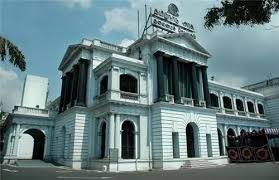
Harbour constituency includes the historic Fort St. George, the seat of the Tamil Nadu Legislative Assembly and Secretariat. Within its walls, colonial administration once governed the Madras Presidency. Today, elected representatives debate policy in its chambers.
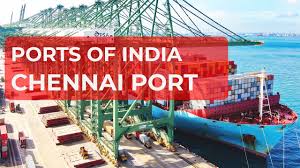
Just beyond lies the Chennai Port, one of India’s oldest ports. Cranes, containers and cargo ships define the skyline. The port economy — dock workers, clearing agents, transport operators — shapes voter demographics and economic priorities.
Harbour is governance and goods movement in the same breath.
George Town: Commerce and Congestion
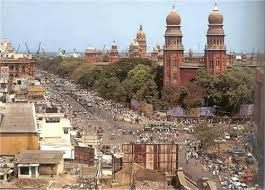
George Town, one of Chennai’s oldest commercial hubs, falls within Harbour’s embrace. Wholesale markets, hardware shops, textile godowns and jewellery traders animate narrow streets from dawn to dusk.
Traffic congestion, fire safety norms, drainage and street vending regulation are daily civic concerns. Urban infrastructure here must balance heritage with heavy commerce.
In Harbour, the street is the stage.
Dravidian Stronghold and Leadership Weight
Harbour has long been associated with Dravidian party strength. It served as an Assembly constituency for senior leaders, including M. Karunanidhi, who represented the seat during critical phases of his political career.
Harbour became emblematic of urban Dravidian consolidation — cadre-rich, booth-disciplined and ideologically anchored. Victory here was not symbolic alone; it was strategic affirmation.
Inner-city seats like Harbour sustain party machinery.
The Electoral Ledger:
Harbour has demonstrated consistent bipolar patterns with strong Dravidian imprint.
2011
Winner: P. K. Sekar Babu (DMK) — 68,452 votes
Second: K. Suresh (AIADMK) — 63,781 votes
Third: R. Rajendran (DMDK) — 17,543 votes
Margin: 4,671 votes
2016
Winner: Sekar Babu PK (DMK) — 42071 votes
Second: Sreenivasan KS ( ADMK) — 37235 votes
Third: Krishna Kumar nadhani ( BJP)- 13357 votes
Margin: 4836 votes
2021
Winner: P. K. Sekar Babu (DMK) — 59,317 votes
Second: Vinoj P. Selvam (BJP ) — 32,043 votes
Third: Ramesh A.(MNM) — 3763 votes
Margin: 27,274 votes
A commanding margin in a decisive cycle.
Sekar Babu later assumed ministerial responsibility, reinforcing Harbour’s continued political weight within government formation.
Harbour does not drift. It consolidates.
Temple Town Within Port Walls
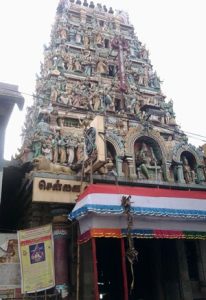
The constituency houses the revered Sri Kalikambal Temple, historically associated with traders and maritime communities. The temple’s festival processions weave through commercial lanes, merging devotion with commerce.
Nearby churches and mosques reflect the plural fabric of old Madras. Religious coexistence defines daily rhythm.
Harbour’s faith is layered like its history.
Labour, Logistics and Livelihood
Port workers, lorry drivers, warehouse handlers and small traders form the constituency’s economic spine. Labour unions maintain active presence.
Wage security, dock modernisation and transport regulation surface during campaign seasons.
Any policy affecting port operations ripples directly into Harbour’s voter sentiment.
Here, economics is immediate.
Civic Priorities
Recurring issues include:
Stormwater drainage in low-lying commercial areas.
Fire safety compliance in wholesale markets.
Housing maintenance in dense residential pockets.
Traffic regulation for goods vehicles.
Urban governance performance is evaluated daily.
Harbour’s electorate does not overlook neglect.
Cuisine and Coastal Pulse
Being close to the coast, Harbour’s culinary identity reflects seafood markets, biryani outlets and traditional messes serving traders and labourers. Tea stalls near Parry’s Corner double as political discussion forums.
Food here is brisk, affordable and rooted in working life.
Political Temperament
Harbour exemplifies inner-city cadre discipline. Booth management, welfare distribution networks and sustained leader visibility shape margins. Electoral surprises are rare; organisational groundwork dominates.
This is a constituency where machinery matters.
What Decides Here
Three determinants shape Harbour’s trajectory:
Cadre Strength and Organisational Depth.
Inner-city mobilisation is decisive.
Urban Service Delivery.
Drainage and infrastructure performance carry weight.
Port Economy Stability.
Labour confidence influences sentiment.
Harbour is not swayed by passing waves. It responds to sustained presence.
Closing Frame
Cargo cranes silhouette against evening sky. Temple bells ring near trading streets. Lorries queue outside warehouses at dawn. Party flags flutter near Fort walls where state policy is framed.
Harbour remains the political dockyard of Chennai — where history docks, ideology unloads and mandate sails outward.
When Harbour votes, it does so with the steadiness of a port tide — deliberate, disciplined and consequential.
In Harbour, mandate is anchored deep.