
Jolarpet: Railway Junction, Yelagiri Breeze and the Borderline Mandate

- Tamil
- Hindi
- Malayalam
- Kannada
- Telugu
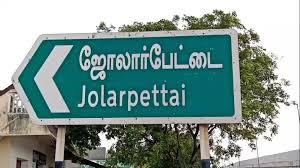
Constituency No. 49 | Tirupattur District | General
Jolarpet is a constituency defined by movement — trains that slice across the state, highways that connect to Karnataka and Andhra Pradesh, and cool hill air descending from nearby Yelagiri.
It is neither entirely rural nor fully urban. It is transit territory, junction politics, border arithmetic.
If Hosur reflects industrial ambition, Jolarpet reflects mobility.
Here, mandate is shaped by tracks, trade and terrain.
Railway Spine of Northern Tamil Nadu
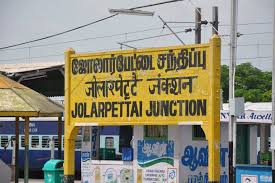
The Jolarpettai Junction is one of Tamil Nadu’s major railway intersections. Long-distance trains linking Chennai to Bengaluru, Hyderabad, Kerala and beyond halt here. The junction is not merely transport infrastructure; it is economic backbone.
Railway employment, vendor networks and transport-linked commerce define the constituency’s town economy. Station modernisation, overbridge construction and traffic regulation are recurring political themes.
In Jolarpet, the whistle of a train carries electoral undertone.
Yelagiri: Hill Air and Tourism Pulse
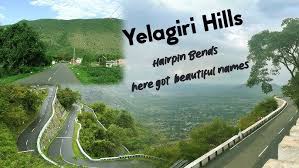
A short drive from the constituency rises Yelagiri Hills, a modest yet beloved hill station. With its hairpin bends, orchards and cool climate, Yelagiri attracts weekend tourists from Chennai and Bengaluru.
Tourism generates ancillary employment — guest houses, eateries, transport services. Road maintenance to hill routes and environmental regulation often enter political discussion.
Jolarpet balances junction bustle with hill calm.
Agrarian Belt and Border Influence
Beyond the railway town, villages cultivate paddy, groundnut and millets. Rain-fed agriculture predominates, supported by tanks and borewells. Water scarcity in lean monsoon years sharpens voter concern.
Proximity to Andhra Pradesh introduces cross-border trade and linguistic overlap. Market flows extend beyond district lines.
Border constituencies often vote with dual awareness — local and interstate.
Temple Tradition and Cultural Identity
Village temples dedicated to Mariamman, Murugan and Ayyanar punctuate rural stretches. Temple festivals during Aadi and Panguni draw participation across caste lines.
The spiritual landscape is understated yet steady. Folk drumming, therukoothu performances and communal feasts reinforce social cohesion.
Faith here moves in rhythm with rural life.
The Electoral Ledger:
Jolarpet has reflected competitive but structured bipolar contests.
2011
Winner: K. C. Veeramani (AIADMK) — 86,005 votes
Second: T. K. Raja (DMK) — 68,861 votes
Third: P. K. Manoharan (DMDK) — 30,822 votes
Margin: 17,144 votes
2016
Winner: K. C. Veeramani (AIADMK) — 82525 votes
Second: Kavitha C (DMK) — 71534 votes
Third: Ponnusamy (PMK) — 17516 votes
Margin: 10991 votes
2021
Winner: Devaraji K.( DMK) — 89,490 votes
Second: K. C. Veeramani (AIADMK)— 88,399 votes
Third: Siva. A (Naam Tamilar Katchi) — 13,328 votes
Margin: 1091 votes
Alliance consolidation shifted the axis.
Jolarpet’s electorate has demonstrated responsiveness to coalition clarity while maintaining competitive discipline.
Civic and Infrastructure Concerns
Primary issues include:
Railway overbridge construction and traffic management.
Drinking water supply during dry seasons.
Road connectivity to Yelagiri hills.
Rural electrification and pump-set reliability.
Transport bottlenecks near the junction frequently surface during campaigns.
Mobility here is expectation, not luxury.
Cuisine and Border Blend
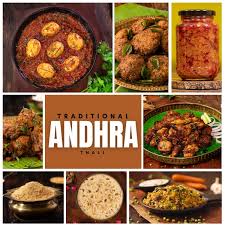
Jolarpet’s culinary profile reflects northern Tamil Nadu’s agrarian palate with Andhra influence — rice meals, tamarind gravies, spicy curries and tea stalls near railway platforms serving travellers and locals alike.
Food here tastes of transit and terrain.
Political Temperament
Jolarpet combines railway workforce mobilisation with rural booth organisation. Campaign strategies often target both unionised labour pockets and agrarian hamlets.
Margins reflect turnout efficiency rather than dramatic ideological swings.
This is a constituency that recalibrates, not revolts.
What Decides Here
Three determinants shape Jolarpet’s electoral trajectory:
Transport Infrastructure Performance.
Railway modernisation and road management matter deeply.
Water Security.
Rain-fed agriculture shapes rural mood.
Alliance Arithmetic.
Margins respond to coalition clarity.
Jolarpet does not drift; it aligns with practical assessment.
Closing Frame
Trains roll in under early morning light. Hill breeze descends from Yelagiri by afternoon. Temple bells echo in village lanes at dusk. Vendors gather near the junction discussing freight schedules and campaign rumours.
Jolarpet stands at the meeting point of rail, road and ridge — a constituency of motion and measured choice.
When it votes, it does so like a train switching tracks — deliberate, decisive and destination-bound.
In Jolarpet, mandate travels with momentum.