
Thiru-Vi-Ka Nagar: Working-Class Heart of North-Central Chennai
 By Nandhini
- Tamil
- Hindi
- Malayalam
- Kannada
- Telugu
Constituency No. 15 | Chennai District | Scheduled Caste (Reserved)
Thiru-Vi-Ka Nagar is one of the most politically revealing constituencies of Chennai because it reflects the city in its lived, crowded, working form rather than its glamorous façade. Named after Thiru. Vi. Kalyanasundaram (Thiru-Vi-Ka)—the Tamil scholar, labour voice and nationalist leader—the constituency carries an identity tied to workers, neighbourhood politics and social justice. It is a dense inner-city seat where civic issues, welfare delivery, public transport and everyday governance dominate political thinking.
Located in the northern-central urban belt of Chennai, Thiru-Vi-Ka Nagar sits between railway corridors, long-established neighbourhoods and busy commercial stretches. It represents a part of Chennai where the city never pauses: streets are full, markets are active, buses move constantly and residential lanes remain alive late into the evening.
Neighbourhoods and Urban Spread
The constituency covers a cluster of densely populated areas such as Vyasarpadi, M.K.B. Nagar, Erukkancheri-side settlements, parts of Pulianthope-linked neighbourhoods and adjoining residential pockets that have grown steadily over decades. These are not recently built suburbs but long-settled urban communities where generations have lived and worked.
Many families trace their roots to labour connected with railways, factories, docks, transport services and small trade. Over time the area has expanded with apartment redevelopments and informal housing extensions, giving the constituency a layered urban character—old houses, rebuilt flats and busy streets existing side by side.
Because population density is high, even small civic disruptions—blocked drains, damaged roads, water supply delays—quickly become political issues.
Railway Influence and Urban Mobility
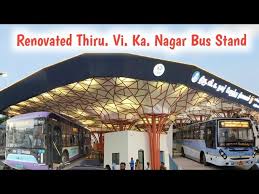
Railways and road networks shape daily life here. Nearby suburban rail lines and bus corridors connect residents to employment centres across Chennai. Thousands of people travel daily to workplaces in the industrial north, the commercial core or the western parts of the city.
This dependence on public transport means mobility issues are central to local discussions. Bus frequency, traffic congestion at junctions, pedestrian safety and interior-road quality often feature prominently in civic complaints.
The constituency functions as a movement hub for workers and students, making transport policy politically significant.
Neighbourhood Commerce
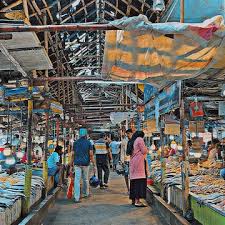
Thiru-Vi-Ka Nagar’s economy is built on neighbourhood commerce rather than large malls or corporate towers. Provision stores, vegetable markets, bakeries, repair shops, tailoring units, pharmacies, tea stalls and small eateries form the backbone of the local economy.
Street-level trade is vibrant. Market lanes stay active throughout the day, with vendors supplying vegetables, groceries and household goods to surrounding colonies. For many residents these small enterprises are both livelihood and social space.
Because commerce is embedded in residential streets, civic management—garbage clearance, traffic regulation, drainage—directly affects the local economy.
Temples and Social Life
Religious life remains an integral part of the constituency’s social rhythm. Temples dedicated to Amman, Murugan, Shiva and Vishnu serve as focal points of neighbourhood identity. Seasonal festivals bring colourful processions, devotional music and community gatherings.
Churches and mosques across the broader neighbourhood belt reflect Chennai’s diverse social composition. Religious observances often double as cultural events where residents meet, organise and celebrate local traditions.
Education and Social Aspiration
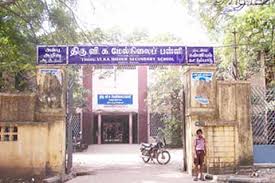
Education is a powerful aspiration in Thiru-Vi-Ka Nagar. Government schools, aided institutions and private schools serve thousands of students from surrounding colonies. Coaching centres and tuition classes are common, reflecting families’ determination to push the next generation toward better opportunities.
Youth employment and educational access therefore influence voter sentiment strongly. Households often judge political leadership by whether opportunities expand for students and young workers.
Civic Pressures of Dense Urban Living
The constituency faces several civic challenges typical of Chennai’s older inner-city neighbourhoods.
Traffic congestion at junctions and narrow streets can slow movement during peak hours. Waterlogging during heavy rains remains a recurring issue because dense construction strains drainage networks.
Waste management, road maintenance and sewage infrastructure also demand constant attention.
Residents expect visible action from elected representatives, and civic performance often shapes electoral perception more than abstract ideological debates.
Electoral Ledger
2011
Winner — V. Neelakandan (AIADMK) — 66,987 votes
Runner-up — K. Selvam (DMK) — 55,612 votes
Third — R. Rajan (DMDK) — 19,845 votes
Winning Margin — 11,375 votes
2016
Winner — P. Sivakumar @ Thayagam Kavi (DMK) — 61744 votes
Runner-up — V. Neelakandan (AIADMK) — 58422 votes
Third — Suganthi (CPM) — 5702 votes
Winning Margin — 3322 votes
2021
Winner — P. Sivakumar (DMK) — 81727 votes
Runner-up — Kalyani P L (AIADMK) — 26714 votes
Third — Illavanji Dr.R (Naam Tamilar Katchi) — 10921 votes
Winning Margin — 55013 votes
What Decides Thiru-Vi-Ka Nagar
Several factors typically influence voting behaviour in this constituency:
Civic services: Drainage, waste management, road repair and water supply remain constant concerns.
Public transport: Reliable bus connectivity and safe commuting routes matter to thousands of daily travellers.
Welfare delivery: Social welfare schemes and public assistance programmes play an important role in voter expectations.
Housing density: Redevelopment, housing quality and neighbourhood infrastructure influence public opinion.
Local accessibility: Voters favour representatives who maintain strong presence within neighbourhood communities.
Closing Frame
Thiru-Vi-Ka Nagar is a constituency where Chennai’s democratic pulse is strong and visible. It is a place of dense streets, resilient neighbourhoods and hardworking families navigating the pressures of metropolitan life. Politics here is not distant; it is experienced daily through water taps, bus stops, school gates and market lanes.
In that sense, when Thiru-Vi-Ka Nagar votes, it speaks as one of the authentic voices of urban Chennai—practical, vigilant and deeply connected to the everyday realities of the city.