

New Delhi, Nov 25:
India has urged the United Nations Security Council (UNSC) to establish a responsible approach to the use of artificial intelligence and other emerging technologies in conflict situations, emphasising that human oversight, international law and respect for national sovereignty must remain central.
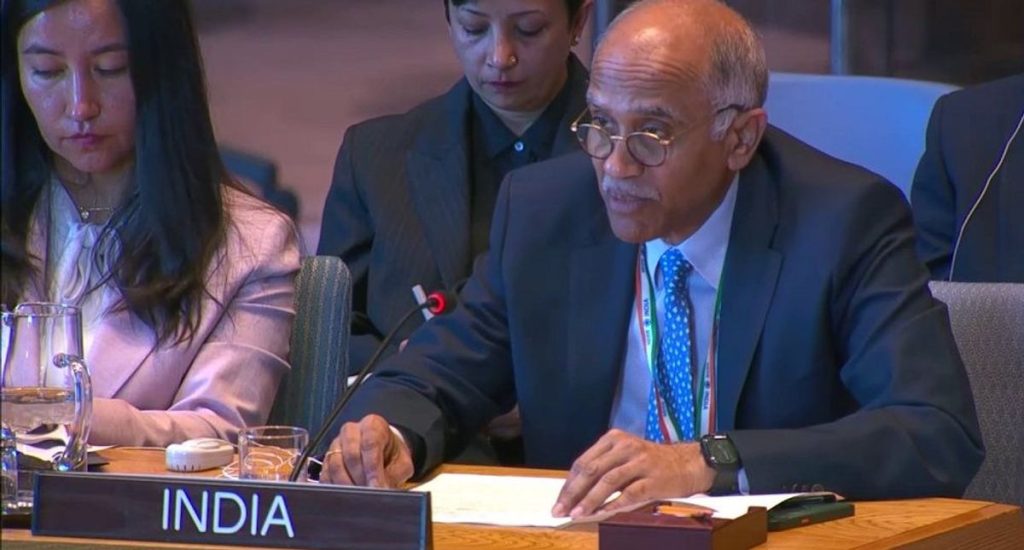
Addressing a high-level open debate on ‘Maintenance of International Peace and Security: Conflict Resolution in an Era of Rapid Technological Change’ at the UNSC on Tuesday, India’s Permanent Representative to the United Nations, Ambassador Parvathaneni, highlighted how technological developments are changing the character of warfare and the broader international security environment.
He observed that artificial intelligence is increasingly being integrated into military operations, intelligence gathering and civilian applications, fundamentally altering the challenges associated with maintaining global peace and security.
India believes that the international community’s response should be guided by four key principles, the ambassador said.
Technology must primarily serve humanity and contribute to peace. Its deployment in conflict situations should be responsible, respect national sovereignty and comply with international law. Governments must also address the dangers arising from the misuse of emerging technologies, while ensuring that technological progress does not widen existing global inequalities.
The Indian representative noted that these technologies could also offer significant benefits to international peacekeeping and conflict prevention efforts.
AI-based analytical systems, satellite imagery and digital platforms could help the United Nations identify potential crises at an early stage, improve emergency responses, facilitate mediation and make peacekeeping operations more effective and secure.
India also drew attention to the ethical and legal questions surrounding lethal autonomous weapons systems. It reiterated its commitment to addressing these concerns through the Convention on Certain Conventional Weapons (CCW).
The ambassador emphasised that decisions involving the use of such weapons must remain subject to meaningful human judgment and supervision. Responsibility for their deployment and consequences, he maintained, must ultimately rest with human beings.
Another major concern raised by India was the potential exploitation of artificial intelligence by terrorist organisations and other non-state actors.
The ambassador warned that malicious use of emerging technologies could create serious security threats. He also cautioned that incomplete, inaccurate or deliberately manipulated information processed through AI systems could distort decision-making and undermine the effectiveness of security responses.
India’s position was that technological innovation should strengthen international cooperation and collective security rather than create new vulnerabilities or deepen divisions among nations.