

Palani: Murugan’s Sacred Hill, Pilgrimage Power and the Spiritual Heart of the Western Ghats
 By Nandhini
- Tamil
- Hindi
- Malayalam
- Kannada
- Telugu
Constituency No. 127 | Dindigul District | General
Palani is one of the most sacred landscapes in Tamil Nadu. Nestled at the foothills of the Western Ghats in Dindigul district, the constituency draws its identity from the towering hill shrine of Lord Murugan — a pilgrimage centre that attracts millions of devotees every year. The temple here is not merely a religious site but a cultural force that shapes the rhythm of life, economy and politics in the region.
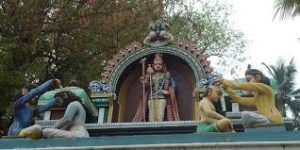
The shrine atop the hill, the Palani Murugan Temple, is revered as one of the Arupadai Veedu, the six sacred abodes of Lord Murugan celebrated in Tamil devotional tradition. For centuries pilgrims have climbed the steps of this hill to worship Dhandayuthapani Swamy, the youthful ascetic form of Murugan.
From the temple bells echoing across the valley to the bustling markets selling offerings and souvenirs, Palani is a town where faith shapes the everyday life of the constituency.
Murugan’s Hill Shrine

The Palani Murugan temple rises on a granite hill nearly 500 feet above the town. Pilgrims traditionally climb hundreds of steps to reach the sanctum, though modern infrastructure such as rope cars and winch systems now assist devotees in reaching the hilltop.
The deity worshipped here is Dhandayuthapani, depicted as a youthful ascetic holding a staff. The shrine’s origins are deeply connected with Tamil devotional literature and ancient legends associated with Murugan.
According to popular tradition, the name “Palani” is derived from the phrase “Pazham Nee” — meaning “You are the fruit,” reflecting the mythological story of Murugan renouncing a divine fruit offered by his parents Shiva and Parvati.
This story remains central to the spiritual identity of the temple.
Pilgrimage Economy

The temple attracts pilgrims throughout the year, with massive crowds gathering during festivals such as Thaipusam and Panguni Uthiram. Devotees arrive from across Tamil Nadu and neighbouring states, transforming the town into one of the most vibrant pilgrimage centres in southern India.
Pilgrimage activity sustains a large local economy. Shops selling religious offerings, lodges for visitors, transport services and food stalls all depend on the steady stream of devotees.
Temple administration also supports numerous workers and services linked to the pilgrimage infrastructure.
Thus the temple economy forms the backbone of Palani’s livelihood structure.
The Famous Panchamirtham

One of the most iconic offerings associated with Palani is Panchamirtham, the sweet prasadam made from banana, jaggery, honey, ghee and cardamom.
Prepared in large quantities at the temple, this unique offering has earned widespread recognition and even holds a geographical indication status.
Pilgrims rarely leave Palani without carrying packets of Panchamirtham, making it both a religious offering and a cultural symbol of the shrine.
The aroma of the sweet mixture drifting through temple streets forms part of the sensory experience of visiting Palani.
Western Ghats & Hill Landscape
Palani lies at the edge of the Palani Hills, the mountain range that rises toward the hill stations of Kodaikanal and surrounding highlands.
These hills influence the region’s climate and agriculture. Streams descending from the hills nourish farmland in the surrounding plains, while the forests and slopes create a dramatic backdrop to the town.
The presence of the mountains enhances Palani’s spiritual aura, reinforcing the symbolism of Murugan as the deity of hills and warriors in Tamil tradition.
Temples & Sacred Geography
While the Murugan temple dominates the town, several other shrines add to the spiritual landscape of the constituency. Temples dedicated to Shiva, Amman and Vishnu exist across the surrounding villages.
Pilgrims visiting Palani often extend their journey to other sacred sites in the Dindigul and Madurai regions.
Religious festivals in village temples also play an important role in sustaining local cultural traditions.
Faith therefore permeates the entire constituency.
Agriculture Around the Town
Beyond the pilgrimage economy, agriculture remains an important livelihood in the surrounding villages. Farmers cultivate crops such as banana, coconut, sugarcane and vegetables in the fertile lands near the foothills.
Markets in Palani town serve as trading centres for these agricultural products.
Thus the constituency combines a religious economy with a traditional farming landscape.
Electoral Ledger:
2011
Winner — K. S. N. Venugopalu (AIADMK) — 95,672 votes
Runner-up — M. Senthil Kumar (DMK) — 79,884 votes
Third — R. Kumar (DMDK) — 24,731 votes
Winning Margin — 15,788 votes
2016
Winner — I. P. Senthil Kumar (DMK) — 100045 votes
Runner-up — Kumarasamy P (AIADMK) — 74459 votes
Third — Rajamanickam V (CPM) — 9687 votes
Winning Margin — 25586 votes
2021
Winner — I. P. Senthil Kumar (DMK) —108,566 votes
Runner-up — Ravi Manoharan K ( AIADMK) – 78,510 votes.
Third — Vinoth Rajasekaran G (Naam Tamilar Katchi – NTK) with 7,656 votes
Winning Margin — 30056 votes
Electoral debates in the constituency often combine local development issues with concerns related to temple administration and pilgrimage infrastructure.
Civic and Development Concerns
Residents frequently highlight several development priorities:
better management of pilgrim traffic during festivals
infrastructure upgrades around the temple hill
improved roads and public transport
support for agriculture and local trade
Balancing tourism growth with town infrastructure remains an ongoing challenge.
Political Temperament
The electorate includes temple workers, traders, farmers, tourism workers and small business owners. Political mobilisation often reflects the concerns of both the pilgrimage economy and the rural hinterland.
Candidates frequently highlight development projects linked to tourism and agriculture.
The constituency therefore blends spiritual symbolism with practical development concerns.
What Decides Palani
Three factors often shape electoral outcomes here:
Pilgrimage economy
Temple-related livelihoods influence local sentiment.
Tourism infrastructure
Facilities for pilgrims remain a major public issue.
Agricultural livelihoods
Farmers from surrounding villages form a crucial voting bloc.
Palani voters therefore balance spiritual pride with expectations of development.
Closing Frame
At dawn the bells of the Murugan temple echo across the hills of Palani as pilgrims begin their climb toward the sacred shrine. In the markets below, vendors prepare offerings while farmers bring produce from surrounding villages.
The constituency stands as one of Tamil Nadu’s most powerful symbols of faith.
When Palani votes, the verdict reflects the voice of a region where devotion, pilgrimage and the rhythms of rural life come together beneath the shadow of Murugan’s sacred hill.