
Pallavaram: Gateway Suburb, GST Corridor Growth and the Expanding Edge of Chennai
 By Nandhini
- Tamil
- Hindi
- Malayalam
- Kannada
- Telugu
Constituency No. 30 | Chengalpattu District | General
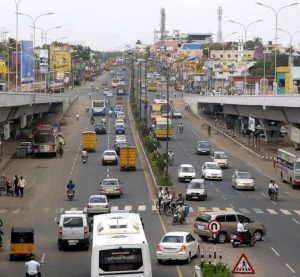
Pallavaram stands today as one of the fastest-transforming suburban constituencies on the southern edge of Chennai. Once a modest cantonment town surrounded by rocky hills and lakes, it has evolved into a major residential and commercial hub along the busy Grand Southern Trunk Road, the historic highway that connects Chennai with southern Tamil Nadu.
The constituency forms part of the rapidly urbanising belt stretching from Guindy through Tambaram toward Chengalpattu. Over the past two decades Pallavaram has witnessed explosive growth driven by its proximity to the airport, IT corridors, railway connectivity and the expanding urban footprint of Chennai.
Apartment towers, shopping complexes, hospitals and educational institutions now dominate the skyline. Yet the old town’s historical layers — ancient hill temples, colonial cantonment traces and long-established neighbourhoods — still survive within this fast-changing urban landscape.
Pallavaram therefore represents the modern suburban face of Chennai: energetic, crowded, commercially vibrant and constantly expanding.
Ancient Hill and Historical Roots
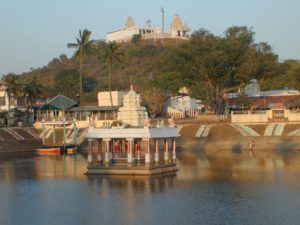
The name Pallavaram itself reflects the region’s deep antiquity. Scholars link it to the Pallava dynasty, suggesting that the area may have been associated with settlements during the early period when the Pallavas ruled large parts of northern Tamil Nadu.
The rocky hill overlooking the town is one of its most distinctive natural landmarks. At its summit stands the Thiruneermalai Ranganatha Perumal Temple, a revered shrine located a short distance away but spiritually connected to the region. Thiruneermalai is one of the Divya Desams, sacred Vishnu temples celebrated in Tamil Vaishnavite tradition.
The hill landscapes around Pallavaram once formed part of a chain of ancient settlements and religious sites scattered across the southern outskirts of historic Madras.
Cantonment and Colonial Footprints
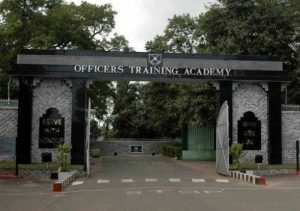
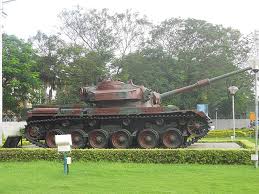
During the British era, Pallavaram gained importance as a military cantonment because of its location along the southern road leading out of Madras. The open plains and strategic positioning made it suitable for military establishments.
Remnants of colonial buildings and cantonment layouts survived well into the twentieth century, shaping the early urban form of the town.
This military heritage contributed to the gradual development of Pallavaram as an organised township long before suburban expansion accelerated in recent decades.
GST Road Commercial Corridor
Today Pallavaram’s most defining feature is its location along the bustling GST Road corridor, one of the busiest urban highways in Tamil Nadu. Shops, showrooms, banks, restaurants and commercial establishments line both sides of the road.
The corridor has become a major shopping and service hub for residents of surrounding suburbs. Retail outlets selling electronics, textiles, jewellery and household goods attract customers from neighbouring localities.
Commercial complexes and small business centres have multiplied rapidly along this stretch, transforming Pallavaram into an active suburban marketplace.
Railway Lifeline
The constituency is served by the Chennai Suburban Railway, particularly the busy Beach–Tambaram–Chengalpattu line. Pallavaram railway station handles thousands of commuters every day travelling to workplaces across Chennai.
This railway connectivity has played a decisive role in turning the locality into a residential hub. Office-goers, students and professionals rely heavily on the suburban trains for daily commuting.
The station area therefore remains one of the busiest nodes in the constituency.
Airport Proximity
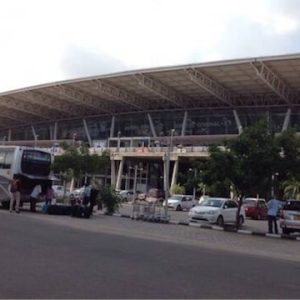
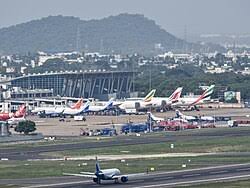
One of Pallavaram’s biggest advantages is its proximity to Chennai International Airport, located just a few kilometres away in Meenambakkam.
Airport access has encouraged the growth of hotels, transport services, logistics businesses and residential developments catering to travellers and professionals.
The airport also makes Pallavaram strategically attractive for business establishments and real estate investors.
Residential Boom
Over the last two decades Pallavaram has witnessed massive residential expansion. Apartment complexes and gated communities now occupy areas that once consisted of open land and small villages.
Middle-class families, IT professionals and airport employees increasingly choose the locality because of its connectivity and relatively affordable housing compared to central Chennai.
Neighbourhoods such as Pammal, Chromepet fringes and surrounding areas have seen rapid development with new flats, schools and shopping centres.
Urban planners now view Pallavaram as a crucial node in the expanding Chennai metropolitan region.
Hospitals, Education and Services
Healthcare infrastructure has grown steadily across the constituency. Private hospitals, diagnostic centres and speciality clinics serve residents from surrounding suburbs.
Educational institutions ranging from schools to colleges attract students from across the region. Coaching centres and training institutes also operate here due to the dense student population.
Restaurants, bakeries and small eateries line the busy streets, reflecting the commercial vibrancy of the suburb.
Thus Pallavaram functions as both a residential zone and a service hub within the metropolitan ecosystem.
Temples and Religious Landscape
Despite intense urbanisation, temples continue to play an important role in the cultural life of the constituency. Among the prominent shrines in the region is the Pallavaram Shiva Temple, along with numerous Amman and Murugan temples across neighbourhoods.
Temple festivals draw large crowds and provide continuity with the older traditions of the town.
Religious diversity is also visible through churches and mosques serving the multi-community population of the suburb.
Electoral Ledger:
2011
Winner — I. Karunanithi (AIADMK) — 92,847 votes
Runner-up — T. M. Anbarasan (DMK) — 78,603 votes
Third — S. Prabhakaran (DMDK) — 27,914 votes
Winning Margin — 14,244 votes
2016
Winner — Karunanithi I (DMK) — 112891 votes
Runner-up — Saraswathi C R (AIADMK) — 90726 votes
Third — Veeralakshmi C (MDMK) — 14083 votes
Winning Margin — 22165 votes
2021
Winner — Karunanithi I (DMK ) with 126,427 votes.
Runner-up — Rajendran (AIADMK ) with 88,644 votes.
Third — Minishree Kanagaraj (NTK – Naam Tamilar Katchi) with 21,362 votes
Winning Margin — 37,783 votes
Urban development issues often influence electoral debates in the constituency.
Civic and Development Concerns
Residents frequently raise several urban challenges:
traffic congestion along GST Road
drainage and flood management during heavy rains
expansion of suburban transport infrastructure
preservation of lakes and open spaces
Managing the pressures of rapid urban growth remains a major challenge.
Political Temperament
The electorate consists largely of middle-class families, professionals, traders and service workers. Urban issues such as infrastructure, housing and transport dominate political discourse.
Campaigns frequently focus on metro expansion, road improvements and civic amenities.
Because of its proximity to Chennai’s commercial corridors, Pallavaram voters often prioritise development-oriented policies.
What Decides Pallavaram
Three factors shape electoral outcomes here:
Urban infrastructure
Roads, drainage and public transport remain crucial.
Residential expansion
New housing developments influence voter demographics.
Commercial growth
Retail and service sectors shape local economic priorities.
Pallavaram voters therefore judge candidates largely on urban governance and development delivery.
Closing Frame
Along the bustling GST Road, the lights of shops, hospitals and apartment towers reflect the relentless energy of suburban Chennai. Trains glide into Pallavaram station carrying thousands of commuters while aircraft descend toward the nearby airport.
The constituency stands at the gateway between old Madras and the expanding metropolis.
When Pallavaram votes, the verdict echoes the aspirations of a suburb racing toward the future while still holding fragments of its ancient past.