

Pennagaram: Hogenakkal Gateway, Pennaiyar Valley and the Hill-River Frontier of Dharmapuri
 By Nandhini
- Tamil
- Hindi
- Malayalam
- Kannada
- Telugu
Constituency No. 58 | Dharmapuri District | General
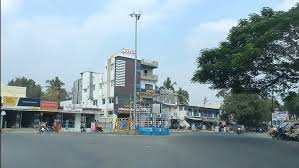
Pennagaram sits in one of the most striking landscapes of northern Tamil Nadu. Located in Dharmapuri district near the Karnataka border, the constituency lies between rugged hill ranges and the dramatic river gorge that leads to the famous waterfalls of the region. Agriculture, forest edges, tourism and cross-border trade together shape the identity of this frontier constituency.
The town itself functions as an important market centre linking villages scattered across the uplands and river valleys. Farmers, traders and transport operators converge here before goods move toward Dharmapuri and neighbouring districts.
But Pennagaram is best known for something beyond its markets and fields — it is the gateway to one of the most spectacular natural landmarks in Tamil Nadu: the roaring cascades of the Hogenakkal Falls.
The constituency therefore combines natural beauty with a rugged agricultural economy and the cultural traditions of northern Tamil Nadu’s hill-river frontier.
Gateway to Hogenakkal
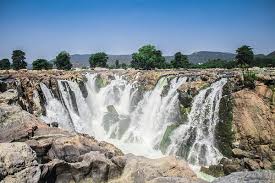
Just a short distance from Pennagaram lies the dramatic gorge of the Cauvery River, where the river plunges through rocky terrain to form the spectacular Hogenakkal waterfalls. Often called the “Niagara of India,” the site attracts tourists from across the country.
The roaring cascades, swirling coracle boats and mist rising from the gorge create one of the most iconic landscapes in Tamil Nadu.
Tourism linked to the waterfalls has brought economic activity to the region. Local communities engage in boating services, small trade and food stalls catering to visitors.
Pennagaram therefore functions as the principal access town for travellers heading toward Hogenakkal.
Cauvery Valley Landscape


The Cauvery river defines the geography of the region around Pennagaram. Flowing from Karnataka into Tamil Nadu, the river cuts through rocky hills before spreading across the plains.
Along its course the river forms fertile pockets where farmers cultivate crops such as paddy, sugarcane and vegetables. In other areas dryland farming dominates, with crops such as millets and groundnut grown according to rainfall patterns.
The river also provides water for irrigation tanks and drinking supply across surrounding villages.
Thus the Cauvery valley remains central to the ecological and economic life of the constituency.
Forests and Hill Terrain

Pennagaram lies close to the forested hill ranges that extend toward the Eastern Ghats and the Karnataka border. These forests provide grazing grounds, minor forest produce and ecological balance for the region.
The rugged terrain creates scenic landscapes where rocky hills overlook river valleys and cultivated fields.
For generations, villages here have adapted their livelihoods to this mixed environment of agriculture and forest resources.
Temples and Local Traditions

Religious traditions remain an important part of life in Pennagaram. Numerous temples dedicated to Amman, Murugan and Shiva stand across the villages.
Among the shrines in the region is the Chennakesava Perumal Temple Pennagaram, visited by devotees from nearby areas during festival seasons.
Amman temple festivals in particular attract large gatherings with colourful processions, folk music and community celebrations.
These religious events strengthen social bonds across rural communities.
Agriculture and Rural Economy


Agriculture remains the backbone of the constituency’s economy. Farmers cultivate crops such as ragi, millets, groundnut and pulses depending on rainfall and irrigation availability.
Cattle and goat rearing supplement agricultural income for many households.
Weekly markets in Pennagaram town serve as trading centres where farmers sell produce and traders distribute goods to neighbouring districts.
Despite the challenging terrain, rural communities have built a resilient economy based on agriculture and trade.
Electoral Ledger:
2011
Winner — P. N. Periannan (DMK) — 74,215 votes
Runner-up — K. P. Munusamy (AIADMK) — 72,514 votes
Third — G. K. Mani (PMK) — 28,667 votes
Winning Margin — 1,701 votes
2016
Winner — Inbasekaran P N P (DMK) — 76848 votes
Runner-up — Anbumani ramadoss (PMK) — 58402 votes
Third — Munusamy K P (ADMK) — 51687 votes
Winning Margin — 18446 votes
2021
Winner — G. K. Mani (PMK) — 1,06,123votes
Runner-up — Inbasekaran. P N P(DMK) — 84937 votes
Third — Tamilazhagan R (Naam Tamilar Katchi) — 8,945 votes
Winning Margin — 21186 votes
The constituency often witnesses competitive contests reflecting the political dynamics of northern Tamil Nadu.
Civic and Development Concerns
Residents frequently highlight several development priorities:
irrigation and water management
better infrastructure for tourism around Hogenakkal
improved road connectivity to remote villages
employment opportunities for youth
Balancing tourism development with environmental protection remains a key issue.
Political Temperament
The electorate consists largely of farmers, traders, tourism workers and transport operators. Village networks play a strong role in political mobilisation.
Campaigns often focus on agricultural welfare, infrastructure development and tourism potential.
Candidates with strong grassroots connections tend to gain support in the constituency.
What Decides Pennagaram
Three factors usually shape electoral outcomes:
Agriculture and water
Farmers depend heavily on Cauvery irrigation.
Tourism economy
Hogenakkal-linked livelihoods influence public sentiment.
Infrastructure needs
Roads and rural development remain crucial.
Pennagaram voters therefore balance environmental concerns with economic opportunities.
Closing Frame
Along the rocky course of the Cauvery, the thunder of Hogenakkal’s waterfalls echoes across the hills while farmers cultivate fields in the surrounding valleys. Markets bustle in Pennagaram town as travellers pass through on their way to the river gorge.
The constituency stands where hills, river and rural life converge.
When Pennagaram votes, the verdict reflects the voice of a landscape shaped by water, wilderness and the resilient communities that live along the banks of the Cauvery.