

Pollachi: Coconut Country, Ghats Gateway and the Agrarian Heart of Western Tamil Nadu
 By Nandhini
- Tamil
- Hindi
- Malayalam
- Kannada
- Telugu

Constituency No. 123 | Coimbatore District | General
Pollachi lies at the southern edge of Coimbatore district where the fertile plains of the Kongu region meet the rising slopes of the Western Ghats. Known across Tamil Nadu for its coconut groves, cattle markets and agricultural prosperity, Pollachi represents one of the most distinctive agrarian landscapes in the state.
For generations the town has served as a trading centre linking the rich farmlands of the Pollachi region with the markets of Coimbatore, Tiruppur and Kerala. Coconut plantations stretch across the countryside while bullock carts and trucks once carried copra, jaggery and agricultural produce to bustling markets.
Pollachi is also the gateway to several scenic hill and forest regions of the Western Ghats. Roads from the town lead toward Valparai, Top Slip and the Anamalai Tiger Reserve, making it an important junction between plains agriculture and mountain landscapes.
Thus Pollachi stands as a constituency where agriculture, trade and nature combine to create a unique identity within western Tamil Nadu.
Land of Coconut Groves
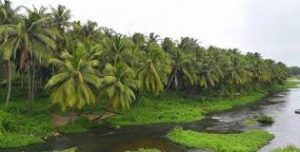
Pollachi’s most defining feature is its vast stretches of coconut plantations. The region’s soil, rainfall patterns and irrigation sources make it ideal for coconut cultivation.
Coconut trees dominate the landscape for miles, producing copra, coconut oil and tender coconuts that are sold across Tamil Nadu and neighbouring states. The town’s coconut markets are among the busiest in the region, attracting traders from many districts.
The coconut economy supports thousands of farmers, traders, transporters and labourers. Even today Pollachi is often referred to as one of the coconut capitals of Tamil Nadu.
Gateway to the Western Ghats

Pollachi sits near the foothills of the Western Ghats, and the road from the town climbs dramatically toward the hill station of Valparai through a series of winding hairpin bends.
The forests of the nearby Anamalai Tiger Reserve form one of the most biodiverse landscapes in southern India. Elephants, gaur and numerous bird species inhabit these forests.
Tourists travelling toward Top Slip and Valparai usually pass through Pollachi, making the town a major transit point for eco-tourism in the region.
The presence of forests and mountains gives Pollachi a scenic character rarely found in agricultural constituencies.
Markets and Agricultural Trade

Pollachi’s markets have historically been among the most vibrant in western Tamil Nadu. The town hosts large agricultural markets where coconuts, jaggery, vegetables and livestock are traded.
One of the notable commercial traditions of the town has been the cattle market, where farmers from surrounding districts bring livestock for sale.
Agricultural trading networks radiating from Pollachi connect the region with Coimbatore, Tiruppur and Kerala markets.
These markets continue to sustain the local economy and maintain Pollachi’s reputation as an agrarian trading hub.
Temples and Spiritual Traditions

Pollachi and its surrounding villages contain several temples that attract devotees from across the region. Among the prominent shrines nearby is the Masani Amman Temple, one of the most revered Amman temples in the Kongu region.
The temple draws thousands of devotees seeking justice and blessings from the deity, and its festivals attract large gatherings.
Village temples dedicated to Murugan, Shiva and local guardian deities also play important roles in community life. Temple festivals remain vibrant cultural events bringing together rural communities.
Industrial and Educational Legacy

While Pollachi is primarily known for agriculture, it has also contributed to the educational and industrial development of the Kongu region. A notable figure associated with the town is N. Mahalingam, an influential industrialist, educationist and philanthropist who played a key role in establishing institutions that promoted technical education and industrial growth in western Tamil Nadu.
His contributions helped strengthen the region’s educational infrastructure and encouraged entrepreneurship across the Kongu belt.
Pollachi therefore reflects not only agrarian prosperity but also a tradition of enterprise and philanthropy.
Electoral Ledger:
2011
Winner — M. Jayaraman (AIADMK) — 1,14,635 votes
Runner-up — S. Muthukumar (DMK) — 90,672 votes
Third — V. Selvaraj (DMDK) — 28,974 votes
Winning Margin — 23,963 votes
2016
Winner — Pollachi V Jayaraman (AIADMK) — 78553 votes
Runner-up — Tamilmani R (DMK) — 65185 votes
Third — Nithyanandhan K (KMDK ) — 7722 votes
Winning Margin — 13368 votes
2021
Winner — Pollachi V. Jayaraman (AIADMK) — 80567 votes
Runner-up — Dr. K. Varadarajan (DMK) — 78842 votes
Third — Sathishkumar V.T (MNM) — 7589 votes
Winning Margin — 1725 votes
Pollachi’s electoral contests often reflect the broader political dynamics of the Kongu region.
Civic and Development Concerns
Residents frequently highlight several priorities:
irrigation and water security for coconut plantations
better road infrastructure linking villages
support for agricultural markets and farmers
sustainable tourism development in nearby forest regions
Balancing agricultural prosperity with ecological preservation remains a key challenge.
Political Temperament
The electorate consists largely of farmers, traders, agricultural labourers and small entrepreneurs. The Kongu region’s entrepreneurial spirit strongly influences political attitudes in the constituency.
Campaigns often focus on agricultural policies, market access and economic development.
Candidates who maintain strong connections with farming communities tend to gain support.
What Decides Pollachi
Three factors usually shape electoral outcomes:
Agricultural prosperity
Coconut farmers form the backbone of the electorate.
Trade networks
Markets and transport routes influence economic priorities.
Regional development
Education, industry and tourism shape expectations.
Pollachi voters therefore balance agricultural interests with broader economic aspirations.
Closing Frame
Across the fertile lands of Pollachi, coconut palms sway beneath the shadow of the Western Ghats while traders gather in bustling markets and pilgrims visit temples nestled in the foothills. Roads from the town wind upward into forested mountains, linking agriculture with nature’s grandeur.
The constituency stands as one of the most distinctive landscapes in western Tamil Nadu.
When Pollachi votes, the verdict reflects the voice of a region where coconut groves, mountain forests and entrepreneurial spirit continue to shape the future.