

Ponneri: Wetland Frontier, Chennai’s Northern Approach and the Changing Face of Tiruvallur
 By Nandhini
- Tamil
- Hindi
- Malayalam
- Kannada
- Telugu
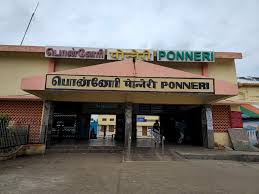
Constituency No. 2 | Tiruvallur District | Scheduled Caste (Reserved)
Ponneri is one of the most strategically placed constituencies in northern Tamil Nadu. Though still rooted in village life, tanks, fields and temple culture, it stands close enough to Chennai to feel the pull of the metropolis every day. It lies on the northern approach to the capital, within reach of the Ennore–Kattupalli industrial-port belt, the suburban rail network and the road corridors that move toward Andhra Pradesh. That gives Ponneri a special identity: it is neither fully rural in the old sense nor fully absorbed into metropolitan Chennai. It is a constituency in transition.
Historically, Ponneri belonged to a water-fed agrarian landscape shaped by tanks, channels, low-lying fields and the larger ecological influence of the Pulicat lake region. Agriculture, inland fishing, cattle rearing and village trade sustained the area for generations. But over time, the expansion of northern Chennai, the growth of port-linked industry, power projects and logistics movement have changed the economic context of the constituency. Land values, employment patterns and development expectations have all shifted.
Yet Ponneri is not merely a growth frontier. It is also a social constituency with a strong rural memory, a reserved seat where welfare delivery, agrarian concerns, caste equations, local leadership and development promises all matter sharply. That is what makes it politically important.
Between Wetlands and Industrial Corridors

The geography of Ponneri is central to its identity. It lies in a belt where water bodies and coastal plains historically shaped cultivation and settlement. The region’s tanks and irrigation systems once formed the backbone of its agrarian economy, while the nearby Pulicat ecosystem influenced fishing and seasonal livelihoods. Even today, despite urban and industrial pressure, the landscape retains this low-lying, water-sensitive character.
That is both an asset and a vulnerability. Water bodies support cultivation and recharge, but they also make the region vulnerable to flooding, encroachment and ecological damage if development is poorly planned. In Ponneri, the old geography has not disappeared. It waits underneath the new one.
Chennai Proximity and Northern Expansion
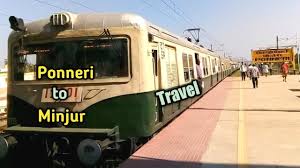
Ponneri’s closeness to Chennai has steadily increased its importance. It lies in the wider northern growth zone linked to Minjur, Ennore, Athipattu and the port-industrial stretch. This means many residents now live within a rural or semi-rural constituency while depending on industrial and service employment generated by the expanding metropolis.
The suburban rail link has made this even more significant. Ponneri is connected to Chennai through the northern railway corridor, and that daily commuter pattern has helped reshape the constituency’s aspirations. Families think not only in terms of crop cycles and local markets but also in terms of jobs, transport, education and urban opportunity.
Agriculture Still Matters
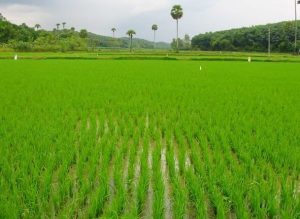
Despite industrial expansion nearby, agriculture remains an important part of Ponneri’s economy. Paddy cultivation survives in many villages, supported by irrigation tanks, monsoon patterns and local water systems. Groundnut, vegetables and other crops are also cultivated in parts of the constituency. Dairy activity and poultry add to household incomes in some areas.
This agricultural base gives the seat social depth. Ponneri is not just a labour-supplying belt for nearby industry; it still has a village economy of its own. Farmers and agricultural workers therefore remain politically significant, and issues like irrigation, tank restoration, crop support and land-use change continue to matter.
Fishing, Coast and Water-Based Livelihoods

Because of its wider proximity to the Pulicat-lagoon influence and coastal settlements in the northern belt, Ponneri also belongs to a broader ecology where fishing and water-linked livelihoods have historically mattered. Even where the constituency is not uniformly coastal in the classic sense, the nearby brackish-water and wetland environment has shaped the economy and social memory of the region.
This creates another layer of political complexity. Development cannot be judged only by roads and industry. It must also be judged by what it does to wetlands, fisheries, tanks and water movement.
Temples and Rural Cultural Life

Ponneri retains a strong temple-centred rural culture. The town and surrounding villages have shrines dedicated to Shiva, Vishnu, Murugan, Mariamman and village guardian deities, and annual festivals continue to serve as major social gatherings. These are not merely religious events. They are occasions of village identity, kinship reaffirmation and local prestige.
The Agastheeswarar temple tradition in the area is often cited among the better-known sacred references of the town, while countless local shrines across the constituency anchor neighbourhood and village life. Even in a constituency increasingly shaped by metropolitan influence, ritual life remains deeply local.
Markets, Roads and Everyday Commerce
Ponneri town functions as a market centre for surrounding villages. Grocery trade, fertiliser shops, small textile outlets, eateries, transport-linked businesses and local services keep the commercial core active. Tea stalls and roadside hotels remain important social spaces where local politics is debated in everyday language.
The constituency also benefits from road connectivity to Minjur, Tiruvallur, Red Hills and Chennai’s northern edge, and this matters economically. The better the road network, the more the constituency can connect agriculture, labour and trade to the wider northern corridor.
What Decides Ponneri
Several forces tend to shape electoral outcomes in Ponneri:
Rural welfare and reserved-seat representation. As an SC-reserved constituency, representation, welfare delivery and social justice politics carry weight.
Agriculture and water. Tank restoration, irrigation, flood control and protection of agricultural land remain important.
Employment and industrial access. The proximity of industrial and port-linked zones raises expectations of jobs and infrastructure.
Transport connectivity. Rail and road access matter to commuters and traders.
Ecological anxiety. Wetlands, encroachment, pollution and flooding are not abstract issues here.
Ponneri often votes as a constituency caught between preservation and expansion.
Electoral Ledger
2011
Winner — Pon Raja (AIADMK) — 95,321 votes
Runner-up — K. Parthasarathy (DMK) — 78,437 votes
Third — R. Karthikeyan (DMDK) — 24,118 votes
Winning Margin — 16,884 votes
2016
Winner — P. Balaraman (AIADMK) — 95979 votes
Runner-up — Parimalam K DR. (DMK) — 76643 votes
Third — Pandian A (PMK) — 9586 votes
Winning Margin — 19336 votes
2021
Winner — Durai Chandrasekar (INC) — 94528 votes
Runner-up — P. Balaraman (AIADMK) — 84839 votes
Third — Maheswari. A (Naam Tamilar Katchi) — 19027 votes
Winning Margin — 9689 votes
Closing Frame
Ponneri is one of those constituencies that reveal how Tamil Nadu is changing. It still has tanks, fields, temple festivals and agrarian rhythms. But it also has rail-bound commuters, industrial expectations and the creeping pressure of metropolitan expansion. It stands near Chennai, but not inside it; near the coast, but not defined by it alone; still rural, but no longer untouched.
When Ponneri votes, it speaks as a frontier seat of northern Tamil Nadu — one where wetlands, villages, industry and the shadow of Chennai meet in the same political field.