
Pudukkottai: Fort Capital, Temple Heritage and the Historical Core of Southern Tamil Nadu
 By Nandhini
- Tamil
- Hindi
- Malayalam
- Kannada
- Telugu
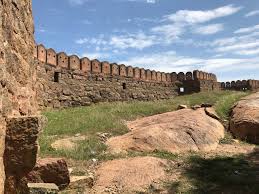
Constituency No. 180 | Pudukkottai District | General
Pudukkottai occupies a distinctive place in the political and cultural map of Tamil Nadu. Unlike many constituencies shaped primarily by agriculture or industry, Pudukkottai grew as a royal capital and administrative centre whose influence radiated across the surrounding region. Even today the town carries visible traces of its princely past in its palaces, temples, civic buildings and urban layout.
Located in the south-central part of the state, the constituency functions as the headquarters of Pudukkottai district. Government institutions, markets and educational centres have developed here over time, making the town an important administrative hub serving large rural areas around it.
Pudukkottai is also geographically positioned close to the famous Chettinad belt of Sivaganga district. While the classic Chettinad towns lie outside the constituency, their cultural and commercial influence extends into this region through architecture, trade and culinary traditions.
Thus the Pudukkottai constituency represents a blend of history, governance and regional culture — a place where royal heritage meets contemporary civic life.
Royal Capital of the Thondaiman Rulers
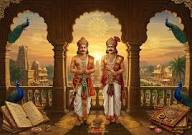
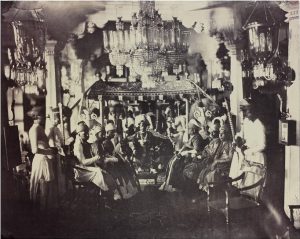
For several centuries Pudukkottai served as the capital of a princely state ruled by the Thondaiman dynasty. The rulers governed the region under various political arrangements during the colonial era before the princely state merged with the Indian Union after Independence.
As a royal capital, the town developed administrative institutions, palaces and civic infrastructure that distinguished it from neighbouring settlements. The influence of princely governance helped shape the town’s orderly layout, with palace complexes, temple precincts and residential quarters forming the core of the settlement.
Even today many buildings in Pudukkottai reflect this historical legacy, reminding visitors that the town once functioned as a seat of royal authority.
Fort Town and Palace Complex
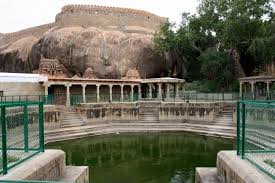
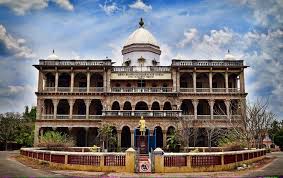
The historic centre of Pudukkottai is dominated by the old palace complex of the Thondaiman rulers. The palace and surrounding structures stand as prominent landmarks in the town, representing a blend of traditional South Indian and colonial architectural styles.
Nearby streets preserve the character of the old fortified town. Temples, markets and residential quarters developed around the palace precincts, creating a compact urban centre that served both administrative and ceremonial purposes.
The fort-town heritage remains one of the defining features of Pudukkottai’s identity.
Temples and Sacred Landscape
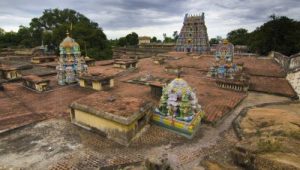
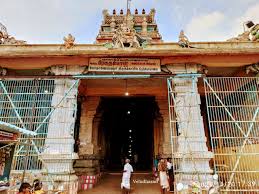
Religion plays a central role in the cultural life of the constituency. Among the most important temples in the town is the Thirukokarnam temple, an ancient shrine dedicated to Lord Shiva. The temple attracts devotees from across the district and hosts major festivals that bring large gatherings of worshippers.
Several Amman temples across the town also serve as important centres of devotion. During festival seasons the streets come alive with temple processions, traditional music and community celebrations.
These religious traditions continue to shape the cultural rhythm of Pudukkottai’s urban and rural communities.
Ancient Heritage and Cave Art
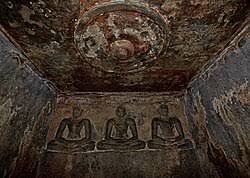
The wider Pudukkottai region is rich in archaeological heritage. One of the most remarkable historical sites nearby is the rock-cut cave complex at Sittanavasal, renowned for its ancient murals and Jain heritage.
The cave paintings depict lotus ponds, animals and human figures rendered in vibrant colours, offering a rare glimpse into early artistic traditions in South India.
Such archaeological sites underline the long civilisational history of the region, showing that human settlement and cultural activity here date back many centuries.
Chettinad Cultural Influence
Pudukkottai lies near the celebrated Chettinad region known for its mercantile communities, distinctive architecture and renowned cuisine. Though the heart of Chettinad lies in towns such as Karaikudi, its cultural footprint extends into the Pudukkottai area.
Merchant networks historically connected Pudukkottai with the Chettinad trading world, and traces of this connection can still be seen in architectural styles, temples and community institutions across the district.
This cultural proximity adds another layer to the identity of the constituency.
Markets and District Headquarters
As the headquarters of Pudukkottai district, the town functions as an administrative centre serving surrounding villages and smaller towns. Government offices, courts, hospitals and educational institutions draw people from across the region.
Markets in the town trade agricultural produce such as paddy, groundnut and pulses grown in nearby rural areas.
Transport routes connect Pudukkottai with Tiruchirappalli, Karaikudi and other neighbouring districts, reinforcing its role as a regional hub.
Electoral Ledger:
2011
Winner — K. P. Krishnan (AIADMK) — 94,381 votes
Runner-up — Periyannan Arasu (DMK) — 77,925 votes
Third — S. Ramasamy (DMDK) — 25,418 votes
Winning Margin — 16,456 votes
2016
Winner — Periyannan Arasu (DMK) — 66739 votes
Runner-up — Karthik Thondaiman (AIADMK) — 64655 votes
Third — Chokkalingam M (IND) — 22973 votes
Winning Margin — 2084 votes
2021
Winner —V. Muthuraja (DMK) —85,802 votes
Runner-up — Karthik Thondaiman(AIADMK) — 72801 votes
Third — Sasikumar (Naam Tamilar Katchi) — 11503votes
Winning Margin — 13,001 votes
Electoral contests in Pudukkottai often reflect the political trends of central Tamil Nadu while also being shaped by local administrative concerns.
Civic and Development Concerns
Residents of the constituency frequently highlight several development priorities:
improvement of urban infrastructure in the district headquarters
preservation of historical monuments and archaeological sites
better road connectivity linking rural areas with the town
expansion of employment and educational opportunities
Balancing heritage conservation with modern urban development remains a central challenge.
Political Temperament
The electorate includes government employees, traders, farmers from surrounding villages and students attending educational institutions in the town.
As a district headquarters constituency, public debate often centres on governance, civic infrastructure and development planning.
Candidates who address both heritage preservation and modern development needs tend to gain support.
What Decides Pudukkottai
Three factors often shape electoral outcomes:
Administrative role – being the district headquarters influences development expectations.
Historical identity – royal heritage and archaeological sites create civic pride.
Urban growth – infrastructure, education and employment opportunities remain key concerns.
Pudukkottai voters therefore evaluate leadership through the lens of governance as well as heritage.
Closing Frame
In Pudukkottai, palace walls, temple towers and busy market streets coexist within a town shaped by centuries of history. The legacy of princely rule blends with the everyday life of a modern district headquarters.
The constituency stands as a reminder that Tamil Nadu’s political map is also a map of its past.
When Pudukkottai votes, it speaks not only for its present citizens but also for a long historical tradition that continues to shape the identity of the region.