

Salem (West): Political Powerhouse, Industrial Arteries and the Expanding Frontier of the Steel City
 By Nandhini
- Tamil
- Hindi
- Malayalam
- Kannada
- Telugu

Constituency No. 88 | Salem District | General
Salem (West) is one of the most politically influential constituencies in western Tamil Nadu. Located within the fast-growing urban sprawl of Salem city, the constituency reflects the transformation of the region from a traditional trading centre into a modern industrial and administrative hub.
Salem itself has long been known as the Steel City of Tamil Nadu, and the western stretches of the city have witnessed some of the fastest urban expansion in recent decades. Residential colonies, commercial establishments and educational institutions have spread across what were once agricultural lands.
Yet Salem (West) is not merely a zone of urban growth. It has also produced some of the most powerful political leaders in the state. The constituency is closely associated with Edappadi K. Palaniswami, former Chief Minister of Tamil Nadu and current Leader of the Opposition, whose political career rose from the Salem region to the highest levels of state leadership.
Thus Salem (West) stands as a constituency where political influence, industrial development and urban expansion converge.
Edappadi K. Palaniswami and Salem Politics

Few constituencies in Tamil Nadu are as strongly associated with a major political figure as Salem (West) is with Edappadi K. Palaniswami (EPS). Though his electoral base lies in the neighbouring Edappadi constituency, his political influence is deeply rooted in the Salem region.
From this district he rose through the ranks of the AIADMK, eventually becoming Chief Minister of Tamil Nadu in 2017 following a dramatic phase in state politics after the passing of J. Jayalalithaa.
During his tenure, Salem district gained greater political visibility, and the region continues to remain one of the strongholds of AIADMK leadership.
The political networks that shape Salem (West) are therefore closely intertwined with the broader political landscape of the district.
Industrial and Economic Landscape
Salem’s industrial identity extends strongly into the western parts of the city. Small-scale manufacturing units, engineering workshops and trading establishments line the industrial corridors of the constituency.
The presence of the Salem Steel Plant and related industries across the district has created a large ecosystem of ancillary industries. Workers employed in these sectors often reside in neighbourhoods within Salem (West).
Industrial activity continues to generate employment and economic growth for the constituency’s residents.
Residential Expansion
The western stretches of Salem have seen rapid residential growth as the city expanded outward. Housing colonies, apartment complexes and commercial centres have emerged in areas that were once farmland.
This urban expansion reflects the broader economic development of Salem district. Improved road networks and civic infrastructure have encouraged migration from nearby villages into the city.
As a result, Salem (West) now represents a mix of long-established urban neighbourhoods and newly developing residential zones.
Temples and Religious Landmarks
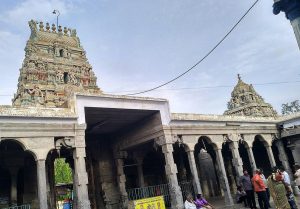

Religion remains an important aspect of Salem’s cultural identity. Among the temples associated with the city is the Sugavaneswarar Temple, a historic shrine dedicated to Lord Shiva that attracts devotees from across the district.
Another significant religious landmark is the Kottai Mariamman Temple, which hosts one of the largest temple festivals in Salem. Thousands of devotees participate in the annual celebrations.
These temples serve as spiritual centres for residents across the city, including those living within the Salem (West) constituency.
Hills and Geography
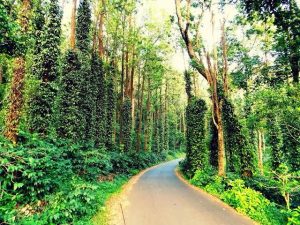

Salem’s geography is shaped by the ring of hills surrounding the city. The Shevaroy Hills, which include the hill station of Yercaud, rise prominently to the northeast.
These hills influence the climate and natural landscape of the region while also drawing tourists who travel through Salem on their way to Yercaud.
The combination of hills and plains gives Salem a unique setting compared with many other cities in Tamil Nadu.
Transport and Infrastructure
Salem stands at the crossroads of major transport routes connecting western Tamil Nadu with the rest of the state. National highways link the city with Chennai, Coimbatore and Bengaluru.
Railway lines also pass through Salem Junction, making it a major rail hub in the region.
Roads passing through Salem (West) carry heavy commuter traffic linking residential areas with industrial zones and commercial centres.
Transport infrastructure therefore plays a crucial role in the daily life of the constituency.
Electoral Ledger
2011
Winner – G. Venkatachalam (AIADMK) – about 1,05,000 votes
Second – DMK candidate – about 95,000 votes
Third – DMDK candidate – about 20,000 votes
Winning Margin: about 10,000 votes
2016
Winner – G. Venkatachalam (AIADMK) – 80755 votes
Second – Panneer Selvam C (DMK) – 73508 votes
Third – Arul R (PMK) – 29982 votes
Winning Margin: 7247 votes
2021
Winner – Arul .R (PMK) -105483 votes
Second – Rajendran A. (DMK) – 83984 votes
Third – Nagammal. S (NTK) – 10668 votes
Margin: 21,499 votes
Electoral outcomes here often mirror broader political shifts across western Tamil Nadu.
Civic and Development Concerns
Residents of Salem (West) frequently highlight several issues:
• traffic congestion along expanding urban corridors
• urban drainage and water management
• housing infrastructure for growing populations
• employment opportunities linked to industrial growth
Balancing rapid urban expansion with civic planning remains a key challenge.
Political Temperament
The electorate includes industrial workers, traders, professionals and residents of expanding housing colonies.
Political campaigns in the constituency often revolve around economic development, infrastructure improvement and urban governance.
The constituency’s proximity to key political leadership in Salem district also adds to its strategic importance.
What Decides Salem (West)
Three factors often shape electoral outcomes:
Industrial economy – employment linked to manufacturing sectors.
Urban expansion – housing and infrastructure influence voter priorities.
Political influence – strong regional leaders shape party networks.
Closing Frame
Salem (West) stands at the frontier of a city that continues to grow outward from its historic core. Factories, housing colonies and commercial centres rise across the landscape while the surrounding hills frame the skyline.
The constituency reflects the transformation of Salem from a trading town into a modern urban hub.
When Salem (West) votes, it speaks for a region where political power, industrial ambition and urban growth move forward together.