

Srivilliputhur: Andal’s Birthplace and the Temple Gopuram that Became Tamil Nadu’s State Emblem
 By Nandhini
- Tamil
- Hindi
- Malayalam
- Kannada
- Telugu

Constituency No. 203 | Virudhunagar District | Scheduled Caste (Reserved)
Srivilliputhur occupies a rare place in Tamil Nadu’s cultural and spiritual geography. Revered as the birthplace of Āṇḍāl, the only woman among the twelve Āḻvārs of the Vaishnavite tradition, the town has shaped devotional life across Tamil society for centuries. Rising above its streets is the magnificent Srivilliputhur Andal–Vatapatrasayi Temple gopuram, the towering structure that today forms the official emblem of the Government of Tamil Nadu.
Few places in the state combine literary devotion, temple grandeur and symbolic identity so completely.
Srivilliputhur is therefore not merely a pilgrimage centre but a town whose spiritual legacy resonates far beyond its geographical boundaries.
Āṇḍāl: The Saint-Poet of Srivilliputhur

The spiritual history of Srivilliputhur begins with Āṇḍāl, one of the most beloved figures of Tamil bhakti literature. According to temple tradition, the saint Periyāḻvār discovered the infant Andal beneath a tulasi plant in the temple garden and raised her with deep devotion to Lord Vishnu.
As she grew, Andal composed hymns expressing her intense love and surrender to the divine. Her most famous work, the Tiruppāvai, consists of thirty devotional verses that continue to be sung across Tamil Nadu.
Through Andal’s poetry, Srivilliputhur became not merely a temple town but the birthplace of a devotional movement that still shapes Tamil spiritual culture.
Tiruppāvai and the Month of Mārgaḻi
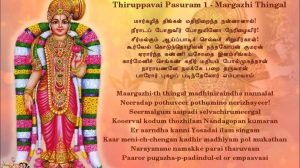
Every year during the Tamil month of Mārgaḻi, Andal’s Tiruppāvai is recited in temples, homes and cultural gatherings across Tamil Nadu and the wider Tamil world.
The verses celebrate devotion to Lord Krishna and carry layers of spiritual symbolism. Children learn them in schools, musicians render them in concerts and devotees chant them before dawn throughout the sacred month.
This continuing tradition ensures that Srivilliputhur remains the spiritual source of a living devotional practice that unites generations.
Andal–Vatapatrasayi Temple
The Srivilliputhur Andal–Vatapatrasayi Temple is one of the 108 Divya Desams, the sacred Vishnu temples praised in the hymns of the Alvar saints. The temple complex contains shrines dedicated to Vatapatrasayi Perumal, Andal and Periyāḻvār.
Architectural elements within the temple reflect centuries of patronage from the Pandya and Vijayanagara dynasties, whose rulers expanded and beautified the complex. Intricately carved pillars, spacious mandapams and sacred tanks form part of the temple’s historic landscape.
Pilgrims visit the shrine throughout the year, but the town becomes particularly vibrant during festivals dedicated to Andal.
The Gopuram that Symbolises Tamil Nadu

Dominating the skyline of Srivilliputhur is the towering rajagopuram, an imposing gateway that has become one of the most recognisable temple structures in Tamil Nadu.
The distinctive silhouette of this gopuram forms the official emblem of the Tamil Nadu Government, representing the state’s deep-rooted temple culture and architectural heritage. Through this emblem, Srivilliputhur’s temple tower stands not only as a religious landmark but as a visual symbol of Tamil identity itself.
Few temple structures enjoy such statewide symbolic status.
Temple Streets and Pilgrim Town
The layout of Srivilliputhur reflects the traditional structure of a South Indian temple town. Streets radiate outward from the temple complex, lined with houses, flower markets and shops selling religious offerings.
Pilgrims walking through these streets create a constant flow of devotional activity. Temple festivals bring processions, music and community gatherings that reinforce the town’s spiritual character.
Even today, daily life in Srivilliputhur revolves around the rhythm of temple rituals and pilgrim visits.
Pal Gova: A Sweet Identity

Beyond its sacred reputation, Srivilliputhur is also widely associated with pal gova, a rich milk sweet prepared by slowly thickening milk with sugar.
This delicacy has become synonymous with the town, and travellers along the Madurai–Tenkasi route often stop here specifically to purchase it. Over time pal gova has grown into a culinary signature of Srivilliputhur.
Agriculture and Surrounding Villages
The constituency includes several surrounding villages where agriculture remains an important livelihood. Paddy cultivation, cotton and pulses form part of the rural economy of the Virudhunagar region.
These agricultural settlements support local markets and contribute to the economic life of the temple town.
Electoral Ledger
2011
Winner – V. Ponnupandi (CPI) – 88,967 votes
Second – R. Sivanandham (DMK) – 81,001 votes
Third – P. Gopi (BJP) – 18,639 votes
Winning Margin: 7,966 votes
2016
Winner – M. Chandra Prabha (AIADMK) – 88,103 votes
Second – C. Muthukumar (PTK) – 51,430 votes
Third – P. Lingam (CPI) – 19415 votes
Winning Margin: 36,673 votes
2021
Winner – E. M. Manraj (AIADMK) – 70,475 votes
Second – P. S. W. Madhava Rao (INC) – 57,737 votes
Third – Sangeetha Priya (AMMK) – 23,682 votes
Winning Margin: 12,738 votes
Civic Priorities
Residents frequently highlight several development needs:
• preservation of temple heritage structures
• improved facilities for pilgrims and tourists
• road infrastructure connecting surrounding villages
• support for agriculture and local markets
Managing tourism growth while protecting the temple town’s historic character remains a continuing challenge.
Closing Frame
Srivilliputhur stands as one of the great devotional centres of Tamil civilisation. Here Andal’s poetry still echoes in temple corridors and the towering gopuram rises above the town as the emblem of Tamil Nadu itself.
Few constituencies embody the intersection of faith, literature and cultural identity so powerfully.
When Srivilliputhur votes, it speaks from a land where devotion became poetry, poetry became tradition, and tradition became the symbol of a state.