

Thiruporur: Sacred Murugan Town on Chennai’s Expanding Southern Frontier
 By Nandhini
- Tamil
- Hindi
- Malayalam
- Kannada
- Telugu

Constituency No. 33 | Chengalpattu District | General
Thiruporur sits at a fascinating intersection of sacred tradition and metropolitan expansion. Located along the southern corridor of Chennai’s growth belt, the constituency is anchored by one of Tamil Nadu’s revered Murugan shrines while simultaneously witnessing rapid urbanisation driven by the IT corridor, highways and residential development spreading outward from the capital.
This dual character gives Thiruporur a distinctive political identity: a temple town that is steadily becoming part of the wider Chennai metropolitan orbit.
Historically, Thiruporur was known primarily as a pilgrimage centre surrounded by agrarian villages, irrigation tanks and temple-based settlements.
Devotees travelled here for centuries to worship Lord Murugan at the celebrated hill temple. Over the past two decades, however, the constituency has begun to change. The expansion of Old Mahabalipuram Road (OMR) and the growth of the IT corridor have brought new housing layouts, educational institutions and commercial activity into areas that once depended almost entirely on agriculture.
Despite this transformation, Thiruporur remains deeply rooted in religious life and rural cultural rhythms.
Murugan Temple and Sacred Heritage

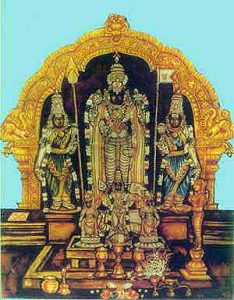
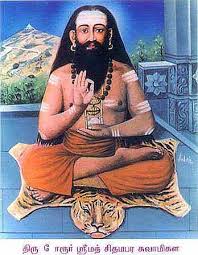
The spiritual centrepiece of the constituency is the Arulmigu Kandaswamy Temple, dedicated to Lord Murugan. The temple’s origin is associated with the revival efforts of the saint Chidambara Swamigal in the eighteenth century, who is believed to have rediscovered the shrine and restored worship. The temple stands near a small hillock and remains one of the important Murugan pilgrimage sites in northern Tamil Nadu.
Devotees throng the temple during Skanda Sashti, Panguni Uttiram and other Murugan festivals, when the town fills with pilgrims, traders and festival activity. The temple tank, surrounding streets and chariot processions form an essential part of Thiruporur’s religious landscape.
Temple-linked commerce—flower sellers, small eateries, religious goods shops and lodging houses—supports the local economy. For many families, pilgrimage activity provides seasonal income.
Village Landscape and Agrarian Roots


Beyond the temple streets, the constituency stretches into villages where agriculture once dominated everyday life. Paddy fields, coconut groves and seasonal crops shaped the local economy for generations. Tanks and canals served irrigation needs, and village markets acted as small trading hubs.
Though agriculture has declined in some pockets due to land conversion, several villages still cultivate paddy and vegetables. Dairy farming and small livestock rearing continue as supplementary livelihoods.
These rural roots remain important politically. Farmers and agricultural workers form a key part of the electorate, and issues such as water management, tank restoration and land-use change often influence public discussion.
Chennai’s Expanding Shadow

Thiruporur’s proximity to Chennai has dramatically altered its economic landscape. The rise of the IT corridor along OMR, along with the growth of educational campuses and residential townships, has brought new residents and new expectations. Land values have risen sharply in certain pockets, and many agricultural lands have gradually given way to plotted housing developments.
The constituency now sits on an important transport link connecting Chennai to Mahabalipuram and the East Coast Road network. Improved road connectivity has made commuting easier for residents working in the technology parks and commercial hubs of the southern metropolitan zone.
However, this rapid expansion also creates tensions. Infrastructure often struggles to keep pace with growth, and villagers worry about disappearing water bodies and agricultural land.
Temples, Culture and Local Festivals
Besides the Murugan temple, several smaller shrines dedicated to Amman, Shiva and village guardian deities dot the constituency’s villages. Local temple festivals remain vibrant events featuring folk music, processions and communal gatherings.
These celebrations preserve cultural traditions that connect present-day residents with the region’s rural past. Even as new apartment complexes appear along highway corridors, these festivals continue to draw participation across social groups.
Commerce and Emerging Economy
Local commerce revolves around temple tourism, village markets and highway-linked trade. Roadside eateries, vegetable markets and small retail outlets serve both pilgrims and travellers moving toward the coastal tourism belt.
The arrival of new residential communities has expanded demand for services—construction, retail, transport and hospitality. Many youth from the constituency now seek employment in nearby IT parks, educational institutions or service businesses linked to Chennai’s growth.
Civic Concerns in a Growing Constituency
With development has come a new set of civic challenges. Residents frequently raise issues related to road maintenance, drinking-water supply and waste management as population increases. Drainage systems in several villages require upgrading to handle heavier rains and denser settlement patterns.
Transport infrastructure also needs improvement to manage traffic moving between Chennai, the IT corridor and the coastal tourism route.
These concerns shape political debates in Thiruporur today.
Electoral Ledger
2011
Winner — K. Manoharan (AIADMK) — 94,785 votes
Runner-up — K. D. Lakshmi (DMK) — 78,421 votes
Third — S. Mohan (DMDK) — 26,774 votes
Winning Margin — 16,364 votes
2016
Winner — Kothandapani M (AIADMK) — 70215 votes
Runner-up — Viswanathan V (DMK) — 69265 votes
Third — Vasu K (PMK) — 28125 votes
Winning Margin — 950 votes
2021
Winner — S. S. Balaji (VCK) — 93954 votes
Runner-up — Arumugam K (PMK) — 92007 votes
Third — Mohana sundari S (Naam Tamilar Katchi) — 20428 votes
Winning Margin — 1947 votes
What Decides Thiruporur
Several factors influence electoral outcomes in this constituency:
Temple and pilgrimage economy: The Murugan shrine remains central to the town’s identity and local commerce.
Urban expansion: Rapid development linked to Chennai’s IT corridor shapes public expectations for infrastructure.
Agricultural concerns: Farmers continue to seek protection of water bodies and irrigation systems.
Transport and connectivity: Road networks linking Chennai, Mahabalipuram and surrounding villages influence economic activity.
Civic infrastructure: Water supply, drainage and waste management are increasingly important as the population grows.
Closing Frame
Thiruporur embodies the meeting point of tradition and transformation. Pilgrims continue to climb temple steps and offer prayers to Murugan, while nearby highways carry technology workers and tourists along the southern corridor of Chennai’s expansion.
The constituency stands between sacred heritage and modern growth, negotiating how to preserve its spiritual character while adapting to rapid development.
When Thiruporur votes, it reflects both its ancient identity as a Murugan pilgrimage centre and its emerging role as a gateway between rural Tamil Nadu and the expanding metropolis of Chennai.