
Tindivanam: Highway Crossroads of Northern Tamil Nadu and the Transit Nerve Near Puducherry
 By Nandhini
- Tamil
- Hindi
- Malayalam
- Kannada
- Telugu

Constituency No. 72 | Villupuram District | Scheduled Caste (Reserved)
Tindivanam occupies a strategic place on the transport map of Tamil Nadu. Located in Villupuram district and positioned close to the Tamil Nadu–Puducherry corridor, the town functions as a major road junction linking multiple regions of the state. Highways branching from here lead north toward Chennai, east toward Puducherry and the Bay of Bengal coast, south toward the Cauvery delta and western districts, and inland toward Tiruvannamalai and the northern interior.
Because of this geography, Tindivanam has long served as a transit town rather than merely a local administrative centre. Buses, trucks, private vehicles and long-distance travellers constantly pass through its junctions. Roadside hotels, eateries and service centres line the highways, catering to the steady flow of passengers moving between Chennai, the delta districts and southern Tamil Nadu.
Thus the constituency reflects the life of a crossroads — shaped by mobility, trade and the constant movement of people and goods.
The Highway Junction Town
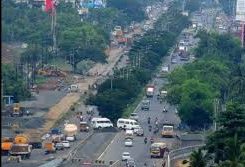
Tindivanam’s most defining feature is its road network convergence. The town lies along the busy Grand Southern Trunk (GST) Highway corridor, which links Chennai with southern Tamil Nadu. From this point, major roads branch toward Puducherry, Villupuram, Gingee and Tiruvannamalai, creating a transport node that channels traffic in several directions.
This network makes Tindivanam one of the important junction towns of northern Tamil Nadu. Bus services from different districts intersect here, and travellers frequently halt in the town before continuing toward coastal, delta or interior destinations.
The highway flyover and junction improvements built in recent years have further reinforced its role as a transit hub.
Gateway to Puducherry
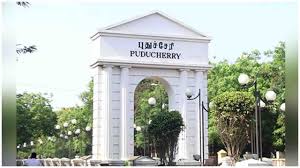
One of the most significant aspects of Tindivanam’s geography is its proximity to Puducherry, the former French enclave located about thirty kilometres to the east. Travellers from Chennai heading toward Puducherry often pass through the Tindivanam junction before turning toward the coast.
This steady tourist and commuter movement adds to the town’s commercial activity. Buses, tourist vehicles and goods transport regularly use the route, giving the constituency an economic rhythm linked closely with the Puducherry corridor.
Roadside Economy
Because of its position on major highways, Tindivanam has developed a thriving roadside service economy. Hotels, tea stalls, restaurants, fuel stations and vehicle repair shops cater to travellers moving through the junction.
Many eateries along the highway have become familiar stopping points for passengers on long-distance bus routes. Drivers and travellers often pause here for meals before continuing their journeys toward southern districts or coastal destinations.
This transit-oriented economy has shaped the town’s commercial identity.
Agricultural Hinterland
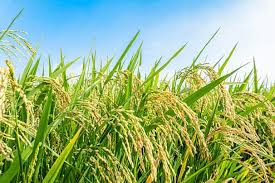
Beyond the busy junction area, the constituency includes numerous villages where agriculture continues to play an important role. Paddy cultivation, groundnut farming and other crops sustain rural communities across the region.
Local markets in and around Tindivanam town serve as trading centres for farmers from surrounding villages. Agricultural produce moves through the same road network that supports the transit economy.
Thus the constituency combines rural agricultural life with highway commerce.
Temples and Local Traditions
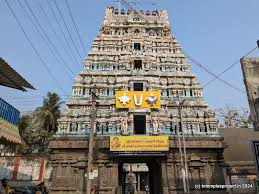
The region around Tindivanam contains several temples dedicated to Shiva, Amman and Murugan, serving as centres of worship for local communities. Village festivals and temple celebrations remain significant cultural events.
These temples reflect the traditional religious life of the region even as the town itself grows around its transport functions.
Urban Growth
With the expansion of highway infrastructure, Tindivanam has gradually developed as a larger urban centre within Villupuram district. Educational institutions, government offices and commercial establishments have expanded in the town.
Residential neighbourhoods have grown along the roads leading toward Puducherry and Villupuram, reflecting the town’s increasing importance in the regional economy.
Electoral Ledger
2011
Winner – C. V. Shanmugam (AIADMK) – 92,335 votes
Second – S. Seethapathy (DMK) – 71,263 votes
Third – R. Ramesh (DMDK) – 21,145 votes
Winning Margin: 21,072 votes
2016
Winner – Seethapathy P (DMK) – 61879 votes
Second – Rajendran S P (ADMK) – 61778 votes
Third – Kalidoss A (PMK) – 29848 votes
Winning Margin: 101 votes
2021
Winner – Arjunan P. (AIADMK) – 87152 votes
Second – Seethapathy P (DMK) – 77399 votes
Third – Pachamuthu P (Naam Tamilar Katchi) – 9203 votes
Winning Margin: 9753 votes
Civic Priorities
Residents frequently highlight several issues:
• traffic management at the highway junction
• development of urban infrastructure as the town expands
• agricultural support for surrounding villages
• improved transport facilities for commuters
Balancing transit traffic with local civic needs remains an ongoing challenge.
Closing Frame
Tindivanam stands where highways diverge toward different parts of Tamil Nadu. Travellers heading toward Chennai, Puducherry, the delta districts or the interior often pass through this junction town.
The constituency therefore carries the energy of movement — buses, trucks, pilgrims, tourists and traders all intersecting along its roads.
When Tindivanam votes, it reflects the voice of a crossroads community shaped by travel, commerce and the steady pulse of the highway.