

Udhagamandalam: Queen of the Hills, Imperial Summer Capital and the Scenic Soul of the Nilgiris
 By Nandhini
- Tamil
- Hindi
- Malayalam
- Kannada
- Telugu

Constituency No. 108 | The Nilgiris District | General
Udhagamandalam — Ooty in everyday speech — is one of the most distinctive constituencies in Tamil Nadu because it does not resemble the plains seats of the state at all. It is a hill capital, resort town, plantation landscape, administrative centre and old imperial retreat rolled into one. If Chennai represents the state’s heat and speed, Udhagamandalam represents its cool altitude, layered colonial memory and mountain beauty. This is the Queen of the Hills, not as a tourist slogan alone, but as a lived reality of mist, lakes, slopes, stone buildings, gardens, clubs, markets, estates and winding roads.
The constituency occupies the heart of the Nilgiris plateau, and its significance comes from several worlds overlapping in one place. It is the district headquarters. It is a historic summer refuge of the Raj. It is a tourism magnet. It is a tea-and-estate economy. It is also a seat where Badaga, Toda, Kota, Kurumba, Tamil, Malayali and other social strands interact in a uniquely Nilgiri context. Few constituencies in Tamil Nadu carry such a sharply different landscape, climate and civic rhythm.
Udhagamandalam is not merely a pretty hill station. It is one of the state’s most symbolically loaded mountain seats.
Queen of the Hills

The first and deepest fact about Udhagamandalam is landscape. The town sits amid rolling downs, shola patches, eucalyptus stands, tea gardens and blue mountain light. The Nilgiris are not dramatic in the same way as some harsher hill belts; their beauty is layered, cultivated and atmospheric. Morning mist, terraced slopes, chill air, flowering gardens and valley views together create the visual grammar of Ooty.
That beauty is not incidental to politics or economy. Tourism, hospitality, land use, roads, conservation and real-estate pressure all arise from the constituency’s status as a prized hill environment. Here scenery itself becomes a public issue.
The Raj Retreat and Summer Capital

Udhagamandalam’s modern identity was profoundly shaped by the British, who transformed it into a summer retreat and administrative refuge from the heat of the plains. The old bungalows, clubs, churches, schools, race culture, garden planning and institutional architecture still preserve that imperial memory. Ooty did not merely host colonial officials; it was shaped by them into a hill enclave of leisure and governance.
That past survives in the texture of the town — in names, built forms, street patterns and elite institutions. Even when modern crowds overrun the season, traces of the old hill station remain visible in its stone houses, sloped roofs and inherited manners of space.
Raj Bhavan, Stone House and Colonial Landmarks

Among the most important landmarks associated with Udhagamandalam are the Raj Bhavan complex, which reinforces its long-standing role as a gubernatorial retreat, and the wider belt of old colonial-era residences and public buildings. The older institutional core still carries the feel of a mountain administrative capital.
The Stone House, one of the earliest European-style buildings in Ooty, remains central to the town’s historical imagination. Schools, churches and heritage properties in and around the constituency continue to testify to the era when Ooty was not just a resort, but a governing station.
Ooty Lake and the Tourist Imagination

No account of Udhagamandalam is complete without the Ooty Lake, one of the town’s best-known visual and recreational landmarks. It has long been central to the tourist image of Ooty — boating, promenading, family outings and seasonal crowds. Around it grew a hospitality ecosystem of shops, food outlets and travel services that remain vital to the constituency’s economy.
The lake is not only a postcard feature; it is part of the town’s civic identity. Questions of maintenance, encroachment, tourism pressure and environmental health are therefore politically important.
Doddabetta and the High Country

The constituency also draws prestige from nearby Doddabetta, the highest peak in the Nilgiris, which offers sweeping views across the mountain landscape. It reinforces Udhagamandalam’s identity as a high-altitude seat with a dramatic natural setting. The peak, along with surrounding forested slopes and viewpoints, helps sustain year-round tourism and deepens the constituency’s image as Tamil Nadu’s premier hill destination.
Botanical Gardens, Rose Garden and Cultivated Beauty
The beauty of Udhagamandalam is not only wild or scenic; it is also curated beauty. The famous gardens of Ooty — especially the Botanical Garden and the Rose Garden — are central to the town’s public life and tourist economy. Flower shows, summer visitation and garden culture have long made the constituency one of the most recognisable leisure spaces in South India.
These landscaped spaces also show how Ooty differs from most other constituencies. In many places, public life gathers around bus stands, bazaars and temple streets alone. In Ooty, gardens themselves are civic landmarks.
Race Course, Club Culture and Elite Memory
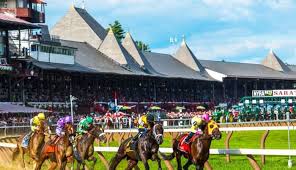
Udhagamandalam also carries an older club-and-race-course culture, part of its colonial inheritance and later elite leisure life. The race course, the club circuit and the seasonal social economy once gave Ooty an unmistakable mountain-aristocratic flavour. Even where that culture has changed in scale or relevance, its memory still shapes the town’s social aura. Ooty was never just a hill village that expanded. It was a curated hill society.
Tea Estates and the Plantation Economy
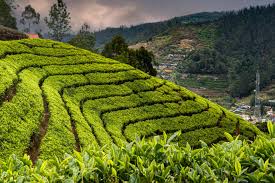
Beyond the town core lie the tea estates that define much of the Nilgiri economy. Tea gardens contour the slopes and remain central to employment, land use and local identity. Estate life, tea factories, labour settlements, auction-linked commerce and associated transport form an important part of the constituency’s economic structure.
This is one of the key tensions in Udhagamandalam: tourism may dominate the public image, but plantations still anchor much of the mountain economy.
Markets, Eateries and Hill Cuisine
Ooty’s bazaars and market streets reflect its mixed life as both a district headquarters and a holiday town. Vegetable markets, homemade chocolates, bakery culture, tea shops, produce counters, woollens, eucalyptus products and tourist-oriented retail all coexist. The cuisine of the town is shaped by travellers, boarding-school culture, hill-station bakeries, South Indian tiffin houses and simple hotel food designed for constant movement.
Eateries in Udhagamandalam are not merely tourist conveniences. They are part of the town’s identity — warm tea in cold weather, bakery goods, hill vegetables, varkey-style snacks and the hybrid food culture of a place that serves locals, tourists, students and officials alike.
Military Angle and Strategic Surroundings
Though the major cantonment identity in the Nilgiris is more strongly associated with nearby Wellington, Udhagamandalam belongs to a district whose wider social and economic life has long been shaped by military presence in the hills. The district’s roads, institutions, seasonal movement and service economy have all been influenced by that larger highland administrative-military ecosystem. Ooty therefore belongs to a wider Nilgiri world where civilian hill-station life and strategic high-country presence have historically existed side by side.
A Bustling Town Beneath the Beauty
For all its romance, Udhagamandalam is no museum-piece resort. It is a busy headquarters town with traffic stress, tourist-season overload, waste management concerns, water pressure, road bottlenecks and land-use conflicts. During peak seasons, the beauty of Ooty is tested by its own popularity. Hotels overflow, roads choke, markets crowd and civic management comes under strain.
This is what makes the constituency politically serious. Behind the postcard lies a living town wrestling with sustainability.
Electoral Ledger
2011
Winner – Budhichandhiran (AIADMK) – 61,605 votes
Second – R. Ganesh (INC) – 54,060 votes
Third – B. Kumaran (BJP) – 2,716 votes
Winning Margin: 7,545 votes
2016
Winner – R. Ganesh (INC) – 67,747 votes
Second – Vinoth (AIADMK) – 57,329 votes
Third – Raman (BJP) – 5,818 votes
Winning Margin: 10,418 votes
2021
Winner – R. Ganesh (INC) – 65,530 votes
Second – M. Bhojarajan (BJP) – 60,182 votes
Third – A. Jayakumar (Naam Tamilar Katchi) – 6,381 votes
Winning Margin: 5,348 votes
These results show a constituency where margins can tighten sharply and where hill-town issues, community equations and candidate visibility all matter.
Why Udhagamandalam Matters
Udhagamandalam matters because it is unlike almost any other seat in Tamil Nadu. It combines heritage, altitude, tourism, estates, environment, district administration and social diversity in one mountain constituency. It is a seat where climate itself changes the political mood, where scenery drives the economy, and where history still inhabits the streets.
Closing Frame
In Udhagamandalam, the lake, the gardens, the estates, the club memory, the mountain air and the old imperial residue all survive within a bustling modern hill town. It is beautiful, yes — but also contested, crowded, economically vital and civically demanding.
When Udhagamandalam votes, the Queen of the Hills speaks not as a postcard, but as a living mountain constituency.