

Villivakkam: Railway-Belt Chennai, Dense Neighbourhoods and the Urban Pressure Points of the Inner City
 By Nandhini
- Tamil
- Hindi
- Malayalam
- Kannada
- Telugu

Constituency No. 14 | Chennai District | General
Villivakkam is one of the important urban constituencies of Chennai because it sits inside the city’s dense, hard-working, lived-in core rather than on its glamorous edge. This is not a postcard constituency of sea views or elite avenues. It is a seat of railway lines, old residential colonies, market streets, workshops, schools, apartment growth, traffic snarls, bus movement and relentless everyday urban life. It belongs to that part of Chennai where the city is felt not as image, but as routine — crowded, practical, politically alert and civically demanding.
The constituency is centred on Villivakkam proper and the surrounding urban belt tied to the ICF railway colony zone, SIDCO Nagar areas, parts of the Inner Ring Road influence, dense residential layouts, older streets, market pockets and the broader north-western inner-city spread between Anna Nagar-side expansion and the Perambur–Korattur industrial-residential interface. That gives the seat a mixed social character. It includes long-time city families, lower-middle and middle-class households, railway-linked communities, small traders, salaried workers, students, tenants and apartment residents.
Villivakkam therefore is one of those constituencies where Chennai’s real urban story is written — in traffic, drainage, schools, trains, street commerce and housing pressure.
A Chennai Seat Shaped by Rail and Roads

One of the defining features of Villivakkam is connectivity. The constituency is closely tied to the suburban railway corridor, and that matters immensely in daily life. For many residents, rail is not background infrastructure; it is survival-time infrastructure. Alongside that, major roads and link routes connect the constituency to Anna Nagar, Perambur, Padi, Koyambedu and the wider Chennai grid.
This transport advantage also creates urban strain. Junctions clog, interior roads struggle under mixed traffic, and local movement gets trapped between buses, two-wheelers, cars, autos and commercial activity. Villivakkam is therefore a constituency where mobility is both a strength and a daily frustration.
Residential Chennai, Not Peripheral Chennai
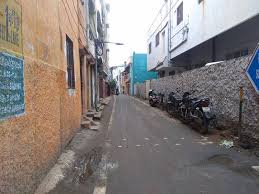
Villivakkam’s political importance comes partly from the fact that it is a thickly settled residential constituency. It is not an outer-ring growth story; it is a mature city zone where population density, ageing infrastructure and new apartment development coexist. Old independent houses stand beside redeveloped flats. Narrow lanes open into busier commercial roads. Schools, clinics, tuition centres, temples and provision stores are woven tightly into neighbourhood life.
That residential density gives the constituency a strong civic consciousness. Voters here tend to respond sharply to visible urban issues — garbage clearance, water supply, mosquito control, road damage, storm-water stagnation and commuter pain.
Commerce and the Everyday City Economy
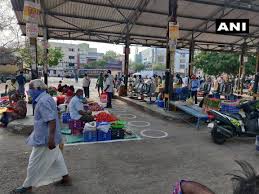
Villivakkam is not a giant central business district, but it has a vigorous everyday commercial economy. Market streets, local shops, bakeries, pharmacies, hardware stores, eateries, textile outlets and service establishments keep the constituency constantly active. Small businesses matter here. So do informal livelihoods. The economy is built not only on large establishments but on the accumulated force of neighbourhood commerce.
This is one reason Villivakkam feels politically alive. In such constituencies, a road dug up for too long, a blocked drain, a traffic diversion, or poor waste clearance is not an abstract complaint. It hits traders, commuters and households immediately.
Culture, Temples and Neighbourhood Identity

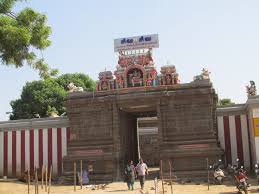
Though fully urban, Villivakkam retains strong neighbourhood identities built around temples, local associations and community memory. Temples dedicated to Shiva, Amman, Vishnu and Murugan remain important anchors in several pockets of the constituency, while churches and mosques in the wider urban spread reflect Chennai’s plural social life.
This is not a constituency where religion dominates the skyline in a spectacular way. Instead, worship is woven into locality itself — street shrines, festival processions, seasonal observances and temple-centred neighbourhood gatherings. That gives Villivakkam a distinctly Chennai character: urban, busy and devout without being theatrically so.
Education and Social Mobility
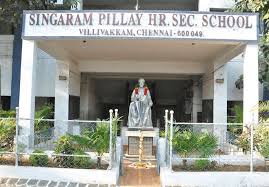
Villivakkam is also shaped by education. Schools, colleges in the wider surrounding urban zone, coaching centres and tuition networks contribute to its aspirational social profile. Families here often prioritise education intensely. That has political consequences. Employment, public exam preparation, student mobility, transport access and the quality of civic surroundings all matter to households that see education as upward movement.
In seats like Villivakkam, the voter is often not looking only for symbolic politics. The voter is measuring everyday administrative competence.
Traffic, Flooding and Civic Pressure
If there is one theme that repeatedly defines Villivakkam, it is pressure. Pressure on roads. Pressure on drainage. Pressure on built space. Pressure on public infrastructure. Being a dense urban seat, Villivakkam frequently faces complaints around traffic bottlenecks, interior-road damage, waterlogging during heavy rain, encroachment, parking spillover, sewage strain and uneven civic maintenance.
Like many parts of Chennai, the constituency carries hydrological memory beneath urban expansion. Intense monsoon spells expose drainage weakness quickly. Residents judge governments strongly on whether rainwater clears fast, roads remain usable and basic services function in crisis.
Political Character of the Seat
Villivakkam is an important Chennai seat because it is politically competitive and socially mixed. It is not a constituency that can be treated casually by major parties. It belongs to a belt where organisation matters, booth work matters, candidate accessibility matters and urban governance performance can decisively influence the vote.
It also reflects a classic Chennai pattern: once voters form a view on whether an MLA is visible, useful and responsive to neighbourhood issues, that impression can become powerful.
Electoral Ledger
2011
Winner — B. Ranganathan (AIADMK) — 65,432 votes
Runner-up — K. Dhanasekaran (DMK) — 57,221 votes
Third — M. Rajan (DMDK) — 18,743 votes
Winning Margin — 8,211 votes
2016
Winner — B. Ranganathan (DMK) — 65972 votes
Runner-up — Thadi M.Raju (ADMK) — 56651 votes
Third — T.Pandiyan (DMDK) — 8234 votes
Winning Margin — 9321 votes
2021
Winner — A. Vetri Azhagan (DMK) — 76127 votes
Runner-up — J. C. D. Prabhakar (AIADMK) — 38890 votes
Third — Sriharan (MNM) — 13364 votes
Winning Margin — 37237 votes
What Decides Villivakkam
In Villivakkam, elections are often shaped by a hard urban checklist:
Traffic and local mobility. Residents care deeply about junctions, road conditions and commuter ease.
Flooding and drainage. Waterlogging remains one of the most politically sensitive issues.
Basic urban services. Garbage clearance, sewage maintenance, street lighting and road relaying matter enormously.
Housing and neighbourhood quality. Dense residential voters notice civic neglect quickly.
Trader and small-business concerns. Local commerce is strong and responds to street-level governance.
Candidate visibility. In a constituency like this, accessibility can matter as much as party label.
Villivakkam often votes like a constituency that wants one thing above all: a city that works.
Closing Frame
Villivakkam is Chennai without disguise — dense, practical, crowded, aspiring and impatient. It is a railway-belt, road-belt, school-belt, market-belt constituency where the city’s daily stresses are impossible to romanticise. Yet that is also its strength. It represents the living urban middle of Chennai, where neighbourhoods endure, commerce adapts and civic accountability remains intensely local.
When Villivakkam votes, it speaks in the language of the real city — not glamour, but governance.