


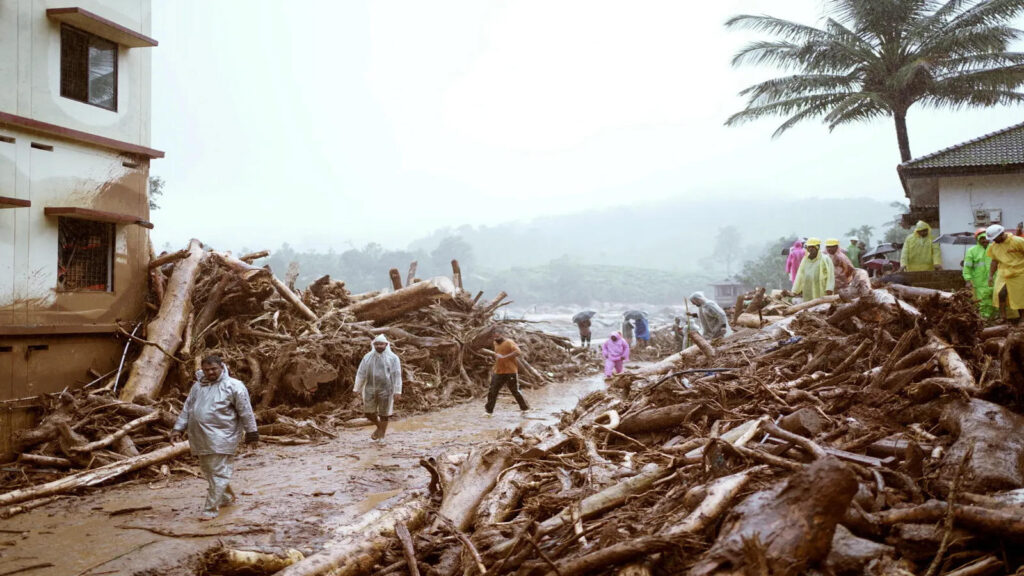
 Wayanad: Kerala’s Wayanad district is grappling with the aftermath of devastating landslides and relentless rains, with the death toll from the disaster climbing to 163.
The extreme weather has wreaked havoc on daily life, leaving the region reeling from the impact of flooding and landslides. Over 100 people have been injured and are currently receiving treatment in nearby hospitals.
In light of the adverse conditions, Leader of Opposition and former Wayanad MP Rahul Gandhi, along with Congress party’s Lok Sabha candidate from Wayanad, Priyanka Gandhi, have canceled their planned visits to the constituency.
The India Meteorological Department (IMD) has issued a warning of continued heavy to very heavy rainfall in Kerala on July 31 and August 1, with predictions of further downpours on August 2. The IMD attributes the intensified rainfall to rising temperatures in the Arabian Sea, which are contributing to the severe weather conditions in the region. Additionally, strong surface winds with speeds reaching 30-40 kmph, gusting up to 50 kmph, are expected to prevail intermittently over Kerala, exacerbating the situation.
Two massive landslides struck the Mundakkai and Chooramala areas of Vellarimala village, under the Meppadi Panchayat in Wayanad, early on Tuesday morning. These landslides destroyed several houses, uprooted trees, and caused nearby water bodies to swell, complicating rescue efforts. The disaster has resulted in significant loss of life and property, with 128 people reported injured and currently receiving medical care in various hospitals across Wayanad.
In the wake of this disaster, attention has returned to a 13-year-old report by the Western Ghats Ecology Expert Panel, headed by Madhav Gadgil. The report, submitted to the Centre in August 2011, had warned against unchecked quarrying and construction activities in Ecologically Sensitive Areas (ESAs) like Meppadi. The recent landslides have brought to light the consequences of ignoring such warnings, as the areas highlighted in the report have now suffered catastrophic damage.
Rescue operations are in full swing in the affected areas, with efforts concentrated on locating missing persons and providing relief to those affected. The National Disaster Response Force (NDRF), along with local agencies, is leading the search and rescue missions. The disaster has displaced thousands, with around 3,069 people currently residing in 45 relief camps across Wayanad. The state government has deployed five ministers to coordinate relief and rescue operations in the district, ensuring that all available resources are mobilized to address the crisis. Meanwhile, Chief Minister Pinayari Vijayan rushed to Wayanad to supervise relief works.
As Kerala continues to battle extreme weather, the situation in Wayanad remains precarious. The ongoing rescue efforts are a race against time, with authorities striving to reach those still trapped or missing. The tragedy has once again highlighted the urgent need for sustainable development practices in ecologically sensitive regions. The coming days will be critical as the state braces for further rainfall and the potential for more landslides and flooding. The resilience of the people of Wayanad and the efficiency of the ongoing rescue operations will be key in mitigating the disaster’s long-term impact.