


Kathmandu, Aug. 27:
A massive glacier collapse may have triggered the devastating flash floods that swept through Nepal’s northern Himalayan region, according to experts studying satellite imagery of the disaster.
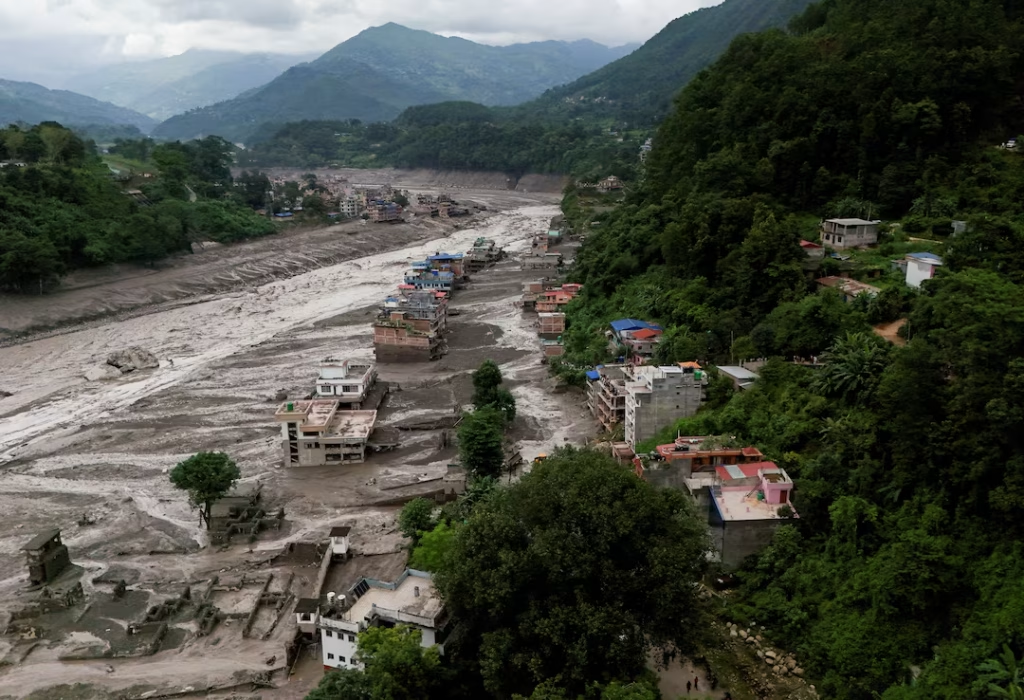
The flooding has caused widespread destruction near Nepal’s border with Tibet, killing people, leaving others missing and sweeping away homes, roads, bridges and other infrastructure.
Satellite images have provided important clues about what may have happened high in the mountains before the sudden surge of water and debris reached populated areas.
Experts believe the collapse of a glacier or a combination of ice, rock and water may have generated an enormous flow that travelled rapidly downstream.
The possibility of a glacial event has renewed attention on the vulnerability of communities living below rapidly changing Himalayan landscapes.
Climate change is causing glaciers across the Himalayas to retreat and is contributing to the formation and expansion of glacial lakes. In some circumstances, the natural barriers holding such lakes can fail, releasing enormous quantities of water in what is known as a glacial lake outburst flood.
However, scientists have cautioned that establishing the precise trigger requires detailed investigation and that several geological and hydrological factors may have combined to produce the disaster.
The Himalayan region is particularly vulnerable because steep terrain allows water, ice and debris to travel downstream at extraordinary speed.
The destruction of bridges and roads has made rescue operations more difficult, while damaged communication networks have complicated efforts to determine the full extent of casualties.
The disaster has also placed Indian tourists and pilgrims in the region under heightened scrutiny, with authorities working to establish the safety of nationals stranded in affected areas.
Experts say the disaster underlines the urgent need for improved monitoring of glaciers and glacial lakes, better early-warning systems and stronger disaster preparedness in Himalayan communities.