

Tiruchirappalli (East): Rockfort City’s Urban Core, Cauvery-Centre Geography and the Civic Pulse of Central Tamil Nadu
 By Nandhini
- Tamil
- Hindi
- Malayalam
- Kannada
- Telugu
Constituency No. 141 | Tiruchirappalli District | General
Tiruchirappalli (East) is one of the important urban constituencies of Tamil Nadu because it belongs to one of the state’s most strategically placed and historically layered cities. Tiruchirappalli — widely called Trichy — sits near the geographic centre of Tamil Nadu and has long functioned as a meeting point of river, road, rail, religion, education, trade and politics. Within that larger city, Tiruchirappalli (East) represents an especially significant urban stretch shaped by dense residential zones, commercial activity, educational institutions, transport access and the wider gravitational pull of the city’s historic landmarks.
This is not a peripheral suburb. It belongs to the core urban system of Trichy, a city that for centuries has mattered out of proportion to its size. Dynasties fought over it, traders passed through it, pilgrims visited it, British administrators used it, and modern Tamil Nadu still depends on it as a transport, educational and administrative hub.
Tiruchirappalli (East) therefore has to be understood not just as an Assembly seat, but as part of a major city whose significance runs through the political and civic life of the state.
A City Near the Centre of Tamil Nadu

One of Tiruchirappalli’s enduring strengths is geography. It sits in central Tamil Nadu, giving it a natural advantage as a transport and administrative node. From Trichy, routes fan out toward Chennai, Madurai, Thanjavur, Karur, Dindigul, Pudukkottai, Tiruvarur and the delta districts. This central location has made the city a logistical hinge for decades.
That geographic centrality influences Tiruchirappalli (East) directly. The constituency benefits from the city’s importance as a regional connector. Whether one is thinking about movement of passengers, goods, students, pilgrims or government activity, Trichy’s central position matters. It gives the constituency an urban seriousness that smaller district-town seats do not possess.
Cauvery, Kollidam and the Riverine Setting

Tiruchirappalli cannot be understood without the Cauvery. The city lies in the riverine zone shaped by the Cauvery and the Kollidam, and this water geography has deeply influenced settlement, agriculture, temple culture and political imagination. Nearby Srirangam, sitting between the river channels, gives the larger city one of its great sacred dimensions, while the Cauvery-fed plains have historically sustained the economy of the region.
For Tiruchirappalli (East), this means belonging to a city that is not just urban in the concrete sense, but river-anchored in the civilisational sense. The Cauvery gave Trichy its fertility, its temple ecology and its wider importance in the history of central Tamil Nadu.
Rockfort and the Historic City

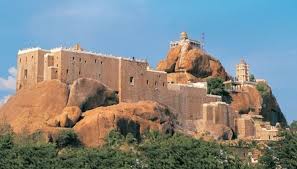
No portrait of Trichy is complete without the Rockfort, the city’s most iconic landmark. Though not every part of Rockfort falls within the Assembly segment, Tiruchirappalli (East) exists under the cultural and political shadow of that extraordinary formation. The rock rising above the city, crowned by temples and carrying memories of warfare, dynastic struggle and colonial-era conflict, defines Trichy’s visual identity.
The Ucchi Pillaiyar Temple atop the rock and the Thayumanaswamy Temple below it are not merely tourist sites; they are part of the emotional architecture of the city. They give Tiruchirappalli its spiritual skyline.
A seat like Tiruchirappalli (East) therefore draws identity from a larger urban civilisation built around landmark, river and temple.
Temple Culture and Urban Religion


Trichy is one of those Tamil cities where religion is not confined to one shrine or one festival. The wider urban region includes great centres such as Srirangam Ranganathaswamy Temple, Jambukeswarar at Thiruvanaikaval, the Rockfort temples, and many neighbourhood shrines dedicated to Shiva, Vishnu, Amman and Murugan.
Within the eastern urban belt, temples remain woven into local life. Daily worship, street-corner shrines, festival processions and neighbourhood devotional culture still shape the social rhythm of the constituency. Urbanity in Tamil Nadu rarely erases religion; in Trichy it coexists with education, bureaucracy and commerce.
That is one reason the city feels layered rather than merely modern.
Rail Junction and Transport Strength
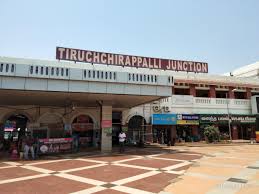
If Chennai is the state capital and Coimbatore its western industrial giant, Tiruchirappalli is one of Tamil Nadu’s great transport brains. The Tiruchirappalli Junction is among the most important railway hubs in the state. It links central Tamil Nadu with the north, south, west and delta districts. Generations of travellers know Trichy as a junction city — a place where one changes trains, changes routes and often changes pace.
The city also has an airport and major road connectivity, adding to its regional pull. For Tiruchirappalli (East), this transport strength translates into urban vitality. Trade, services, hospitality, coaching centres, offices and retail all grow more easily in a city that stays connected.
Commerce, Education and Urban Life
Tiruchirappalli is a city of students, traders, government employees and service-sector workers. The wider city hosts major educational institutions, training centres and professional colleges. That gives the urban electorate a certain character: aspirational, mobile and civic-minded.
Commercially, the city supports textile trade, jewellery, retail, hotels, eateries and a range of professional services. Tiruchirappalli (East), being part of this urban grid, draws from that ecosystem. The constituency includes densely lived neighbourhoods where residential and commercial uses frequently overlap.
This mix matters politically. The voter here is not only shaped by temple sentiment or party tradition, but also by traffic, drainage, roads, business climate, property values, education access and urban amenities.
Cuisine and Everyday Identity
Trichy’s food culture is less loudly branded than some other Tamil cities, but it is no less important. The city is known for its strong tiffin culture, mess traditions, vegetarian eateries near temple zones, biryani and parotta circuits in busier urban stretches, and the wider influence of central Tamil Nadu cooking.
The constituency benefits from this larger culinary ecosystem of markets, bakeries, coffee spots and long-standing eateries.
Urban identity in Trichy is built not only through monuments but also through these everyday habits of food, trade and movement.
Political Significance
Tiruchirappalli city has long mattered in Tamil Nadu politics because it sits at the intersection of region, religion and transport. It has produced or hosted several influential political personalities and often serves as a barometer of urban-central Tamil Nadu sentiment.
Tiruchirappalli (East), as part of this larger city, is therefore not a marginal seat. It is politically watched because Trichy itself matters.
A city constituency like this tends to reward organisation, visibility and civic responsiveness. Urban voters are often sharper in judging delivery because they see both promise and failure at close range every day.
Electoral Ledger
2011
Winner – M. Manoharan (AIADMK) – 79,482 votes
Second – K. N. Nehru (DMK) – 77,760 votes
Third – N. Jeyaprakash (DMDK) – 11,208 votes
Winning Margin: 1,722 votes
2016
Winner – Natarajan N (AIADMK) – 79938 votes
Second – Jerome Arockiaraj G (INC) – 58044 votes
Third – DR.Rohaiyaah Shaik Mohamed (MDMK) – 9694 votes
Winning Margin: 21894 votes
2021
Winner – Inigo S. Irudayaraj (DMK) – 94,302 votes
Second – V. Vellamandi N. Natarajan (AIADMK) – 40505 votes
Third – Prabhu R. (Naam Tamilar Katchi) – 14312 votes
Winning Margin: 53797 votes
The pattern shows a competitive urban constituency where margins are real, but not unreachable. That makes party machinery and candidate profile especially important.
Urban Issues That Matter
In a seat like Tiruchirappalli (East), the decisive issues are usually practical and visible:
traffic flow, road quality, drainage, water supply, waste management, commercial regulation, public transport,
flood preparedness, neighbourhood upkeep and urban planning.
Because this is part of a major city, the electorate often expects not just promises but functioning systems.
Closing Frame
Tiruchirappalli (East) belongs to one of Tamil Nadu’s most prominent cities — a city of Cauvery memory, temple skylines, rail junction importance and central-state geography. It draws strength from Trichy’s old civilisational weight and its modern urban momentum.
Here the pulse of the constituency is the pulse of the city itself: devotional yet practical, historic yet busy, central in location and central in significance.
When Tiruchirappalli (East) votes, it speaks as part of Trichy — one of Tamil Nadu’s enduring urban hearts.