


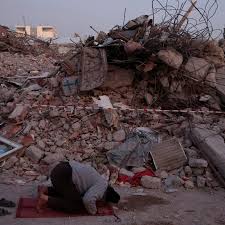
Over a month after three deadly earthquakes struck Turkiye, experts are trying to piece together information on the compliance level of buildings in the geologically fragile region. A recent report outlining preliminary findings of damage assessment of the earthquakes shows violations of the building code stipulations in the past two decades contributed to a large number of lives lost and extensive damage to infrastructure. Over 48,000 people have died so far in the February 6 quakes and nearly 1.2 lakh people have been injured. The report by a team of scientists from Middle East Technical University (METU), Ankara, and colleagues also observed that in Gaziantep, Hatay, Kahramanmaraş, and Adıyaman provinces, the buildings were subjected to seismic shocks larger than what the Turkish Earthquake Code (2018) design levels provided for. The experts noted that regardless of the unprecedented nature of the earthquakes, buildings should have endured and not suffered collapses the way they did. The ‘Preliminary Reconnaissance Report’ by the international team said that buildings designed and constructed post 2002 could be presumed to perform better during the quakes than the older buildings. However, the report shows that more than 1,000 buildings constructed after 2000 were heavily damaged or collapsed, violating the performance objective given in the code which assesses the seismic risk of a building with respect to its geographical location. This, the report said, appeared to be an important observation demanding further investigations on the design and construction quality of those buildings. ”Inadequacies could also develop due to the presence of ”soft stories,” which are entrances or basements not having continuity of its walls with those of the upper storeys,” explained Bora Sezer, a structural earthquake engineer based in Istanbul, Türkiye. ”The structures were poorly built. Normally, checks should be done during the construction of the s