


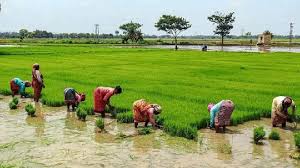
 New Delhi, Dec 30: India is poised to achieve new heights in foodgrain production in 2025, driven by favourable monsoon, though significant challenges persist in pulses and oilseeds production as the country’s agricultural sector shows signs of robust recovery.
The Agriculture Ministry’s initial projections paint an optimistic picture, with kharif (summer) foodgrain production estimated at a record 164.7 million tonnes for the 2024-25 crop year ending June 2025.
Winter crop planting has maintained steady progress, with wheat sown across 29.31 million hectares as of mid-December 2024, while total rabi (winter) crops cover 55.88 million hectares.
“We had a good kharif crop because of normal rainfall,” Agriculture Secretary Devesh Chaturvedi said.
“Overall, the crop prospect for the whole year looks promising,” he added, though cautioning against potential heat waves in February-March that could affect the winter wheat harvest.
The agricultural sector is projected to bounce back strongly, with growth projections of 3.5-4 per cent in 2024-25, up from 1.4 per cent in the previous fiscal year.
Agri-economist S Mahendra Dev attributes this improvement to “good monsoon and rise in rural demand”.
This growth comes despite localised floods and droughts affecting crops in parts of Maharashtra, Uttar Pradesh, and Rajasthan. Climate change-induced weather anomalies have particularly impacted onion and tomato yields in certain regions.
However, the path ahead isn’t without hurdles.