


Chennai, August 12:
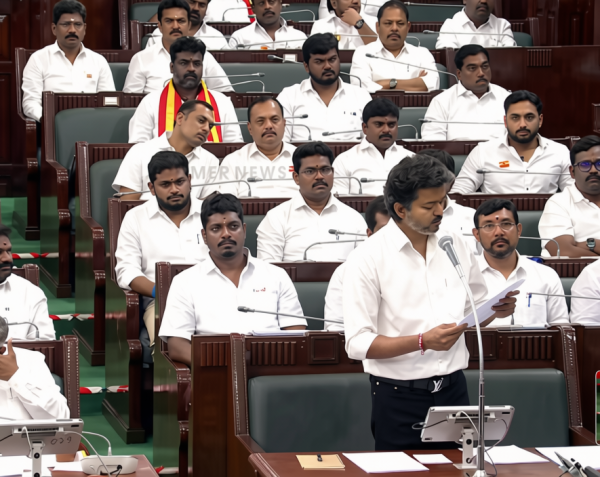
The Tamil Nadu Assembly on Wednesday adopted a resolution urging the Centre to maintain the existing strength of 543 Lok Sabha seats and freeze the proposed delimitation exercise for another 25 years, amid growing concerns that the exercise could reduce the State’s representation in Parliament.
The resolution was adopted after members of various political parties voiced apprehensions over the possible impact of delimitation on Tamil Nadu. The demand comes amid reports that the Union government is examining the possibility of bringing a Constitutional Amendment Bill to facilitate a fresh delimitation exercise after the completion of the Census.
The State’s political parties have been divided over the issue, although there is broad agreement that Tamil Nadu’s existing parliamentary representation should be protected. Tamil Nadu currently has 39 Lok Sabha seats and 18 Rajya Sabha seats.
The resolution also comes four days after Chief Minister and TVK founder Vijay convened an all-party meeting of MPs to discuss the proposed delimitation exercise. The meeting was attended by MPs from the ruling TVK and its supporting parties, including the Congress, VCK, CPI, CPI(M) and IUML, but was boycotted by the DMK and AIADMK and their allies.
The DMK, which has 22 Lok Sabha and eight Rajya Sabha members, stayed away from the meeting, while the AIADMK and PMK also declined to participate. The opposition parties argued that there was no official confirmation from the Centre about introducing a delimitation Bill and accused the ruling party of using the issue for political purposes.
However, the Assembly resolution has brought the demand for a freeze in delimitation to the floor of the State legislature, reinforcing Tamil Nadu’s long-standing position that States which successfully implemented population-control measures should not be penalised through a reduction in their parliamentary representation.
DMK Parliamentary Party leader and deputy general secretary Kanimozhi said there was no change in the party’s position on delimitation. She recalled the resolutions adopted at earlier all-party meetings and reiterated the demand for freezing delimitation for another 30 years.
She also referred to the assurance given by the Centre in 2000 that the delimitation exercise would be based on the 1971 Census. The DMK has demanded that the Centre provide a fresh assurance that the existing freeze should continue from 2026.
Tamil Nadu’s present representation accounts for about 7.18 per cent of Parliament’s total strength. Kanimozhi said the State should not lose representation because it had successfully implemented population-control and socio-economic welfare measures over several decades.
The DMK has maintained that it is not opposed to delimitation as such, but wants a “fair delimitation” that does not reduce Tamil Nadu’s parliamentary representation. The party has also favoured increasing the overall strength of both the Lok Sabha and Rajya Sabha without diminishing the representation of States such as Tamil Nadu.
The current freeze on Lok Sabha constituency allocation is linked to the 1971 Census. With the latest Census expected to be completed in 2027, political parties in Tamil Nadu have expressed concern that a fresh population-based exercise could substantially alter the distribution of parliamentary seats between States.
The Centre has maintained that there would be no reduction in the number of seats held by existing States and has indicated that the total strength of the Lok Sabha could instead be increased. However, the possibility of a larger increase in representation for States with higher population growth has triggered apprehension in southern States.
Tamil Nadu’s argument is that rewarding population growth while potentially reducing the relative representation of States that successfully controlled population growth would create an unfair incentive structure.
The Assembly’s resolution now puts the State government’s demand on record: retain the existing 543-seat framework and freeze delimitation for another 25 years. The issue is expected to remain a major political and constitutional debate as the Centre prepares for the post-Census delimitation process.