


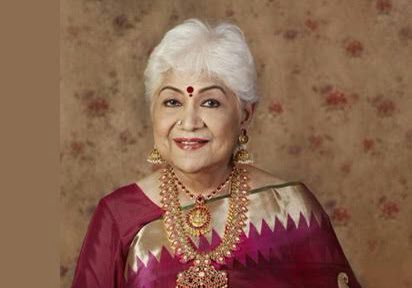
Veteran actress Sowcar Janaki, one of the most distinguished and versatile artistes of Indian cinema, died on Friday at the age of 94. She passed away at 1.59 pm, bringing to an end an extraordinary career that spanned more than seven decades and nearly 400 films across Tamil, Telugu, Kannada and Malayalam cinema.
She entered films at a remarkably young age and went on to become one of the defining actresses of South Indian cinema. Her screen career began with the Telugu film Shavukaru in 1950, which gave her the screen name “Sowcar” Janaki. She subsequently became a leading actress in Tamil and Telugu cinema before establishing herself as a formidable character artiste.
She was far more than a conventional heroine. Janaki possessed a rare ability to move effortlessly between romance, drama, comedy, tragedy and emotionally complex character roles. Her career included nearly 400 films, besides extensive work on stage and radio. She also remained active in theatre for decades, performing in hundreds of shows.
A memorable association with K. Balachander
Among the most important creative partnerships in Janaki’s career was her association with legendary filmmaker and playwright K. Balachander.
Their relationship began in theatre. Janaki acted in Balachander’s stage productions, including Meleuguvarthi (Candle Light), at a time when he was running his drama troupe. Their association later moved to cinema, resulting in some of the most memorable performances of her career.
Balachander brought out a different dimension of Janaki’s talent. In Kaviya Thalaivi, she played a challenging dual role as mother and daughter, demonstrating the dramatic range that would become a hallmark of her career. She subsequently appeared in Balachander’s Bama Vijayam, Ethir Neechal and Thillu Mullu, among other works. Janaki herself had recalled that Balachander gave her considerable freedom to offer suggestions about her characters and performances.
Her performances in Balachander’s films helped establish that she could command a film even when she was no longer playing the conventional heroine. She became an actress whose presence could give a character depth, humour and emotional authority.
Puthiya Paravai: a role that remains unforgettable
If there was one film that demonstrated the extraordinary possibilities of Sowcar Janaki’s talent, it was the 1964 Sivaji Ganesan classic Puthiya Paravai.
Directed by Dada Mirasi and produced by Sivaji Ganesan, the film starred Sivaji, B. Saroja Devi and Sowcar Janaki. Janaki played the crucial dual role of Chitra and Sarasa, giving the film one of its most memorable dramatic turns.
Her performance opposite Sivaji Ganesan was particularly special. She was not merely a supporting presence alongside the legendary actor; she became an integral part of the film’s suspense and emotional architecture. Her sophisticated portrayal of the two contrasting characters remains one of the celebrated performances of Tamil cinema’s golden era.
Sivaji himself held Janaki in high regard. Their professional partnership was marked by mutual respect, and Janaki had spoken of the challenge of working with an actor of Sivaji’s stature. Their ability to rehearse together and adjust their performances contributed to the strength of their scenes.
From leading lady to character powerhouse
Janaki’s filmography reads almost like a history of South Indian cinema. She worked with some of the greatest stars of different generations, including Sivaji Ganesan, M.G. Ramachandran, Gemini Ganesan, Rajkumar, N.T. Rama Rao, Akkineni Nageswara Rao, Prem Nazir, Kamal Haasan, Rajinikanth and Mammootty.
Films such as Valayapathi, Pallum Pazhamum, Panam Padaithavan, Paar Magale Paar, Motor Sundaram Pillai, Iru Kodugal, Uyarndha Manithan, Neerkumizhi, Mahakavi Kalidas, Bama Vijayam, Ethir Neechal and Thillu Mullu showcased different facets of her artistry.
Her transition from heroine to character roles was equally remarkable. Rather than allowing age to define her career, she embraced meaningful roles and continued to leave an impression on audiences. Her later performances in films such as Vetri Vizha, Puthu Puthu Arthangal, Hey Ram and Biskoth reflected the same commitment to performance.
A career beyond cinema
Janaki’s artistic journey extended well beyond the silver screen. She was a radio artiste in her younger years and remained deeply connected with theatre. Her stage career included hundreds of performances, including productions associated with Balachander.
She was also recognised for her contribution to cinema with several major honours, including the Kalaimamani, Filmfare Lifetime Achievement Award – South, SIIMA Lifetime Achievement Award and the Tamil Nadu State Film Award for Best Actress for Iru Kodugal.
The Government of India honoured her with the Padma Shri in 2022, recognising her immense contribution to Indian cinema.
An institution in herself
Sowcar Janaki belonged to a generation of artistes for whom acting was not merely about stardom. It was about craft, discipline and the ability to inhabit a character.
Her career connected the early post-Independence years of Indian cinema with contemporary filmmaking. She successfully crossed linguistic and generational boundaries and remained relevant for decades.
For Tamil cinema, she will be remembered not simply as the heroine of a bygone era, but as an actor’s actor—an artiste who could stand alongside giants such as Sivaji Ganesan and yet create an identity entirely her own.
From the dramatic intensity of Puthiya Paravai to the sharp humour and humanity of Balachander’s films, Sowcar Janaki leaves behind a body of work that will continue to be revisited and celebrated.
The screen has lost one of its most enduring women. But Sowcar Janaki’s characters—and the extraordinary artistry with which she brought them alive—will remain.