


Chennai, Aug 22:
Inflow into the Cauvery at Hogenakkal rose to 12,000 cusecs on Saturday following continued releases from Karnataka’s Kabini and Krishnarajasagar (KRS) dams, prompting authorities to maintain safety restrictions for tourists at the popular waterfall destination.
The inflow at Hogenakkal was recorded at 10,000 cusecs at 6 am and subsequently increased to 12,000 cusecs, according to officials. The Central Water Commission is closely monitoring the flow at Biligundlu, along the Tamil Nadu-Karnataka border.
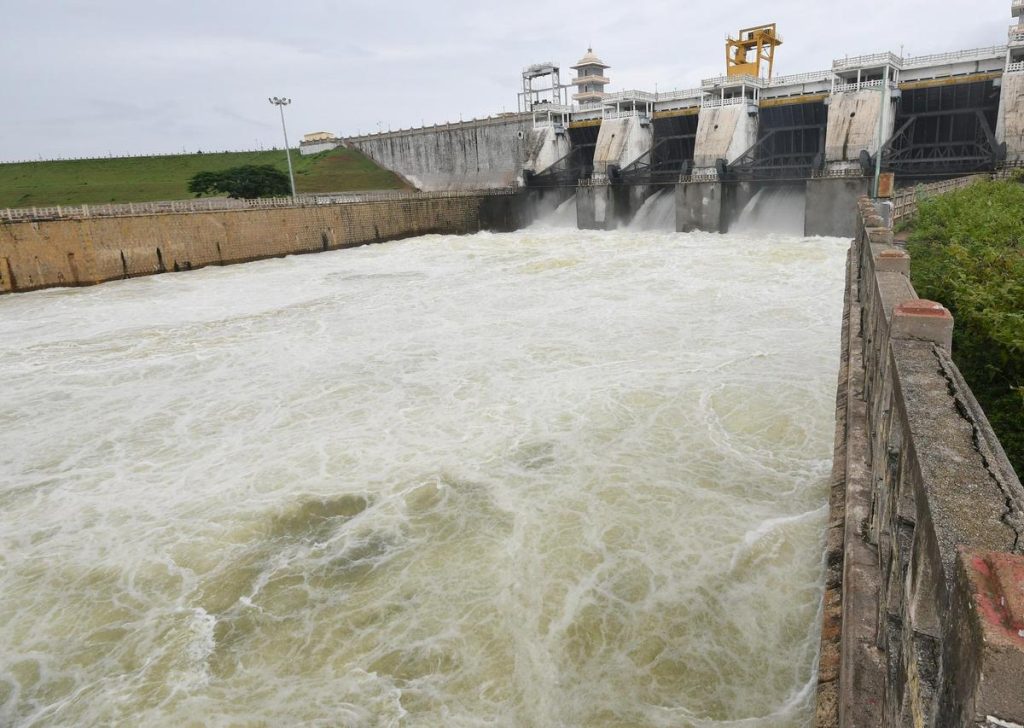
Around 4.95 TMC of water was released from the Kabini dam to Tamil Nadu over the past nine days following directions from the Cauvery Water Management Authority. The continuous release from the dam during this period has resulted in a decline of around seven feet in its water level.
The Kabini dam’s water level stood at 2,275.56 feet at 8 am on Friday, against its maximum level of 2,284 feet. Its level was 2,282 feet on August 13. The dam has a total storage capacity of 19.52 TMC and held around 14.57 TMC on Friday.
The inflow into Kabini was around 7,184 cusecs, while its discharge into the Cauvery was 12,940 cusecs.
Meanwhile, the KRS dam near Kannambadi in Srirangapatna taluk of Mandya district had a water level of 108.95 feet at 8 pm on Friday, against its full reservoir level of 124.80 feet. The inflow into the reservoir was 1,551 cusecs, while 2,000 cusecs was being released into the Cauvery.
Together, the KRS and Kabini dams were releasing around 14,940 cusecs of water into the Cauvery for Tamil Nadu.
The increased discharge from Karnataka has resulted in a noticeable rise in the Cauvery flow downstream, with the Hogenakkal inflow reaching 12,000 cusecs on Saturday.
In view of the increased water flow, the Dharmapuri district administration has continued the ban on coracle operations at Hogenakkal as a precautionary measure. Authorities have advised visitors to follow safety restrictions as water levels and currents can change rapidly.
Officials are continuing to monitor the river at Hogenakkal and other points, particularly the flow at Biligundlu, as water released from Karnataka makes its way into Tamil Nadu.