


Chennai, Aug 28:
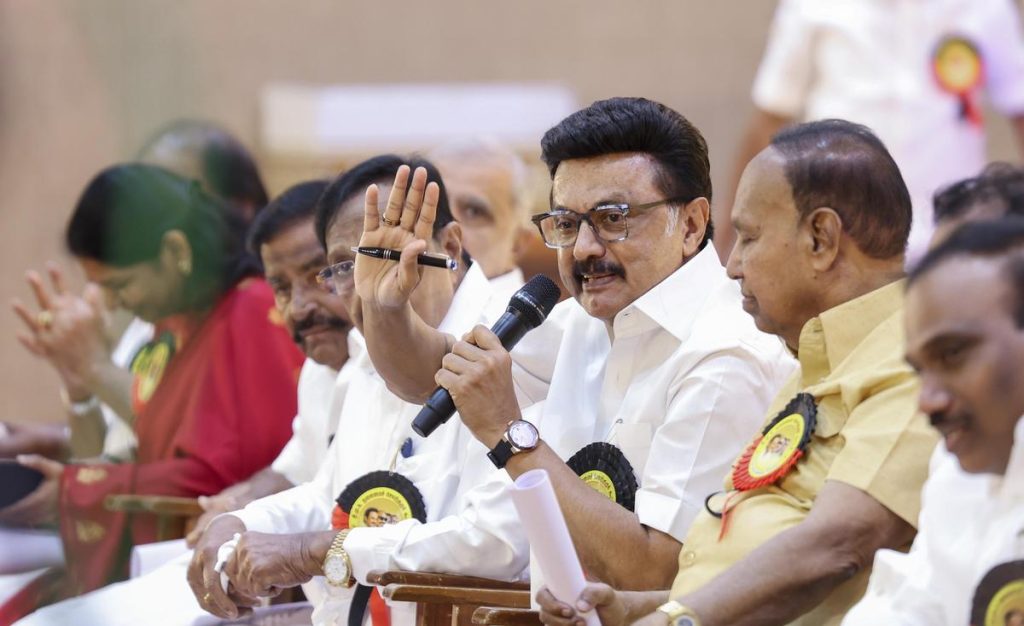
DMK president M K Stalin on Friday announced a major organisational restructuring of the party, increasing the number of district units from 77 to 110 and reorganising Assembly constituencies under the new structure as part of preparations for the DMK’s 16th organisational elections.
In a statement issued from the party headquarters at Anna Arivalayam, Stalin said the DMK had always functioned on four fundamental pillars — ideology, organisational structure, activities and its cadres — and had continuously renewed, strengthened and enriched these foundations over the years based on the thoughts and aspirations of its cadres.
He said the party’s headquarters executive committee meeting held on August 22 had adopted several important resolutions aimed at carrying out administrative and organisational reforms. The decisions included conducting the DMK’s 16th organisational elections and introducing changes to strengthen the party’s structure at various levels.
Stalin noted that since its formation, the DMK had conducted organisational elections on 15 occasions to elect its office-bearers. The upcoming exercise would mark the party’s 16th organisational election.
A key resolution adopted at the executive committee meeting concerned the restructuring of district units. The party resolved to increase the number of organisational districts from the existing 77 to 110 and authorised Stalin to determine the Assembly constituencies that would fall under each newly constituted district.
Following recommendations submitted by the DMK’s organisational restructuring committee and consultations with party leaders, Stalin announced the division of Assembly constituencies across Tamil Nadu into 110 organisational districts.
The restructuring is aimed at making the party administration more focused and manageable at the grassroots level by reducing the number of Assembly constituencies handled by individual district units. The party had earlier indicated that the larger organisational overhaul would include changes in the functioning of district-level leadership and efforts to strengthen the DMK’s presence closer to the constituency level.
Stalin said Sholinganallur would be the only Assembly constituency to be declared an exclusive organisational district because of its large population.
He directed the existing district secretaries in all the newly announced 110 districts to convene district executive committee meetings in the presence of representatives to be deputed by the party headquarters.
The district units have been asked to submit their recommendations within 15 days for reorganising the party’s city, union, area, town, ward and branch-level structures in accordance with the newly created organisational districts.
Stalin further instructed party functionaries to implement the restructuring exercise in line with the resolutions adopted by the headquarters executive committee and the guidelines to be issued by the party’s restructuring committee.
The organisational overhaul marks one of the most significant structural changes undertaken by the DMK in recent years, with the party seeking to modernise and strengthen its grassroots machinery through a wider network of district units. The August 22 executive committee resolutions also included broader reforms relating to district-level leadership, including age and tenure restrictions, as part of the party’s restructuring exercise.