


New Delhi, Oct 30:
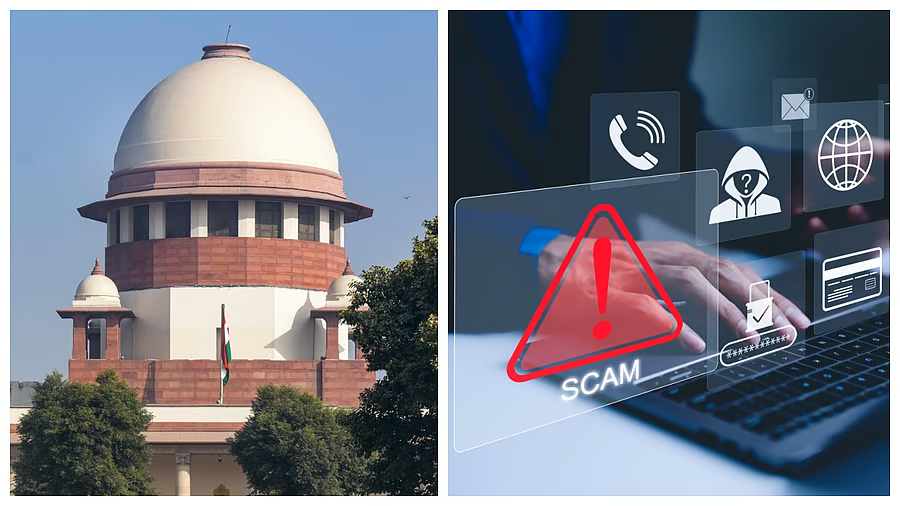
The Supreme Court on Thursday said banks and other financial institutions must compensate customers who lose money to digital fraud, including so-called digital arrest scams, if an investigation establishes that the fraud resulted from their failure to exercise due diligence. The compensation must not be less than the amount lost by the victim, the court said.
A three-judge Bench comprising Chief Justice Surya Kant and Justices Joymalya Bagchi and V Mohana said the proposed Reserve Bank of India (RBI) regulatory framework must include enforceable provisions fixing responsibility on financial institutions. In its order, the Bench emphasised that banks must indemnify victims where their due-diligence failures contribute to the fraud. It also stressed that general advisories would not be sufficient without clear obligations and consequences for non-compliance.
The court called for mandatory safeguards, including temporary suspension of transactions that are unusual or inconsistent with an account holder’s past transaction pattern, automated reporting of suspicious activity and physical verification to establish the genuineness of transactions. It also said banks should alert nearby police stations when unusual transactions indicate that a customer could be a victim of digital arrest.
The Bench said it would examine the RBI’s proposed Know Your Customer (KYC) Amendment Directions, 2026, before allowing the regulatory process to proceed. The proposed directions are expected to be notified by November 30 and operationalised by December 31. The court also asked the RBI to submit a list of authorised financial institutions that would be covered by the framework.
Attorney General R Venkataramani informed the court that reported digital arrest cases had declined by around 50 per cent following coordinated action and the court’s intervention. However, the Chief Justice pointed out that losses from such offences had still reached nearly Rs 800 crore this year. The court stressed that prevention must be prioritised, rather than merely reporting fraud after money has been transferred.