


SEOUL,Nov 4:
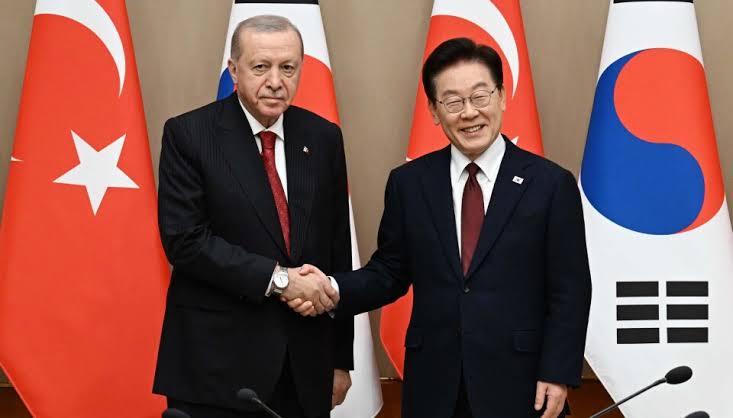
South Korea and Turkey have agreed to expand their strategic partnership, placing nuclear energy and defence cooperation at the centre of their bilateral agenda. The understanding was reached during talks between Turkish President Recep Tayyip Erdogan and South Korean President Lee Jae Myung in Seoul on November 3. The agreements signal an effort by both countries to move beyond traditional trade relations and deepen industrial and technological cooperation at a time when energy security and defence capabilities are gaining greater strategic importance.
Nuclear energy emerged as one of the key areas of discussion, particularly Turkey’s proposed nuclear power plant at Sinop. South Korean companies are seeking a role in the project, which has been under consideration since the two countries signed a memorandum of understanding in November 2025. Erdogan said the latest documents would take bilateral cooperation in nuclear energy further, while Lee described progress on the Sinop project as smooth. A new memorandum covering financing cooperation for nuclear power projects was also signed to support the participation of South Korean companies.
For Turkey, the partnership offers an opportunity to access South Korea’s established expertise in advanced engineering, nuclear technology and industrial manufacturing. The Sinop project is significant not only for its potential contribution to Turkey’s energy requirements but also for the country’s broader ambition to diversify its energy sources. South Korea, meanwhile, sees the partnership as an opportunity to expand the international reach of its nuclear industry and secure a stronger position in overseas infrastructure projects.
Defence cooperation formed the other major pillar of the discussions. Lee said both countries had agreed to expand joint production and technological collaboration while exploring opportunities for companies from the two nations to enter third-country markets together. Although neither leader disclosed specific projects, the emphasis on joint production suggests that the partnership could extend beyond equipment purchases towards deeper industrial collaboration. Erdogan highlighted defence as an area where the strategic relationship had already delivered tangible results and called for more successful joint projects.
The discussions also covered South Korea’s technological capabilities, particularly in semiconductors and other advanced industries. Turkey has been seeking to strengthen its domestic industrial and defence capabilities, making South Korean expertise relevant to its long-term economic and strategic plans. For Seoul, closer engagement with Turkey provides access to a partner positioned between Europe, Asia and the Middle East, while creating opportunities for South Korean companies in energy, manufacturing and defence markets.
The economic relationship provides a strong foundation for the expanded partnership. Bilateral trade between South Korea and Turkey reached a record $10.7 billion in 2025, supported by a free trade agreement that came into effect in 2013. The latest agreements indicate that both governments want to build on this commercial relationship through long-term cooperation in strategic sectors. Whether the commitments translate into major projects will depend on financing arrangements, industrial participation and the implementation of the proposed initiatives. For now, the Seoul summit marks a significant step towards a broader partnership linking energy security, defence production and advanced technology.