


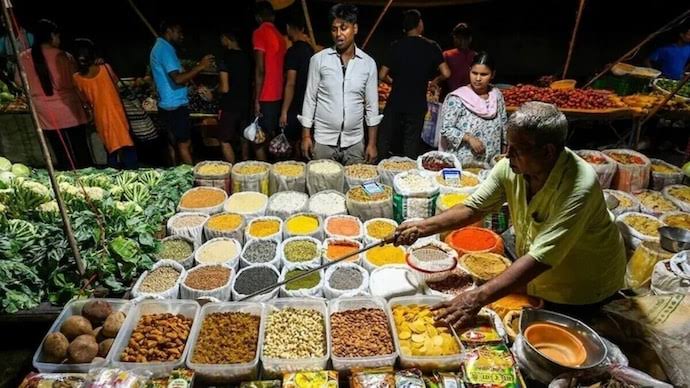
Chennai, Nov 13:
India’s retail inflation climbed to 6.09 per cent in October, crossing the Reserve Bank of India’s upper tolerance threshold of 6 per cent for the first time in two years. The sharp increase has strengthened expectations among economists that the central bank could raise interest rates again at its December policy review.
Consumer Price Index (CPI)-based inflation had stood at 5.54 per cent in September. Higher prices of food and beverages, restaurant services and transport contributed to the latest increase, indicating that inflationary pressures are spreading across several segments of the economy.
Figures released by the Ministry of Statistics and Programme Implementation showed that food inflation accelerated to 8.94 per cent in October, compared with 7.74 per cent in the preceding month.
Inflation increased across 11 of the 12 major categories covering goods and services. Restaurant and accommodation services recorded inflation of 10.06 per cent, while the food and beverages category registered 8.51 per cent. Personal care, miscellaneous goods and services saw inflation rise to 10.14 per cent.
Among individual items, onions recorded the steepest price increase at 116.22 per cent. Garlic prices rose 60.74 per cent, followed by silver jewellery at 52.39 per cent, ginger at 48.32 per cent and lemons at 47.30 per cent.
The October reading is significant as it marks the first breach of the RBI’s upper inflation limit in two years. Under its inflation-targeting framework, the central bank is required to maintain retail inflation within a range of 2-6 per cent. The previous instance of inflation crossing this threshold was in October 2024, when it reached 6.25 per cent.
Radhika Rao, Senior Economist and Executive Director at DBS Bank, attributed the October surge primarily to rising food prices, while noting that inflationary pressures were becoming more widespread on a sequential basis.
She said the headline inflation rate had not yet reached its peak and that an unfavourable base effect could push the RBI to revise its quarterly inflation estimates upwards.
According to Rao, the latest figures reinforce expectations of another interest rate increase in December, which would mark the second consecutive hike.
The RBI raised its benchmark policy rate by 25 basis points to 5.50 per cent in October, marking its first increase in nearly four years. The central bank had indicated that additional tightening remained possible amid persistent inflation, rupee weakness and elevated crude oil prices.
The October CPI data assumes particular importance ahead of the Monetary Policy Committee’s meeting scheduled for December 2-4. ICRA expects inflation in the food and beverages segment to remain above 8 per cent in November 2026, broadly in line with October’s level. Higher prices of milk, sugar and onions are among the factors likely to keep food inflation elevated.
Concerns over agricultural production have added to the inflation risks. Below-normal monsoon conditions and inadequate replenishment of reservoir levels have raised questions about the outlook for the upcoming rabi crop season.
ICRA Chief Economist Aditi Nayar said the combination of persistent inflation and relatively resilient economic growth could leave little room for the RBI to delay further monetary tightening.
She expects CPI inflation to remain above the central bank’s 6 per cent ceiling over the next couple of months. At the same time, GDP growth in the second quarter of FY2027 is expected to moderate only marginally from the previous quarter and remain above 7 per cent.
Against this backdrop, Nayar said another 25-basis-point increase in the policy rate in December appeared highly likely. She added that crude oil prices would be an important factor in determining the RBI’s policy direction in 2027, particularly the extent of any further rate increases. Recent moderation in global oil prices could influence that assessment.