

Nagapattinam: Port of the Cholas, Cyclone Coast and the Sacred Crossroads of Faiths
 By Nandhini
- Tamil
- Hindi
- Malayalam
- Kannada
- Telugu

Constituency No. 163 | Nagapattinam District | General
Nagapattinam stands on one of the most historic stretches of the Coromandel Coast. For more than a thousand years this coastal town has served as a port, a religious crossroads and a cultural gateway between Tamil Nadu and the wider Indian Ocean world. Sailors, merchants, monks and missionaries have passed through its shores, leaving behind temples, mosques, churches and even traces of a once-famous Buddhist centre.
Today Nagapattinam is known equally for its deep historical legacy and its vulnerability to the sea. Cyclones from the Bay of Bengal regularly sweep across this coast, shaping the life of fishing communities and reminding the town of its precarious relationship with the ocean.
Yet despite the storms, Nagapattinam remains a place where history, faith and maritime life continue to intersect.
Chola Port of the Eastern Seas
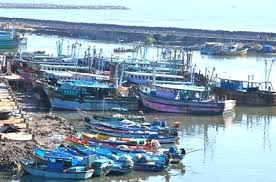
Nagapattinam’s recorded history stretches back to the Chola period, when it emerged as one of the most important maritime centres of South India. Chola kings used the port to maintain trade connections with Southeast Asia, Sri Lanka and other regions across the Bay of Bengal.
Historical inscriptions and literary sources describe Nagapattinam as a thriving harbour town where merchants, pilgrims and travellers arrived by sea. Ships carried textiles, spices and other goods from the Tamil country to distant markets.
The Cholas also patronised religious institutions here, contributing to the town’s remarkable diversity of temples and monasteries.
Thus Nagapattinam was not simply a port; it was an international gateway linking the Tamil region with the wider maritime world.
The Buddhist Legacy
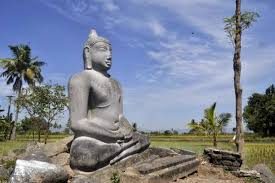
One of the most fascinating chapters in Nagapattinam’s history is its connection to Buddhism. Historical records indicate that during the Chola period a major Buddhist establishment existed in the town, often associated with Sri Lankan and Southeast Asian monks.
Archaeological discoveries made during earlier centuries unearthed Buddhist bronzes and sculptures that confirmed the presence of a significant Buddhist centre in the region. While the original monasteries no longer function today, the finds remain an important reminder of the town’s cosmopolitan past.
The Buddhist connection underscores Nagapattinam’s role as a meeting point of religious traditions in the medieval maritime world.
Temples of the Delta Coast
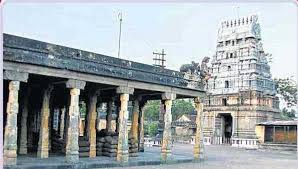
Nagapattinam also occupies an important place in the Saivite tradition of Tamil Nadu. The Kayarohaṇaswamy Temple is one of the prominent Shiva temples in the town and is celebrated in the hymns of the Nayanmar saints as a Paadal Petra Sthalam.
Devotees visit the temple seeking spiritual blessings, particularly during festival seasons when the temple streets come alive with processions and rituals. The temple’s architecture reflects layers of Chola and later-period additions.
The region surrounding Nagapattinam also contains numerous temples dedicated to Amman and Murugan, reinforcing the deep-rooted religious traditions of the Cauvery delta.
Nagore Dargah and Islamic Heritage
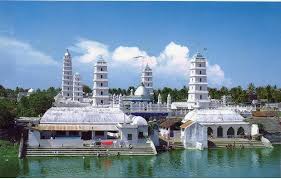
Just a short distance from Nagapattinam lies the celebrated Nagore Dargah, the shrine of the revered Sufi saint Hazrat Shahul Hameed. The dargah is one of the most important Islamic pilgrimage centres in South India.
Every year thousands of devotees from different faiths gather for the Nagore Kandhuri festival, a major religious event that reflects the region’s tradition of shared devotion.
The presence of the dargah adds another layer to the religious diversity of the Nagapattinam region.
Cyclones and the Sea
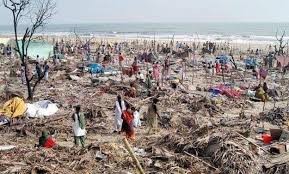
Nagapattinam’s coastal location exposes it to the full force of cyclones that develop over the Bay of Bengal. Storm surges, heavy rainfall and powerful winds have periodically struck the district, affecting fishing communities and coastal settlements.
The 2004 Indian Ocean tsunami also devastated parts of the Nagapattinam coast, causing widespread destruction and loss of life. Reconstruction efforts in the years that followed rebuilt housing, infrastructure and livelihoods for thousands of residents.
Cyclones remain a recurring challenge, and disaster preparedness continues to be an important aspect of governance in the region.
For the people of Nagapattinam, the sea is both livelihood and threat.
Fishing and Coastal Economy

Fishing forms the backbone of the local economy. Hundreds of boats operate from coastal landing centres, bringing in catches that supply markets across Tamil Nadu.
Fishing communities have lived along this coast for generations, developing deep knowledge of seasonal winds, tides and marine resources.
Alongside fishing, agriculture in nearby delta villages produces paddy and coconut, contributing to the region’s economic diversity.
Nagapattinam therefore combines maritime and agrarian livelihoods.
Electoral Ledger:
The constituency has witnessed competitive contests reflecting the broader political landscape of the Cauvery delta.
2011
Winner — K. A. Jayapal (AIADMK) — 88,265 votes
Runner-up — J. Anbazhagan (DMK) — 68,780 votes
Third — R. Rajendran (DMDK) — 20,542 votes
Winning Margin — 19,485 votes
2016
Winner — Thamimun Ansari. M (AIADMK ) — 64903 votes
Runner-up — Mohamed jafarullah A (MAMAK) — 44353 votes
Third — Dhameem Ansari Sahib A.B (CPI) — 11088 votes
Winning Margin — 20550 votes
2021
Winner — J. Mohamed Shanavas (VCK)— 66281 votes
Runner-up — Thanka Kathiravan (AIADMK) — 59043 votes
Third — S.Augustine Arputharaj (Naam Tamilar Katchi) — 9,976votes
Winning Margin — 7,238 votes
Left parties have historically maintained a presence in parts of the Nagapattinam region due to strong farmer and labour movements.
Civic and Development Concerns
Residents frequently highlight several development priorities:
cyclone-resistant housing and infrastructure
protection of coastal fishing livelihoods
improvement of port facilities
strengthening agricultural irrigation in nearby delta villages
Climate resilience has become an increasingly important issue for the constituency.
Political Temperament
The electorate of Nagapattinam includes fishermen, farmers, traders and workers connected to coastal industries. Political mobilisation often reflects both agrarian and maritime concerns.
Campaigns frequently focus on disaster preparedness, fishing rights and agricultural welfare.
Local leadership and alliance politics often influence electoral outcomes.
What Decides Nagapattinam
Three factors usually shape elections here:
Coastal livelihoods
Fishing communities form a crucial voting bloc.
Delta agriculture
Farmers in surrounding villages influence political priorities.
Cyclone resilience
Infrastructure and disaster management remain vital issues.
Nagapattinam voters therefore weigh both economic survival and long-term development when choosing their representatives.
Closing Frame
Along the shores of Nagapattinam, fishing boats return at dawn while temple bells ring and pilgrims gather at the Nagore dargah. The sea that once carried Chola ships across the Bay of Bengal still shapes the life of this ancient port.
Nagapattinam stands as a constituency where history meets the horizon — a town of temples, dargahs, vanished monasteries and resilient coastal communities.
When Nagapattinam votes, the verdict carries the voice of a coast that has faced storms for centuries and continues to endure.