

Ottawa, Nov 16:
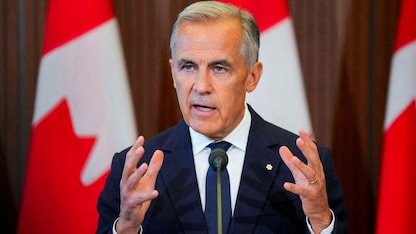
Canadian Prime Minister Mark Carney has indicated that his government could explore partnerships with Chinese, European or Japanese automakers if negotiations with US President Donald Trump fail to secure the future of Canada’s integrated North American automobile industry.
Carney made the remarks in Cambodia on Monday, ahead of a planned meeting with Chinese President Xi Jinping in Shenzhen later in the week. Cooperation in the automotive sector is expected to feature in their discussions.
The Canadian leader said his priority remained preserving an integrated North American market that would allow Canada’s automotive workforce and manufacturing facilities to operate at full capacity. However, he argued that US trade measures had weakened the integration of the regional industry.
Canada and China reached an agreement in January allowing tens of thousands of Chinese electric vehicles to enter the Canadian market at reduced tariffs.
Carney said any agreement with Washington must ensure that Canada retains a viable automobile sector. While negotiations with the US remain his preferred route, he said their outcome would influence whether Ottawa pursued other international partnerships.
Asked whether the possibility of Chinese investment was intended to put pressure on Washington, Carney rejected the suggestion, describing the situation as one of action and reaction.
He said Canada would seek alternative opportunities if its workers and manufacturing capacity could not be fully utilised within the North American market.
Ford, General Motors and Stellantis, commonly referred to as the Detroit Three, operate manufacturing facilities across Canada, the US and Mexico. Their supply chains are closely connected, with vehicle components often crossing national borders several times before final assembly. Trump has repeatedly urged automakers to shift production from Canada to the US.
Carney said any future Chinese investment in Canada’s automobile industry would have to involve substantial domestic manufacturing rather than simply assembling imported components. He said such projects would need to meet labour standards, establish manufacturing facilities and develop local supply chains over time. He also highlighted the potential role of Canadian critical minerals in supporting the electric vehicle industry.