

Mettur: The Dam that Shaped a Delta and the Industrial Edge of Salem
 By Mahalakshmi
- Tamil
- Hindi
- Malayalam
- Kannada
- Telugu
Constituency No. 85 | Salem District | General
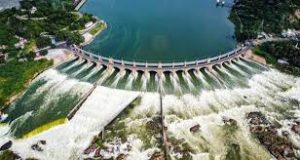
Few constituencies in Tamil Nadu can claim to influence the destiny of half the state’s agriculture. Mettur does. Perched along the banks of the Cauvery in Salem district, this town is defined by one monumental structure — the Mettur Dam, one of the largest and most important dams in southern India.
From this reservoir flows the lifeblood of the Cauvery delta. The opening of the Mettur dam each year marks the beginning of the agricultural season for farmers hundreds of kilometres downstream in the fertile plains of Thanjavur, Tiruvarur and Nagapattinam. When the shutters open, the delta celebrates; when water is delayed, anxiety spreads across the state’s agricultural heartland.
But Mettur is not merely a hydraulic landmark. It is also an industrial township, a power generation centre and a constituency where river, hill and industry converge. The town stands along the rocky edge of the Eastern Ghats, creating a dramatic landscape where the Cauvery widens into the vast Stanley Reservoir before flowing onward across Tamil Nadu.
The Dam That Feeds the Delta

The Mettur Dam, completed in 1934 during the British colonial period, remains one of the most significant irrigation projects in Tamil Nadu. Built across the Cauvery, the dam created the massive Stanley Reservoir, named after the then Governor of Madras.
The reservoir stretches across miles of water bordered by rocky hills, forming one of the most striking landscapes in the region. More importantly, it regulates the release of water to the Cauvery delta through an intricate irrigation network that sustains millions of farmers.
Every year the traditional June 12 opening of the dam becomes a symbolic moment in Tamil Nadu’s agricultural calendar. The water released from Mettur travels down the Cauvery to irrigate the paddy fields of the delta, reinforcing the dam’s immense importance to the state’s economy.
In this sense, Mettur is not merely a town — it is a hydraulic command centre that shapes the fortunes of Tamil Nadu’s farmers.
Stanley Reservoir and Hill Landscape
The vast Stanley Reservoir created by the dam forms a scenic expanse of water surrounded by the rugged hills of the Eastern Ghats. During monsoon seasons the reservoir fills dramatically, reflecting the surrounding rocky ridges and forests.
The area has also become a modest tourist destination. Visitors gather along the dam’s viewpoints to watch the Cauvery waters spread across the reservoir. The sight of water cascading through the dam’s shutters during high inflow periods attracts large crowds.
The hills surrounding Mettur add to the dramatic geography of the constituency, giving it a landscape quite different from the plains of the Cauvery delta downstream.
Industrial Township

Mettur is also known for its industrial base. The town hosts several major industries that have shaped the local economy for decades. Among them are the Mettur Thermal Power Station and the Mettur Chemicals and Industrial Corporation, both of which have provided employment to thousands of workers.
The thermal power station supplies electricity to large parts of Tamil Nadu, while chemical industries have contributed to the growth of the township. Industrial development has therefore played a crucial role in shaping the constituency’s economic profile.
At the same time, environmental concerns linked to industrial activity have periodically surfaced, reflecting the challenges of balancing economic growth with ecological protection.
Temples and Sacred Geography

Despite its industrial image, Mettur retains a strong spiritual dimension. One of the notable shrines in the region is the Badrakali Amman Temple, a temple visited by devotees from surrounding towns and villages.
The temple stands near the foothills overlooking the river landscape and plays an important role in local religious life. Annual festivals draw large gatherings, reinforcing the deep cultural traditions of the region.
Village temples dedicated to Murugan, Vinayagar and Amman are scattered across the constituency, continuing the rural religious practices that have long characterised the Cauvery basin.
River, Industry and Agriculture
The economy of Mettur reflects a unique combination of sectors. While the dam and power station define the town’s modern identity, agriculture continues to play an important role in surrounding villages.
Farmers cultivate crops such as paddy, sugarcane and millets depending on irrigation availability.
The release of water from the dam influences not only local agriculture but also farming across the entire Cauvery delta.
Thus the constituency sits at the intersection of water management, energy production and rural livelihoods.
Few places in Tamil Nadu embody this combination so clearly.
Electoral Ledger:
Mettur has witnessed intense electoral contests reflecting the broader political dynamics of Salem district.
2011
Winner: S. Sundararajan (AIADMK) — 1,08,713 votes
Second: P. Gopal (DMK) — 86,542 votes
Third: K. Balu (DMDK) — 27,418 votes
Margin: 22,171 votes
2016
Winner: S. Semmalai (AIADMK) — 72751 votes
Second: Parthiban S R (DMK) — 66469 votes
Third: Mani GK (PMK) — 49939 votes
Margin: 6282 votes
2021
Winner: S. Sadhasivam (PMK) — 97,055 votes
Second: Srinivasaperumal. S (DMK) — 96,399 votes
Third: Manikandan.C (Naam Tamilar Katchi) — 9,109 votes
Margin: 656 votes
Political competition in the constituency often mirrors the wider electoral trends of western Tamil Nadu.
Civic and Development Concerns
Residents frequently highlight several development priorities:
environmental management around industrial zones
maintenance of irrigation infrastructure
employment opportunities for youth
tourism development linked to the dam and reservoir
Balancing industry, ecology and agriculture remains a key challenge for policymakers.
Political Temperament
The electorate of Mettur includes industrial workers, farmers, traders and employees of government institutions. Political mobilisation often reflects both labour issues and agricultural concerns.
Campaigns frequently address water management, employment and infrastructure development.
Because the dam affects farmers across Tamil Nadu, political debates about water releases often echo strongly in the constituency.
What Decides Mettur
Three factors generally influence electoral outcomes:
Water politics
Control and release of Cauvery water remains central to the region.
Industrial employment
Factories and power stations shape the livelihoods of many families.
Agricultural dependence
Farmers continue to form an important voting bloc.
Mettur voters therefore weigh both economic opportunity and water security when choosing their representatives.
Closing Frame
As the sun rises over the Stanley Reservoir, the vast waters of the Cauvery stretch across the hills surrounding Mettur. From this single dam flows the irrigation that nourishes the rice fields of the delta and the electricity that powers towns across the state.
Mettur stands as one of Tamil Nadu’s most consequential constituencies — a place where river, reservoir and industry shape the destiny of millions.
When Mettur votes, the verdict resonates far beyond its hills, across the fields and cities that depend on the waters of the Cauvery.