

Velachery: Lake-Bed Metropolis, Mall Corridor and the High-Growth Urban Edge of Chennai
 By Nandhini
- Tamil
- Hindi
- Malayalam
- Kannada
- Telugu

Constituency No. 26 | Chennai District | General
Velachery is one of the most important urban constituencies in Chennai because it captures, in concentrated form, the story of the city’s late twentieth-century and early twenty-first-century transformation. What was once a lower-lying settlement ringed by water bodies, fields and village habitations has become a dense and highly valuable urban zone of apartment towers, IT-linked residences, malls, schools, colleges, flyovers, hospitals, offices and relentless traffic. Few constituencies in Chennai have changed as dramatically, or as quickly.
This is a seat of aspiration and anxiety at once. It is high-growth, high-density and high-profile. It attracts professionals, traders, long-time residents, migrants, students, middle-class families and real-estate capital. It also carries one of modern Chennai’s sharpest warnings: when urbanisation outruns hydrology, the city pays the price. Velachery’s history as a lake-and-marsh-linked landscape still haunts it every monsoon. Roads, flyovers and malls may signal prosperity, but heavy rain still reminds residents what lies beneath the concrete.
Velachery therefore is not merely another Chennai constituency. It is one of the city’s clearest urban case studies.
What the Constituency Represents
Velachery belongs to south Chennai’s expanding metropolitan core. It is not simply a neighbourhood seat but a major urban cluster with intense residential and commercial weight. The constituency includes Velachery proper, and is closely tied in public life and movement to adjoining zones such as Taramani, Perungudi, Madipakkam belt influences, Vijayanagar, Baby Nagar, Dhandeeswaram, Lakshmi Nagar, Rajalakshmi Nagar, and the transport-commercial corridors feeding toward Guindy, Taramani and the IT stretch. The social life of the constituency is shaped by this wider network of southern Chennai mobility.
It is a seat where village traces, old temple pockets, railway and road infrastructure, shopping culture and apartment urbanism coexist uneasily but permanently.
From Water Landscape to Real-Estate Powerhouse

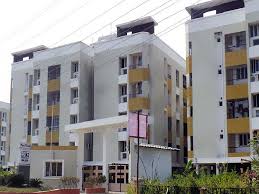
The deepest fact about Velachery is that it was once a wet landscape. Tanks, channels, low-lying areas and marsh-linked drainage patterns shaped the region long before urban expansion. As Chennai grew southward, Velachery shifted from semi-peripheral settlement into a prime residential and commercial zone. Land values rose, layouts multiplied, apartments climbed upward and traffic thickened.
The result is one of the most visible growth stories in Chennai. But growth here has always carried a shadow. Because large parts of the region historically interacted with water, the memory of floods and inundation remains central to local consciousness. This is why Velachery’s civic politics is never just about development. It is about the cost of development without drainage wisdom.
High-Rise Living and the New Middle Class
Velachery is one of the constituencies where Chennai’s urban middle class became physically visible in the form of apartment clusters, gated communities and vertical housing growth. Families working in IT, finance, education, healthcare, media, government and business increasingly made Velachery home because it offered a strategic location between the old city and the newer southern growth corridors.
This housing boom reshaped the constituency’s social character. Long-time local residents now live alongside software professionals, salaried households, renters, students and migrants. That social mix affects politics. Velachery voters are often highly sensitive to infrastructure, commuting time, stormwater drainage, property values, public order and civic delivery.
Commercial Muscle: Malls, Markets and Everyday Retail
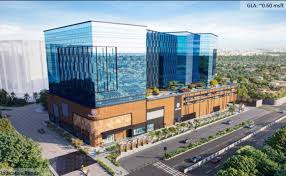
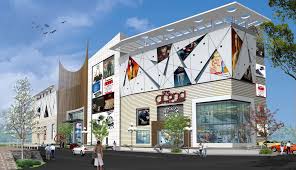
Velachery is also a major commercial centre. It is one of the places where south Chennai’s consumer culture became unmistakably visible. Large shopping complexes, branded outlets, supermarkets, restaurants, cinema-linked leisure spaces, neighbourhood retail belts and pavement-level commerce all coexist here. The constituency serves not only its own residents but also a much wider catchment area from adjoining neighbourhoods.
Traditional market activity survives alongside modern retail. Vegetable markets, local street vendors, tea shops and tiffin centres remain part of the social texture. Velachery therefore is not merely mall urbanism. It is a layered urban marketplace.
Temples, Worship and Cultural Continuity
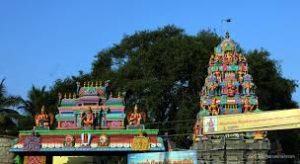
Despite its rapid urban growth, Velachery retains an older religious-cultural core. The area is associated with the ancient Dhandeeswarar Temple, one of the important historic Shiva temples linked to the locality’s older identity. That matters because Velachery’s history did not begin with apartment towers. It began as a lived settlement with temple-centred community life.
Alongside Hindu temples, the constituency includes churches, mosques and prayer spaces serving its socially diverse population. This multi-faith character reflects the wider metropolitan nature of Chennai. Religious life here is not as dominant over public space as in a classic temple town, but it remains deeply woven into neighbourhood life.
Festivals, local temple processions and seasonal observances continue to provide continuity amid relentless urban change.
Education, Colleges and Institutional Growth
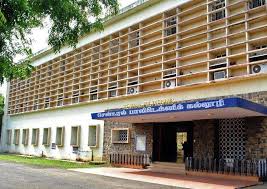
Velachery’s rise is closely tied to its educational and institutional ecosystem. The constituency and its nearby zones are deeply influenced by the educational corridor of south Chennai. Schools, colleges, coaching centres, tuition hubs and professional institutes shape the area’s daily rhythm. Students, teachers and office-going families give the constituency a strongly aspirational tone.
Its proximity to major institutional zones such as Guindy, Taramani and the wider educational belt of south Chennai strengthens its importance. This is one reason Velachery has become more than a residential seat; it is also a service-and-institution seat.
Cuisine and Urban Social Life
Velachery’s food culture reflects its metropolitan character. Traditional tiffin centres, vegetarian messes, biryani outlets, bakeries, tea kadais, multi-cuisine restaurants and café culture all coexist. The constituency feeds students, commuters, shoppers, office-goers and apartment families. What was once a more localised food environment has become one of Chennai’s more varied urban eating zones.
This matters politically and socially because eateries, street food, delivery culture and night-time commerce are part of Velachery’s lived identity. It is one of those Chennai seats where food and traffic often rise together.
Flyovers, Rail, Roads and Commuting

Velachery’s importance cannot be separated from mobility. It is deeply tied to major road corridors, the Velachery suburban rail connection, link roads toward Guindy and Taramani, and the wider southern transport network. Flyovers and road improvements have attempted to manage the constituency’s explosive growth, but congestion remains a defining feature.
A constituency like Velachery does not experience transport as convenience alone. It experiences it as daily stress. Travel time, bottlenecks, junction management and parking pressure are not peripheral issues here; they are among the core determinants of urban satisfaction.
Floods, Inundation and the Politics of Water
If one issue captures Velachery’s civic personality more than any other, it is waterlogging and flooding. The constituency’s historic low-lying character means heavy rain can quickly expose drainage weaknesses. Residents know that one intense monsoon event can undo the illusion of permanent urban control. Water enters roads, basements, neighbourhood lanes and sometimes homes. This has made stormwater drains, encroachment removal, lake restoration, canal clearance and flood preparedness central political issues.
In Velachery, civic memory is written in rainwater lines.
Political Character of the Seat
Velachery is a politically important Chennai seat because it combines visibility, affluence, middle-class activism, infrastructure sensitivity and changing demographics. It is not a constituency that votes on one axis alone. Identity, party loyalty, governance record, candidate accessibility and civic performance all matter.
Urban seats like this are often read as tests of how well parties understand the changing priorities of metropolitan Tamil Nadu. Velachery is especially significant because the voter here expects development, but also judges whether that development is sustainable, navigable and safe.
What Decides Velachery
Several issues strongly influence electoral outcomes here:
Flood management and drainage. This is foundational, not secondary.
Roads, flyovers and traffic flow. Commuting conditions deeply shape voter mood.
Water supply and urban services. Rapid growth has stretched infrastructure.
Housing pressure and planning. Residents are sensitive to overbuilding and civic strain.
Public transport connectivity. Rail, bus and road integration matter heavily.
Safety, cleanliness and neighbourhood upkeep. A dense middle-class electorate notices these sharply.
Velachery often votes like a constituency that wants growth, but not chaos.
Electoral Ledger
2011
Winner – M. K. Ashok (AIADMK) – 82,784 votes
Second – J. M. H. Aassan Maulaana (DMK) – 59,544 votes
Third – S. Ravi (BJP) – 5,722 votes
Winning Margin: 23,240 votes
2016
Winner – Vagai Chandrasekar (DMK) – 70139 votes
Second – C. Munusamy (AIADMK) – 61267 votes
Third – P. Sritharan (BJP) – 14472 votes
Winning Margin: 8872 votes
2021
Winner – J. M. H. Aassan Maulaana (INC) – 68493 votes
Second – M. K. Ashok (AIADMK) – 64141 votes
Third – Dr. Santosh Babu IAS (MNM) – 23072 votes
Winning Margin: 4352 votes
These results show a constituency that can swing significantly when wider city mood aligns with local governance concerns.
Closing Frame
Velachery is one of modern Chennai’s defining urban experiments — ambitious, profitable, crowded, connected and vulnerable. It has malls and marsh memory, flyovers and flood anxiety, temples and towers, schools and traffic. It is a constituency that reveals both the success and the strain of metropolitan expansion.
When Velachery votes, it speaks as the voice of aspirational south Chennai — but also as a warning that no city can fully escape the ground on which it was built.