

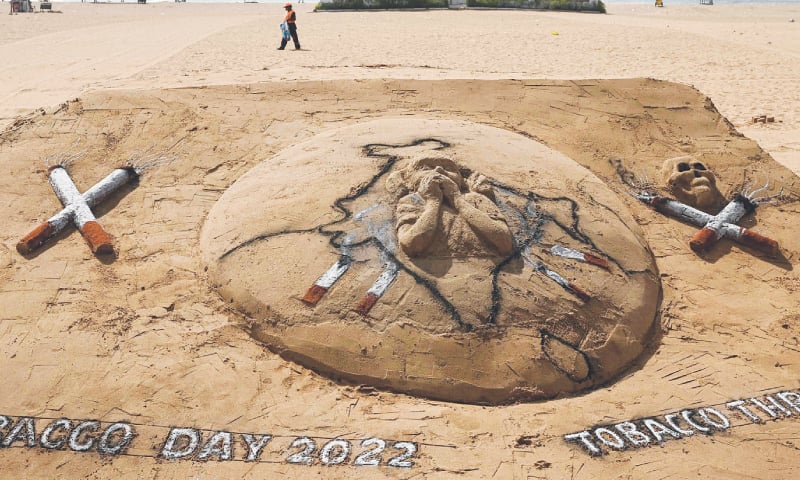
 Geneva : The tobacco industry is a far greater threat than many realise as it is one of the world’s biggest polluters, from leaving mountains of waste to driving global warming, the WHO said Tuesday. The World Health Organization accused the industry of causing widespread deforestation, diverting badly needed land and water in poor countries away from food production, spewing out plastic and chemical waste as well as emitting millions of tonnes of carbon dioxide. In its report released on World No Tobacco Day, the UN agency called for the tobacco industry to be held to account and foot the bill for the cleanup. The report, “Tobacco: poisoning our planet”, looks at the impacts of the whole cycle, from the growth of plants to the manufacturing of tobacco products, to consumption and waste. While tobacco’s health impacts have been well documented for decades — with smoking still causing more than eight million deaths worldwide every year — the report focuses on its broader environmental consequences. The findings are quite devastating, Ruediger Krech, WHO director of health promotion, told AFP, charging that the industry is one of the biggest polluters that we know of.
He slammed tobacco companies’ frequent efforts to rehabilitate their image through beach cleanups and funding environmental and disaster relief organisations as greenwashing. The tobacco industry dumps toxic waste into communities and depletes natural resources, he told a press conference. Tobacco is not only poisoning people, it’s poisoning our planet. At the same time the processing and transportation of tobacco account for a significant share of global greenhouse gas emissions — with the equivalent of one-fifth of the global airline industry’s carbon footprint. In addition, products like cigarettes, smokeless tobacco and e-cigarettes also contribute significantly to the global build-up of plastic pollution, WHO warned. Cigarette filters contain microplastics — the tiny fragments that have been detected in every ocean and even at the bottom of the world’s deepest trench — and make up the second-highest form of plastic pollution worldwide, the report said. Stressing that there is no evidence filters provide any proven health benefits over smoking non-filtered cigarettes, the UN agency urged policy makers worldwide to consider banning them. The WHO also called for governments to immediately halt the some $500 billion in subsidies the tobacco industry receives each year, and also urged them to stop allowing taxpayers to foot the bill for cleaning up the industry’s mess.