

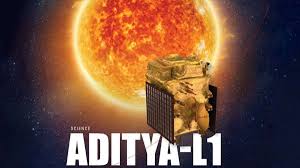
 India’s Aditya-L1 solar observatory has played a pivotal role in a landmark global study of the May 2024 “Gannon’s Storm”, the strongest solar storm in over two decades. Working alongside six U.S. satellites, Aditya-L1 helped scientists uncover why the storm behaved unusually and impacted Earth so severely. A team of Indian researchers, in a study published in Astrophysical Journal Letters, revealed that two colliding Coronal Mass Ejections (CMEs) caused a rare magnetic reconnection—a massive breakup and rejoining of magnetic field lines inside the storm. This intensified the storm’s impact, disrupted Earth’s magnetic shield, and accelerated particles to high energies. Aditya-L1’s precise magnetic field measurements allowed scientists to map the reconnection region, found to be a staggering 1.3 million km wide, nearly 100 times Earth’s diameter—an unprecedented observation. The discovery highlights India’s growing leadership in space science and strengthens global efforts to understand and predict dangerous solar storms. Launched on September 2, 2023, Aditya-L1 orbits the Sun-Earth Lagrange Point L1, offering continuous, uninterrupted solar monitoring.
Aditya-L1 joins global mission in solar storm discovery
 By NT Bureau
🌐 Translate ▾
- Tamil
- Hindi
- Malayalam
- Kannada
- Telugu
Add A Comment