


Tiruchy, Aug 24:
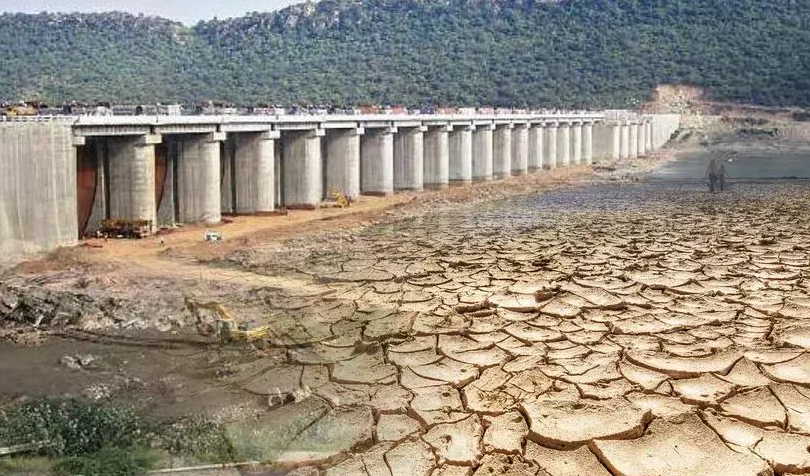
With drought conditions and declining groundwater levels raising concerns over agricultural production, climate experts have urged the Tamil Nadu government to immediately formulate a standard operating procedure (SOP) to deal with the impact of El Niño and establish a coordinated mechanism for water conservation.
Experts have suggested that the government should identify existing tanks and water bodies, restore them, prevent encroachments and promote reuse of available water as part of a long-term drought management strategy.
Climate adaptation expert and former faculty member of the Irrigation Management Training Institute, Tiruchy, A Meenakshi Sundara Arasu, said the government needed to adopt a clear strategy before each cultivation season rather than responding after water shortages had already affected farmers.
“When the drought condition crosses 40 per cent, the drought management department declares it as a crisis and initiates steps for supporting the farmers who are ultimately affected,” he said.
According to Arasu, farmers should first assess the availability of groundwater before deciding to cultivate water-intensive crops.
The present situation, he said, called for a rethink of the crop pattern in the Cauvery Delta.
With groundwater levels already depleted and Mettur storage under pressure, farmers could consider pulses and other drought-tolerant crops that require substantially less water than paddy.
Pulses can be harvested with limited irrigation, whereas even short-duration paddy varieties require water at different stages of cultivation and have a minimum crop duration of around 110 days.
“Due to El Niño, there would be water shortages and drought-like situations. While the groundwater level has already depleted, the farmers, instead of going for paddy, should opt for pulses,” Arasu said.
He also called for regular assessment of water availability in the Mettur reservoir before decisions are taken on releasing water for irrigation.
The expert said the proposed SOP should not be prepared by the Agriculture Department alone. The Water Resources Department and Agriculture Department should coordinate their assessments before advising farmers.
A major weakness in the Delta, according to Arasu, is the absence of adequate local water-storage infrastructure.
Farmers often depend on water released from reservoirs and canals, but there is inadequate storage and reuse of the water after it reaches the region. As a result, considerable quantities of water ultimately flow into the sea.
He called for a comprehensive inventory of tanks and water bodies, particularly in the Delta, followed by renovation and removal of encroachments.
A GIS-based mapping system could help the government identify existing and historically available tanks and monitor their condition, he suggested.
The expert’s recommendations assume importance as farmers face the combined challenge of inadequate river water and falling groundwater availability.
The failure of the kuruvai crop in several parts of the Delta has already intensified demands for government intervention, while farmers remain uncertain about taking up the samba crop.
A drought-response SOP could establish clear triggers for action, including assessment of reservoir and groundwater levels, crop advisories, water allocation, restoration of local storage structures and communication of contingency plans to farmers.
Experts say such preparedness would help shift the State’s response from crisis management to climate adaptation.
With El Niño expected to continue influencing weather conditions, the immediate challenge before the government is to ensure that farmers receive practical advice and water-management support before the next cultivation cycle begins.