


Tiruchy, Aug 24:
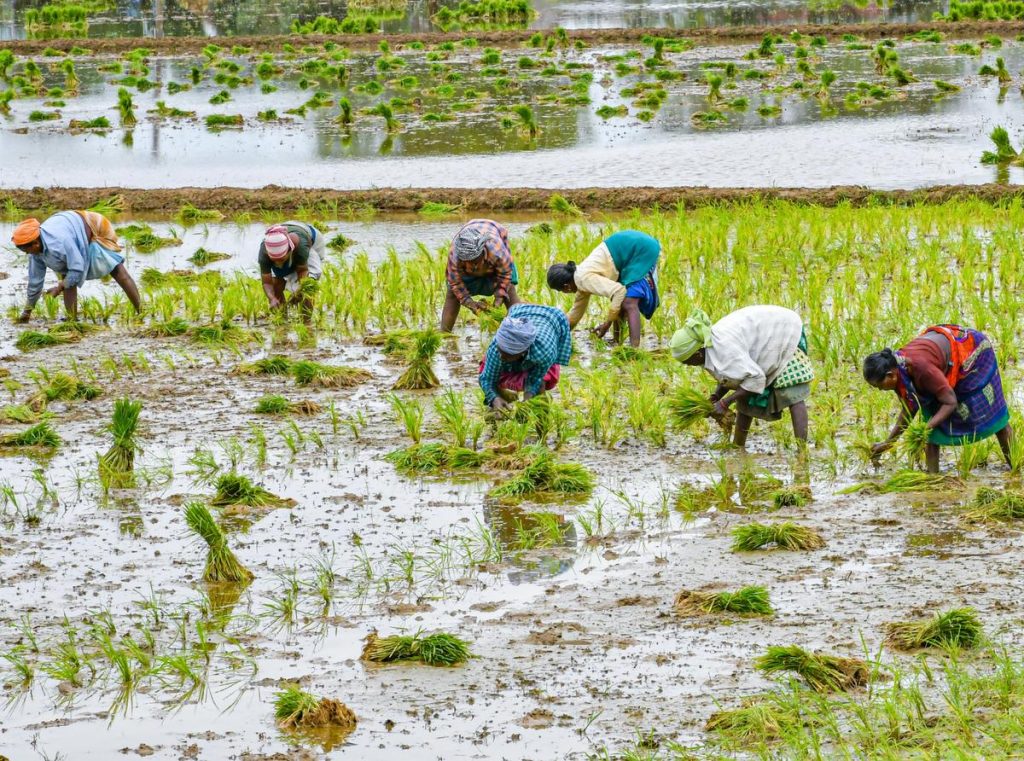
The failure of the kuruvai crop across large parts of the Cauvery Delta has left farmers worried about the prospects of the ensuing samba season, with cultivators demanding that the Tamil Nadu government urgently implement measures to deal with drought and the anticipated impact of El Niño.
Farmers have also complained that the District Agricultural Contingency Plans prepared to tackle the climatic impact of El Niño have not reached them despite the government announcing the plans in the Agriculture Budget.
Agriculture Minister R Vinoth had announced during the Agriculture Budget that Tamil Nadu was prepared to deal with severe climatic impacts associated with El Niño. The government had said that District Agricultural Contingency Plans prepared by the Tamil Nadu Agricultural University for all districts had been communicated to Collectors and that steps would be taken to implement the recommended measures.
However, farmers in the Delta claim that they remain largely unaware of the government’s preparedness or the practical measures they should adopt.
“We have not so far been informed about the preparations to tackle El Niño. We have already lost kuruvai in the Delta region, and samba cultivation is still doubtful due to the drought condition resulting from El Niño,” said Cauvery Farmers Protection Association general secretary Cauvery V Dhanapalan.
According to him, several drought-tolerant paddy varieties had already been introduced, but farmers had found that some of them failed to provide satisfactory yields under field conditions.
The farmers’ concerns are not limited to the availability of seeds. They say they need practical, field-level advice on crop selection, water management and the timing of cultivation, particularly when both reservoir storage and groundwater availability are under pressure.
Dhanapalan said discussions among officials would not be sufficient unless farmers were consulted before decisions were taken.
He alleged that despite warnings about the possible impact of El Niño, farmers had not been adequately sensitised or consulted about the preparations.
“The government has to wake up as early as possible and sensitise the farmers and prepare them for the upcoming climatic change,” he said.
The crisis has also revived concerns over the condition of water bodies in the Delta.
Dhanapalan pointed out that the region has several abandoned water bodies that could have provided additional storage capacity if they had been restored before the current water crisis.
He questioned why more attention had not been given to rejuvenating such water bodies, particularly when the Delta had been declared a Protected Special Agriculture Zone in 2020.
The failure of kuruvai has increased uncertainty over samba, the longer-duration crop that is crucial to the agricultural economy of the Cauvery Delta. Farmers say they cannot take the risk of planting a long-duration crop without reliable water availability.
The situation has also highlighted the growing dependence on groundwater in areas where Cauvery water is unavailable. With groundwater levels already under pressure, farmers fear that borewells may not provide a sustainable alternative for the samba crop.
The immediate demand from farmers is therefore for a coordinated response involving the Agriculture and Water Resources departments, timely dissemination of contingency plans, field-level crop advice and restoration of local water storage structures.
For the Delta’s farmers, the concern is no longer merely about losing one crop. The fear is that an unsuccessful kuruvai season could be followed by another difficult season unless water availability and climate preparedness are addressed immediately.