


Brussels, Oct 13
The European Union has imposed sanctions on 1,569 Russian individuals and entities linked to the country’s military-industrial complex, targeting companies and executives associated with the supply of components used in missiles, drones and other advanced weapons systems.
The measures, announced on October 12, represent the EU’s largest single round of sanctions listings since Russia launched its full-scale invasion of Ukraine in February 2022. The package includes 826 companies belonging to Russia’s military-industrial complex and 743 individuals serving as their chief executives.
According to the EU, the targeted entities are involved in supplying components and technologies required for the production of advanced weapons. These include electronics, radar systems, navigation equipment and other critical parts used in missiles, drones and aircraft.
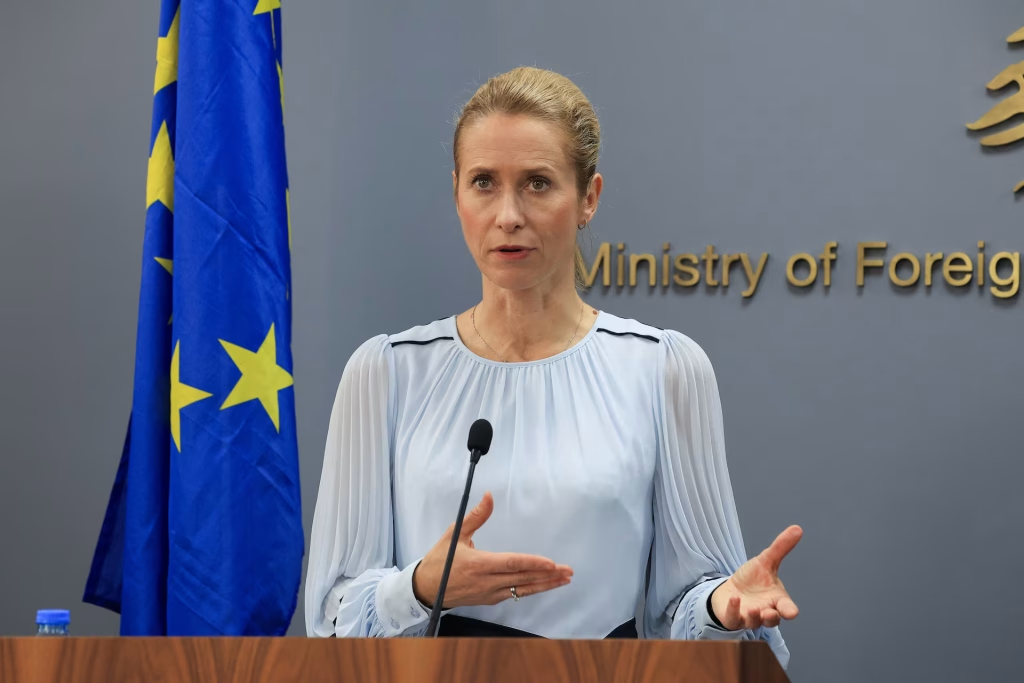
EU foreign policy chief Kaja Kallas said more than half of the listings were directed at the production chain for ballistic missiles used by Russia against Ukraine. The bloc said the sanctions were intended to increase pressure on Moscow’s military capabilities and restrict its access to essential industrial supplies.
The measures also target 77 individuals accused of organising, participating in or administering what the EU described as sham elections in Russian-occupied parts of Ukraine. The move reflects the bloc’s continued rejection of Russia’s claims over territories occupied during the war.
The sanctions form part of the EU’s broader effort to weaken Russia’s capacity to sustain its military campaign. Previous rounds of restrictions have targeted Russian officials, financial institutions, defence manufacturers and networks suspected of helping Moscow obtain restricted technology through third countries.
The latest package seeks to address supply chains that can allow military production to continue despite export controls. Its effectiveness will depend on enforcement, cooperation among countries and the ability of Russian manufacturers to find alternative suppliers.
The EU has maintained that sanctions are a response to Russia’s continued aggression against Ukraine and the impact of its military operations on civilians and infrastructure. Moscow has repeatedly criticised Western sanctions, arguing that they are politically motivated.
The new listings underline the continuing economic and diplomatic confrontation between Russia and European governments as the war enters another year. The EU has signalled that restrictions on military production and procurement networks will remain a central part of its strategy.