


Chennai, Oct 27:
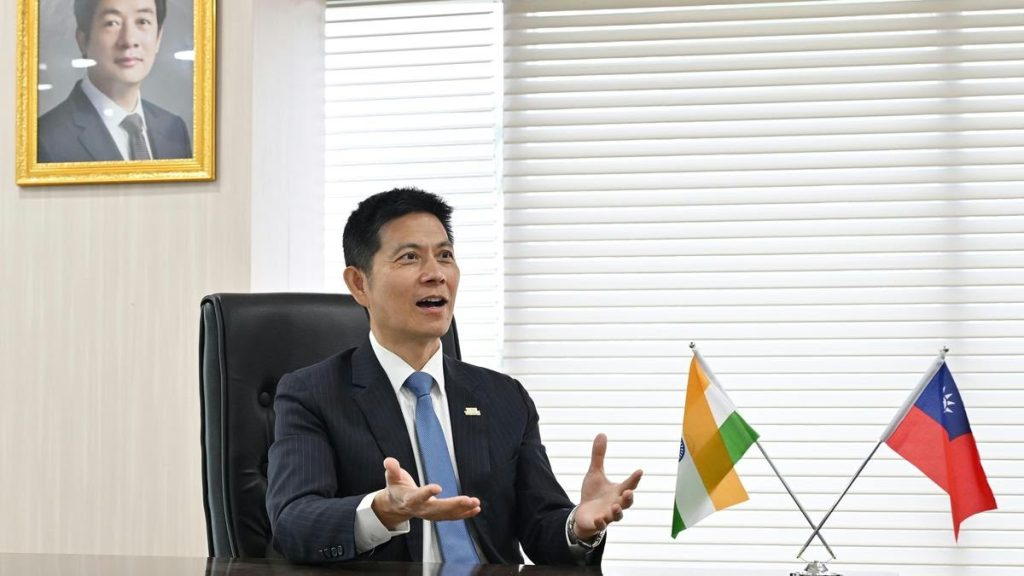
Taiwan should be given meaningful opportunities to participate in the United Nations Framework Convention on Climate Change (UNFCCC) and its related mechanisms, as excluding a capable partner could limit global efforts to tackle climate change, said Stephen Hsu, Director-General of the Taipei Economic and Cultural Center.
In an article advocating Taiwan’s participation in international climate cooperation, Hsu said climate action should be guided by the willingness and capacity to contribute rather than political considerations. With the world preparing for COP31, he emphasised the need for broader cooperation to turn climate commitments into measurable results.
According to Taiwan’s latest national greenhouse gas inventory, net greenhouse gas emissions in 2024 were 6.59 per cent below 2005 levels, marking the third consecutive year of decline. Carbon dioxide emissions intensity fell by 48.59 per cent over the same period. Taiwan has set emissions-reduction targets of 28±2 per cent by 2030 and 38±2 per cent by 2035 against its designated baseline.
Hsu highlighted Taiwan’s sector-specific climate action programmes for 2026–2030, which cover six major sectors and include 20 flagship mitigation plans and 63 performance indicators. He said such measures demonstrate how national climate commitments can be translated into practical actions and monitored outcomes.
On the circular economy, Hsu pointed to legislative measures aimed at reducing waste, promoting sustainable product design, extending product life cycles and improving resource recovery. Taiwan has 69 listed companies operating in the circular economy, with combined annual revenue exceeding NT$1 trillion, illustrating the potential to combine industrial growth with environmental sustainability.
Taiwan’s carbon pricing framework is another key component of its climate strategy. Its carbon fee collection system, launched in 2026, has generated NT$4.97 billion for the Greenhouse Gas Management Fund, which supports decarbonisation through subsidies, credit guarantees and interest assistance. The framework has also received recognition through its inclusion in the United Kingdom’s list of qualifying carbon pricing mechanisms for its Carbon Border Adjustment Mechanism.
Hsu also underscored the importance of adapting to climate risks, particularly extreme heat and urban vulnerability. Taiwan’s National Green Canopy Programme uses LiDAR remote sensing, digital twin technology and microclimate data to identify urban heat hotspots and strengthen green infrastructure. Such initiatives, he said, could provide useful lessons for other economies preparing for climate-related challenges.
Emphasising the social dimension of the green transition, Hsu said workers, small and medium-sized enterprises and vulnerable communities must receive adequate support as industries shift towards low-carbon operations. Taiwan is developing a national just-transition action plan following consultations across six major sectors and providing assistance through its Greenhouse Gas Management Fund.
On international cooperation, he cited Taiwan’s collaboration with Paraguay on 12 environmental governance action plans covering technology sharing, youth dialogue, circular economy exchanges, electric buses and carbon-credit demonstration projects. These partnerships demonstrate how technical expertise and practical cooperation can deliver environmental benefits beyond formal diplomatic engagement.
Although Taiwan is not a party to the UNFCCC, it says it aligns its climate policies with the Paris Agreement and relevant international standards. Hsu called for practical arrangements to enable Taiwanese experts and institutions to participate meaningfully in technical discussions and cooperative mechanisms associated with COP31.
He argued that a more inclusive international climate framework would expand opportunities for knowledge-sharing, strengthen cooperation and make better use of available solutions. As climate change increasingly affects economies and communities worldwide, he stressed that international efforts require greater collaboration and practical action to achieve a net-zero and climate-resilient future.