


Mumbai, Nov 3:
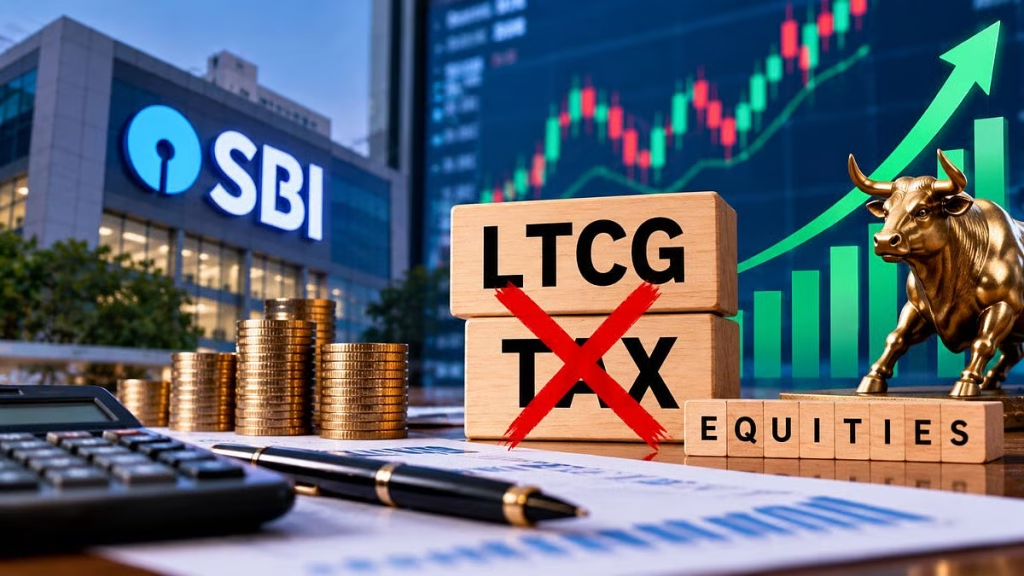
The Union government has sufficient fiscal capacity to absorb an estimated revenue loss of approximately Rs 50,000 crore should it decide to eliminate the Long-Term Capital Gains (LTCG) tax on equities in the forthcoming Union Budget, according to a research assessment released by SBI Research. The projection has revived market debate over long-standing industry demands to rationalize direct taxation on securities trading.
Economists at SBI Research noted that buoyant direct tax collections, robust corporate tax buoyancy, and disciplined fiscal consolidation provide the Centre with sufficient budgetary cushion to absorb the forgone revenue. The study argued that the actual fiscal fallout from removing the tax would be substantially offset by heightened liquidity, higher trading turnovers, and increased receipts from the Securities Transaction Tax (STT).
The report highlighted that the reintroduction of the LTCG tax on listed equities in 2018 added complexity to investment portfolios and created an uneven playing field for domestic retail investors navigating inflationary pressures. Scrapping the levy or lengthening the holding period threshold could act as a catalyst to divert household financial savings away from speculative assets and real estate into formal capital markets.
With initial deliberations commencing for Budget 2027, financial market participants have welcomed the proposal, emphasizing that removing capital gains frictions would strengthen India’s appeal against competing emerging markets. Analysts maintain that such structural tax rationalization would reinforce long-term equity capital formation and deepen domestic institutional participation amid volatile foreign portfolio flows.