

Brussels, Nov 17:
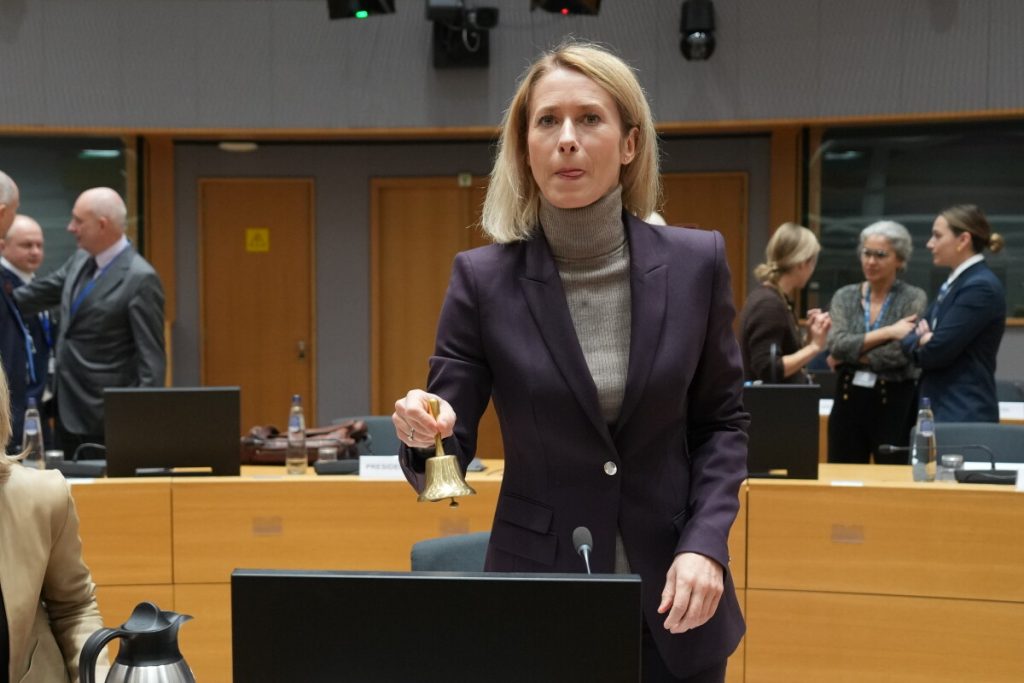
European Union foreign ministers have accused Russia of prolonging the conflict in Ukraine while continuing attacks on critical infrastructure and civilian facilities as the region prepares for another harsh winter.
At a meeting in Brussels on Monday, European leaders stressed that establishing a ceasefire should be the immediate priority before discussions move towards a comprehensive peace agreement.
EU foreign policy chief Kaja Kallas said there was little evidence of Russian willingness to reduce hostilities, pointing instead to an escalation in military action.
She argued that Russia, having initiated the conflict, should not be allowed to impose additional demands on Ukraine and its Western partners as a condition for ending the war.
The latest disagreement follows negotiations held in Abu Dhabi last week, where the United States encouraged Ukraine and its allies to consider a Russian proposal for a revised European security arrangement.
European governments, however, view Moscow’s proposal as an attempt to weaken NATO’s military presence in eastern Europe. The Russian demand reportedly involves moving troops and military equipment back towards western Europe, broadly reversing deployments made before the alliance expanded in 1999 to include countries such as Poland, Hungary and the Czech Republic.
Kallas described the proposal as unacceptable, arguing that the countries concerned had never posed an offensive threat to Russia.
Ireland’s Foreign Minister Helen McEntee also expressed concern over Moscow’s continuing military operations against civilian infrastructure. She said Russia had shown no meaningful change in its position despite ongoing diplomatic discussions.
McEntee indicated that EU ministers would approve additional sanctions targeting the financial networks supporting Russia’s war effort. The bloc would also consider further assistance to help Ukraine withstand the approaching winter.
German Foreign Minister Johann Wadephul maintained that Europe did not require a new security framework, arguing that existing arrangements should be respected by all parties.
Lithuanian Foreign Minister Kestutis Budrys echoed this position, saying that the priority should be strengthening Ukraine, European security and transatlantic cooperation rather than negotiating an entirely new arrangement.
The United States has continued its mediation efforts through negotiators Jared Kushner and Steve Witkoff, who have engaged with representatives from Russia and Ukraine for more than a year.
However, the diplomatic process has yet to produce a lasting ceasefire or a clear breakthrough towards ending the conflict.
With disagreements over security arrangements and continued fighting on the ground, the prospects for an immediate peace agreement remain uncertain.