


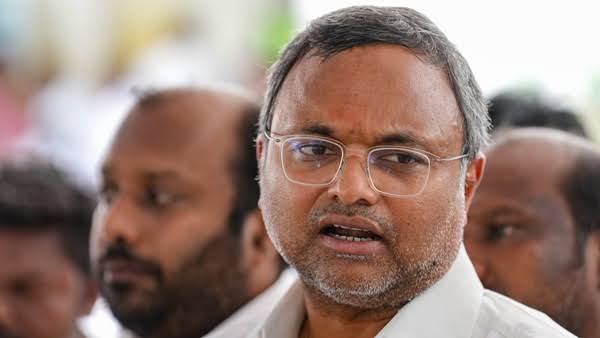

In a surprising turn of events, Congress MP Karti Chidambaram has found himself at odds with his own party after being issued a notice by the Tamil Nadu disciplinary committee for praising Prime Minister Narendra Modi and expressing confidence in Electronic Voting Machines (EVMs).
The disciplinary committee, led by KR Ramasamy, took action against Karti Chidambaram following his remarks comparing the popularity of Rahul Gandhi and Prime Minister Modi. This move highlights the internal dissent within the Congress party and raises questions about the unity of its members.
During a recent television interview with a Tamil news channel, Karti Chidambaram reportedly stated that Prime Minister Modi is more popular than Rahul Gandhi. Such a statement, especially coming from a Congress MP, has stirred controversy within the party and led to the issuance of a show-cause notice.
Notably, Karti Chidambaram’s divergence from the party line extends beyond his comments on popularity. He also expressed his faith in Electronic Voting Machines (EVMs), a stance that contradicts the Congress party’s official position. The Congress has actively opposed the use of EVMs, citing concerns about their reliability and advocating for alternative voting systems.
This development comes at a time when the Congress party is already grappling with internal challenges and a leadership vacuum. The notice issued to Karti Chidambaram adds another layer of complexity to the party’s dynamics, highlighting the need for internal cohesion and strategic communication.
Meanwhile, Jairam Ramesh, the party’s general secretary, recently expressed dissatisfaction with the Election Commission of India’s (ECI) response to concerns related to EVMs. Last month, Ramesh had written to the ECI, seeking an appointment for a delegation of INDIA bloc parties to present their views on the Voter Verifiable Paper Audit Trail (VVPAT) slips.
The controversy surrounding Karti Chidambaram’s statements and the Congress party’s stance on EVMs raises questions about the party’s ability to present a unified front and effectively address internal differences. As the political landscape evolves, the Congress party may need to navigate these challenges to maintain its relevance and coherence in the face of dissenting voices from within.