


Chennai, July 16:
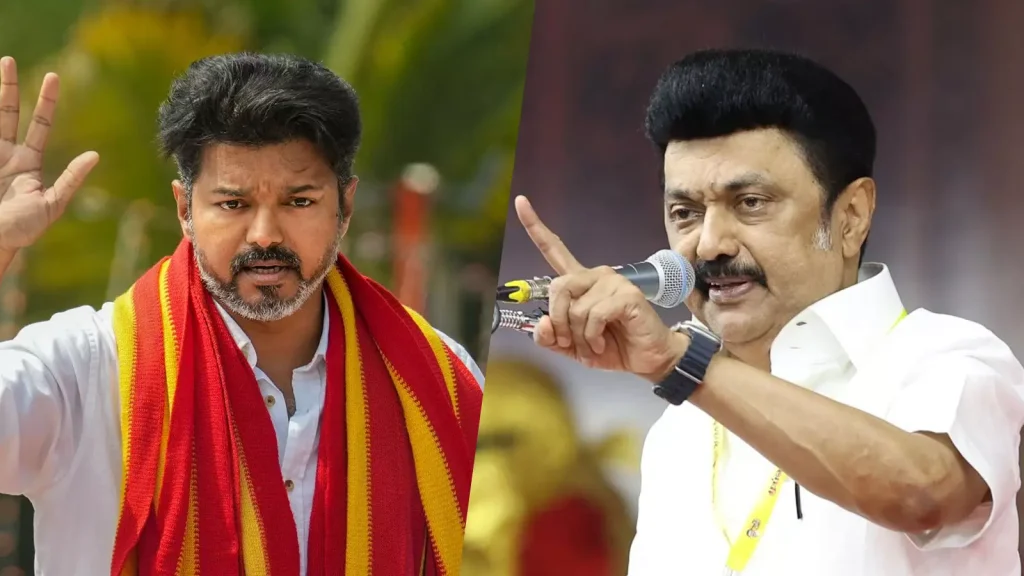
The Dravida Munnetra Kazhagam (DMK) on Wednesday signalled a clear shift in its political strategy, declaring the ruling Tamilaga Vettri Kazhagam (TVK) as its principal political opponent in the State. The announcement comes in the wake of the recent Assembly election outcome, which altered the political landscape in Tamil Nadu.
Speaking to reporters in Chennai after paying floral tributes to former Chief Minister K. Kamaraj on his birth anniversary, DMK organising secretary R. S. Bharathi said the party would henceforth concentrate its political attacks on the ruling dispensation. He also urged the media to frame their questions accordingly, emphasising that the DMK’s primary engagement would now be with the TVK.
“Our principal political opponent is now the TVK. Please ask us questions only about the TVK and not about other political parties,” Bharathi said, underscoring the party’s recalibrated approach in the post-election scenario.
Reflecting on the DMK’s campaign strategy during the Assembly elections, Bharathi acknowledged that the party had largely focused its criticism on the All India Anna Dravida Munnetra Kazhagam (AIADMK), which he suggested may no longer hold the same political relevance. In a sharp metaphor, he described the AIADMK as a “dead snake,” while referring to the now-ruling TVK as a “poisonous snake,” indicating a more formidable and immediate political challenge.
“During the Assembly election, we were attacking a dead snake. Meanwhile, a poisonous snake entered the field,” he remarked, adding that the party would ensure such a strategic miscalculation is not repeated in future political engagements.
The statement marks a notable departure from the DMK’s earlier stance during the election campaign, when several party leaders, including Bharathi, had downplayed the emergence of the TVK and often avoided commenting on it. However, with the TVK assuming power after the elections, the DMK appears to have repositioned itself as the principal opposition force targeting the ruling party.
Political observers note that the shift signals the beginning of a more direct and potentially aggressive opposition strategy by the DMK against the government, setting the stage for heightened political contestation in the State in the coming months.