


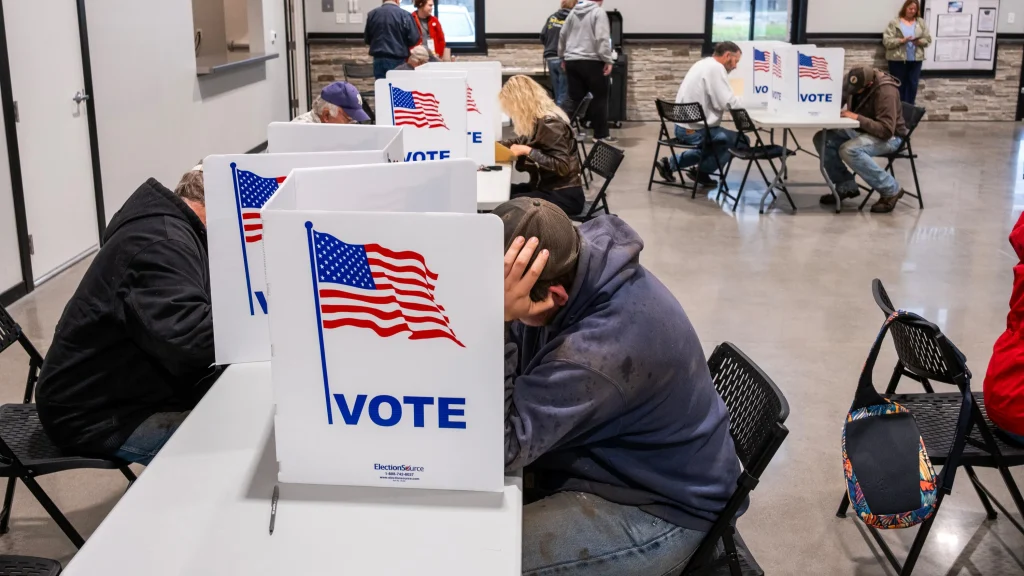
The night America’s map shifted
Americans went to the polls on Tuesday, November 3, 2026, and by Wednesday morning there was no ambiguity left. The Democratic Party had won both chambers of the US Congress. President Donald Trump, 80, remains in the White House, but for the final two years of his term he will govern against a legislature his opponents control.
AFP called it a sweeping rout, and the details bear that out. Democrats took Senate seats in states that had not sent one of their own to the chamber in decades. In Kansas, Adam Hamilton, a Methodist minister, became the first Democrat elected to the Senate from the state since 1932. In Texas, James Talarico ousted a Trump-backed candidate, and Gina Hinojosa unseated Governor Greg Abbott.
I want to cover four things here: what a midterm is, why Democrats won, what I think Gen Z and artificial intelligence had to do with it, and why Indians, in America and at home, should care.
First, what is a midterm?
The US elects its President every four years. Halfway through each term, Americans vote again in a national election called the midterm. In 2026, all 435 seats in the House of Representatives, 35 of the 100 Senate seats and 36 governorships were up for grabs. The new Congress is due to take office in January 2027.
A midterm cannot remove a President. What it can do is change who controls Congress, and that is a big deal, because in the American system the President and Congress are separate institutions. Congress writes laws and approves budgets. The Senate confirms Cabinet members and judges. The House can start impeachment, and both chambers can investigate an administration through hearings and subpoenas. The President can veto bills, and Congress can override a veto only with a two-thirds vote in both chambers, which is very hard to achieve.
The outcome is what Americans call divided government. Trump keeps his veto and his office. Democrats gain the power to block his agenda, investigate his administration and stall his nominees. Neither side can easily impose its will on the other.
How this compares with India. The comparison is useful, but it can also mislead.
- The House of Representatives resembles our Lok Sabha and the Senate resembles the Rajya Sabha. Both countries elect their lower house by first-past-the-post.
- But an Indian Prime Minister must hold a majority in the Lok Sabha or the government falls. America’s President is elected separately and stays in office even if his party loses Congress.
- US senators are elected directly by the voters of each state, and every state gets two. Rajya Sabha members are elected by state legislators, and states have different numbers of seats.
- In India, a “mid-term poll” usually means an early general election after a government loses its majority. The American midterm is scheduled, always happens, and does not end the government.
- India’s Election Commission runs national elections as a single body. In the US, each state runs its own voting, which is one reason counting can take days.
It is tempting to say the BJP is India’s Republican Party and the Congress is its Democratic Party. That is shorthand, not equivalence. The parties differ in history, ideology and social base.
How the night unfolded
Republicans began the night with a 53-47 Senate majority. By AFP’s account, a six-seat Democratic gain was enough for the networks to project a takeover, even with some races unresolved. Kansas and Iowa were described as the fifth and sixth Republican-held seats to fall. Earlier upsets came in Texas, South Carolina, North Carolina and Ohio. Democrats also defended their own seats, including Jon Ossoff’s in Georgia and an open seat in New Hampshire.
In the House, Democrats flipped districts from Pennsylvania and New Jersey to Kentucky, Arizona and North Carolina. Some sat in territory Trump carried comfortably in 2024, despite Republican efforts to protect seats by redrawing district maps. For me the bellwether was Indiana, where Democrat J.D. Ford defeated Republican Victoria Spartz in a district Trump won by 17 points. Hakeem Jeffries is positioned to become the first Black Speaker of the House.
The governors’ races told the same story with a few exceptions. Keisha Lance Bottoms won in Georgia and will be the first Black woman elected governor in US history. In Florida, Republican Byron Donalds won the governorship, a bright spot for his party. Some races, including Mississippi’s Senate contest and the Kansas governor’s race, were still uncalled on Wednesday.
The new faces
This class stands out for its flips and its firsts. These are the main winners reported so far; some races were still uncalled.
- James Talarico, US Senator, Texas: a Democratic state representative; Reuters called him the state’s first Democratic senator-elect in 38 years.
- Adam Hamilton, US Senator, Kansas: a Methodist minister and the first Democrat elected to the Senate from Kansas since 1932.
- Josh Turek, US Senator, Iowa: Iowa had not elected a Democratic senator since 2008.
- Roy Cooper, US Senator, North Carolina: won an open seat against Trump’s pick, Michael Whatley.
- Sherrod Brown, US Senator, Ohio: defeated Senator Jon Husted in a state Trump has won three times.
- Annie Andrews, US Senator, South Carolina: Reuters said Democrats had not won a Senate race there this century.
- Troy Jackson, US Senator, Maine: defeated Republican Susan Collins.
- Abdul El-Sayed, US Senator, Michigan: a physician; The Hindu reports he is the first Muslim US senator, winning 52.5% of the vote.
- Chris Pappas, US Senator, New Hampshire: won the open seat of retiring Senator Jeanne Shaheen.
- Jon Ossoff, US Senator, Georgia: re-elected; reporting says the win lifts his presidential prospects.
- Gina Hinojosa, Governor, Texas: defeated Governor Greg Abbott and is described as the state’s first Latina governor.
- Keisha Lance Bottoms, Governor, Georgia: the first Black woman elected governor in US history.
- Amy Acton, Governor, Ohio: defeated Republican Vivek Ramaswamy.
- Hakeem Jeffries, likely House Speaker: positioned to become the first Black Speaker.
- Pia Dandiya and Suhas Subramanyam, US House, Florida and Virginia: Indian-American winners; Dandiya won a district redrawn to favour Republicans.
On the Republican side, Byron Donalds won the Florida governorship and Ashley Moody kept her Senate seat. In the House, Robert Garcia is expected to lead the Oversight Committee, which will drive the investigations. Mississippi’s Senate race, where Democrat Scott Colom says outstanding ballots will go his way, and the Kansas governor’s race, where Democrat Cindy Holscher led by under a point, were uncalled.
Why Democrats won
Read any account and you land on the same word: prices.
The cost of living. Reuters, citing exit polls, reported that nearly nine in ten voters called the cost of living a crucial or major factor, and nearly two-thirds blamed Trump for high prices. In the AP’s voter poll, about three-quarters of voters rated the economy “not so good” or “poor.” Trump won in 2024 on a promise to bring inflation down. AFP quoted a 24-year-old Los Angeles voter, Taylor Cook, who listed rent, groceries, utility bills and property taxes as costs that keep climbing. To me, that voter sounds like half my generation.
The Iran war. Trump launched the war with Iran in February 2026, and it sent fuel prices soaring. The day after the election, Vice President JD Vance said the war was why Republicans lost, a remark seen as an effort to distance himself ahead of a possible 2028 run. Asked whether he agreed, Trump said it was largely true, because the war had pushed up petrol prices in the short term. But he added that he would do it again, because Iran cannot be allowed a nuclear weapon.
Tariffs and corruption. Voters also blamed tariffs for rising costs. The AP found that roughly half of voters considered corruption crucial to their vote, and about six in ten said Trump puts his own interests ahead of the country’s.
Candidate quality. Several Trump-endorsed candidates lost, including Paxton in Texas, Graham in South Carolina and Whatley in North Carolina. Reuters said this will revive questions about his instincts, particularly his habit of rewarding loyalty over broad appeal.
The fear campaign fell flat. In the closing weeks, Trump and other Republicans portrayed Democrats as dangerous radicals. Reuters reported that voters, focused on grocery and petrol prices, did not buy it.
A coalition coming apart. Reuters reported that Republican support among Hispanic voters fell to about one in three, from 46% in 2024. It also reported sharp declines among Black men and younger voters. Democrats also fielded a candidate in nearly every race, including long shots that paid off.
One sober note from the numbers: this is not a love letter to Democrats. The AP found that just under half of voters viewed the Democratic Party favourably, against about four in ten for Republicans. Voters will expect Democrats to deal with prices, not just to oppose Trump.
What the campaign was really about
The campaign boiled down to a short list of everyday and national worries. The first two dominated.
- The cost of living. Rent, groceries, utility bills and property taxes were the daily complaints. Nearly nine in ten voters called the cost of living crucial or major, per Reuters.
- The Iran war and fuel prices. The war began in February 2026 and pushed petrol prices up. For Indians, the blockade of the Strait of Hormuz has also hurt energy and trade.
- Tariffs. Voters tied higher prices to Trump’s tariffs, and AFP listed them among the main grievances.
- Corruption. Roughly half of AP-poll voters called corruption crucial, and about six in ten said Trump puts his own interests first. Young voters also named big money in politics.
- Immigration enforcement. It was a live issue, and Democrats say they will investigate it, but in the AP poll it ranked below prices and corruption.
- AI data centres. They also appeared in the AP poll as an issue, again below prices and corruption.
- Election integrity. Trump warned about noncitizens voting and filed lawsuits in Alaska and California, and Republicans redrew district maps. Neither stopped the Democratic gains.
The closing Republican message, that Democrats were dangerous radicals, did not push these concerns aside. Voters wanted to know how costs would come down.
Trump’s biggest setbacks
This result hurts Trump personally, not just his party. Both the Guardian and Reuters stressed that several candidates he endorsed lost.
- Loss of Congress. Democrats won both chambers, so his agenda will stall and the veto is his main remaining tool.
- Senate confirmations. Democrats can block or delay nominees for the Cabinet, courts and agencies. Reuters noted a hearing on his FCC pick was already set.
- Investigations. Democrats plan oversight of corruption, the Iran war and immigration enforcement. Garcia warned Republicans to “lawyer up.” Impeachment is not ruled out, but conviction would need two-thirds of the Senate.
- The Iran war. Vance said it was why Republicans lost, and Trump said that was largely true. He still says he would do it again, so the issue stays live.
- Endorsements. Paxton, Graham and Whatley, all backed by Trump, lost. That revives doubts about his political instincts.
- A fractured coalition. Republican support among Hispanic voters fell to about one in three from 46% in 2024, and Reuters also reported drops among Black men and young voters.
- Redistricting. The push to gain as many as nine seats in Florida and Texas fell short.
- The 2028 field. A strong Democratic showing may boost its many presidential hopefuls and complicate the path for Vance and other Republicans.
It was not all bad for Trump. He said he would accept the results and work with Democrats. Minutes later, though, he posted an image of a red cap marked “VETO,” signalling a fight ahead.
Gen Z, AI and a generation that thinks alike
Here is where the reporting ends and my own view begins.
Polling suggests the youngest voters moved sharply. A Yale Youth Poll in March 2026 found Democrats leading by double digits among voters under 30, reversing the near-even split among the youngest voters in the 2024 presidential exit polls. Other surveys found that young Americans cared most about what everyone else did: affordability and corruption.
AI was part of the campaign itself. A Scripps News poll found that 43% of voters said they had been fooled by AI ads during this campaign.
What I believe. I believe Gen Z, the first generation to grow up entirely on smartphones, played a crucial part in setting the mood of this election, and that AI was the new force it had to navigate. This is a generation that compares its life daily with people in other countries, worries about jobs and prices, and increasingly doubts whether what it sees online is real. I also believe Gen Z thinks alike across borders: young people everywhere are searching for leaders they can trust, and they want rights, freedom and a say in their own future. That mindset is not unique to America. It runs through other recent upheavals involving young people:
- Bangladesh, 2024: student protests over job quotas, organised and amplified through social media, contributed to Prime Minister Sheikh Hasina’s resignation on August 5, 2024.
- Nepal, 2025: young people protested corruption, nepotism and elite privilege, and the movement led to Prime Minister K.P. Sharma Oli’s resignation.
- Tamil Nadu, 2026: the Assembly campaign was fought heavily on Instagram Reels, YouTube Shorts and WhatsApp, with reported uses of AI including recreating historical leaders and cloning voices. According to The Hindu’s reporting, Tamil Nadu now has a TVK government under Chief Minister Vijay.
The forms differ: two street uprisings and two elections. Yet in each, young people moved early, a phone was the platform, and the demand sounded the same: honest leaders, fair opportunity and a voice.
Where the evidence stops. I want to be straight about this. No study yet shows that Gen Z or AI changed the American result, and the reports I relied on name prices, the Iran war and corruption as the main drivers. Social media did not topple any government on its own either; in Bangladesh and Nepal, organisation, repression and wider crises mattered as much as the platforms. And visibility is not the same as votes: a message can reach millions, mobilise few and convert fewer. Tamil Nadu’s own history shows that cinema, rallies and newspapers once did the work that Reels do now.
So this is my belief, not a finding. But a trend can matter before the data can measure it, and I think this one does. There is a danger in it too. When anyone can publish, algorithms can amplify and AI can fabricate, the hardest task for democracy may be telling truth from perception.
Why this matters for India
The phrase “Indians defeated Americans” needs care. No country defeated another here. But Indians and Indian-Americans were part of this story in two ways.
Indian-Americans at the ballot box. Pia Dandiya, a first-generation Indian-American, won a US House seat from Florida, in a district that had been redrawn to favour Republicans. Suhas Subramanyam was re-elected from Virginia. The Hindu reported that four Indian-origin representatives were elected to Congress, including Pramila Jayapal and Ro Khanna among the winners. The night was not one-sided: Republican Vivek Ramaswamy lost the Ohio governor’s race to Democrat Amy Acton. In a pre-election survey, Indian-Americans polled 62% to 63% for Democrats.
There is a wrinkle for New Delhi. The Hindu noted that some winners, such as Jayapal and Khanna, have criticised the Modi government in the past over human rights, protests and minorities.
What it means for India. The Hindu’s Suhasini Haidar argued that the results may matter less for bilateral ties than for India’s “operating environment” in the world. She listed five areas.
- The Iran war. At least 24 Indians have been killed since the strikes began, including 15 seafarers. The roughly 10-million-strong Indian diaspora in the Gulf sends home about $50 billion a year. The Hormuz blockade since March has hurt India’s energy, fertiliser and goods trade. Any end to the war, in the paper’s words, would come not a day too soon.
- Russian oil. Trump waived tariffs on Russian-oil importers on October 16, giving India a temporary reprieve. But the sanctions law behind them had bipartisan support, so New Delhi will have to work both sides of the aisle. India’s share of oil imports from Russia fell from about 51% in July to 33% in September.
- Trade and tariffs. Talks on a free trade agreement began in February 2025 and have see-sawed since. Former diplomat Mohan Kumar saw a strong chance of a deal by the time Prime Minister Modi attends the G-20 in Florida in mid-December. The Hindu also noted that tariffs could rise again.
- Immigration. More Democratic lawmakers from immigrant families could soften the rhetoric. But tough visa and deportation policies have wide support, so little may change in practice.
- China and the Quad. Trump is expected at the ASEAN summits in Manila on November 16 to 18 and the APEC summit in Shenzhen on November 19. A Quad leaders’ summit is being planned.
Former ambassador Navtej Sarna said any constraint on Trump’s “adventurism” could be good for the world and for the bilateral relationship, though he thought it too early to say which policies would be affected. In Indian politics, Opposition leaders have already cited the American result to say that change is in the air.
What comes next
Democrats will now use Congress to block Trump’s legislation, scrutinise his administration and slow judicial and senior appointments. Robert Garcia, expected to lead the House Oversight Committee, warned Republicans to “lawyer up.” Trump struck a conciliatory tone, saying he was willing to accept the results and work with Democrats, but minutes later posted an image of a red cap marked “VETO.”
The midterms ended on November 3, but the questions behind them did not. A generation across several continents is looking for leaders it can trust, and it will judge every government, in Washington, Dhaka, Kathmandu or Chennai, by whether it delivers a fair chance. Prices decided this election. But I believe the anger over those prices, and the doubt over what is true, belong in large part to the young. In the end voters decide, one by one, what to make of what they have seen and lived. On November 3, tens of millions of Americans did exactly that, and the answer they gave was not decided by a screen.