

Egmore: Colonial Facades, Dravidian Cadres and the Inner-City Verdict

- Tamil
- Hindi
- Malayalam
- Kannada
- Telugu

Constituency No. 16 | Chennai District | Scheduled Caste (Reserved)
Egmore is not merely an Assembly segment; it is layered history compressed into a few square kilometres. Colonial railway arches, museum domes, hospital corridors, congested residential lanes and party offices coexist in a constituency that has seen the evolution of Madras into Chennai — and the Dravidian movement into state power.
Reserved for Scheduled Castes, Egmore carries both representational weight and historic centrality. It is an inner-city seat where symbolism and service intersect daily.
In Egmore, the past is never far from the polling booth.
Colonial Architecture and Civic Memory

Egmore’s skyline is marked by some of Chennai’s most recognisable public buildings. The Chennai Egmore Railway Station, with its Indo-Saracenic façade, stands as a transport lifeline linking the city to southern Tamil Nadu.
Trains arriving from Madurai, Tirunelveli and Ramanathapuram unload passengers into Egmore’s civic orbit.
Nearby rises the Government Museum Chennai, one of India’s oldest museums, housing archaeological treasures and classical bronzes. Colonial-era courts, hospitals and administrative offices cluster around these landmarks. Egmore is heritage in brick and bureaucracy.
Inner-City Realities
Behind grand facades lie dense residential colonies, government quarters and working-class neighbourhoods. Egmore includes areas where civic demands are immediate and unvarnished:
Drainage performance during monsoon.
Drinking water supply.
Public housing maintenance.
Sanitation and waste management.
Urban poverty and upward mobility coexist. Welfare delivery is not abstract here; it is survival infrastructure.
Egmore votes with lived experience.
Dravidian Movement Footprints
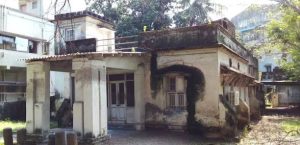
As part of central Chennai’s political landscape, Egmore has witnessed the consolidation of Dravidian politics from the 1960s onward. Party offices, cadre networks and trade union presence remain visible. Inner-city constituencies like Egmore often serve as organisational anchors during election cycles.
The evolution from Justice Party roots to Dravidian dominance echoes through neighbourhood meetings and local rhetoric.
Politics here is institutional memory.
Electoral Ledger:
Egmore’s reserved status has not diminished its political competitiveness.
2011
Winner: Nallathambi K. (AIADMK) — 63,489 votes
Second: Parithi Ilamvazhuthi (DMK) — 58,210 votes
Third: S. Rajendran (DMDK) — 18,742 votes
Margin: 5,279 votes
2016
Winner: K. S. Ravichandran (DMK) — 55060 votes
Second: Parithi Ilamvazhuthi (ADMK) — 44381 votes
Third: Venkatesan M (BJP) — 7159 votes
Margin: 10679 votes
2021
Winner: I. Paranthaman (DMK) — 68,832 votes
Second: John Pandian (AIADMK) — 30,064 votes
Third: Priyadharshini.U (MNM) — 9,990 votes
Margin: 38,768votes
A widened margin under alliance consolidation.
Egmore’s electorate does not abandon bipolarity easily, but consolidation can dramatically expand margins.
Hospitals, Education and Public Institutions
Egmore houses major public institutions including large government hospitals and educational establishments. These institutions shape local employment and daily traffic patterns. Health infrastructure performance often becomes an electoral issue — especially in times of public health stress.
Access, crowd management and service quality are monitored closely by residents.
In Egmore, governance is visible every day.
Temple, Church and Mosque Coexistence
Urban religious plurality defines Egmore. Vinayagar temples, churches and mosques share neighbourhood grids. Festival seasons bring diverse celebrations — from Vinayaka Chaturthi processions to Christmas services and Ramadan gatherings.
Political representatives must navigate this plural fabric with sensitivity.
Egmore’s social map is layered and inclusive.
Transport Artery and Urban Movement

The railway station ensures constant passenger flow. Auto stands, bus routes and arterial roads sustain daily migration between north and south Chennai.
Traffic management and pedestrian safety around the station area remain recurring demands. When rainwater stagnates or platforms overflow, voter frustration surfaces quickly.
Infrastructure here is not optional; it is identity.
Civic Associations and Cadre Strength
Inner-city voter mobilisation in Egmore relies heavily on booth-level organisation. Party cadres maintain sustained neighbourhood presence. Welfare scheme distribution networks influence loyalty.
Turnout discipline shapes margins significantly.
Egmore does not produce accidental verdicts.
Cuisine and Street Pulse
Egmore’s food culture reflects Chennai’s diversity — roadside idli vendors, biryani outlets, mess halls serving railway passengers and small eateries catering to hospital visitors.
Food here is fast, functional and affordable.
Tea stalls double as political commentary hubs.
What Decides Here
Three determinants shape Egmore’s trajectory:
Welfare Delivery and Urban Services.
Housing, sanitation and drainage are central.
Organisational Cadre Strength.
Inner-city mobilisation is decisive.
Alliance Consolidation.
Margins expand rapidly under unified coalitions.
Egmore is not swayed by grand speeches; it evaluates visible performance.
Closing Frame
Railway announcements echo beneath arched ceilings. Museum domes glow in afternoon sun. Temple bells mingle with traffic horns. Party flags flutter above narrow lanes.
Egmore stands at the crossroads of colonial memory and contemporary Dravidian politics — a constituency where history frames habit and habit shapes mandate.
When Egmore votes, it does so with the clarity of an inner-city electorate that knows both its past and its present needs.
In Egmore, mandate travels through railway arches — steady, grounded and consequential.