

Hosur: Border Boom, Factory Floors and the Airport Question

- Tamil
- Hindi
- Malayalam
- Kannada
- Telugu
Constituency No. 55 | Krishnagiri District | General
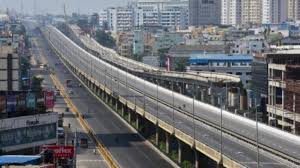
Hosur is not just another western constituency; it is Tamil Nadu’s industrial frontier — a border town turned manufacturing powerhouse, pressed against Karnataka and pulled by Bengaluru’s economic gravity. It is where Tamil Nadu’s industrial policy meets interstate migration, where factory sirens outnumber temple bells at dawn, and where urban sprawl advances faster than administrative comfort.
Hosur is growth in motion — and politics here must keep pace.
Borderline Economy, Bengaluru Shadow
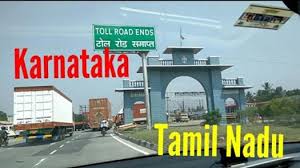
Located just across the Tamil Nadu–Karnataka border, Hosur’s rise is inseparable from Bengaluru’s expansion. Industrial estates, automobile manufacturing units, electronics factories and logistics hubs define its economic landscape.
Thousands commute daily across the border for work. Conversely, Karnataka-based professionals reside in Hosur for cost advantages while working in Bengaluru’s tech corridors.
Policy here cannot ignore geography. Interstate coordination on roads, taxation, industrial regulation and water sharing often enters public discourse.
Hosur votes with one eye on Chennai and the other on Bengaluru.
Industrial Estates and Labour Dynamics
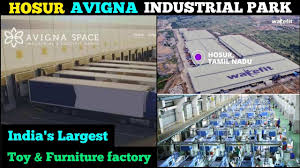
Hosur houses major industrial clusters — automobile assembly plants, auto-component manufacturers, electronics units and ancillary workshops. MSMEs form a critical layer beneath large-scale manufacturing.
Employment stability, industrial power tariffs and land acquisition policy influence voter sentiment. Labour unions operate actively in factory belts, while migrant workers add demographic complexity.
When global markets tighten, Hosur feels it. When production surges, optimism follows.
Industry here is pulse, not backdrop.
Airport Ambition and Controversy
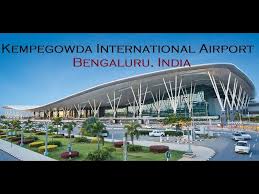
The idea of developing an airport in Hosur has surfaced periodically in political and industrial circles. Given its proximity to Bengaluru’s Kempegowda International Airport, questions have arisen about viability, regulatory approvals and airspace coordination.
Local business leaders argue that an airport would accelerate logistics efficiency and attract investment. Critics question duplication and economic sustainability.
The airport debate symbolises Hosur’s ambition — and its strategic complexity.
Infrastructure here is aspiration writ large.
Temple Roots and Cultural Identity
Despite industrial dominance, Hosur retains deep religious roots. The Chandira Choodeswarar Temple, perched atop a hill, offers sweeping views of the town below. The temple’s annual festivals draw devotees across communities.
Village Amman shrines and Ayyanar temples persist in peri-urban pockets. Even in a rapidly industrialising constituency, devotional rhythm remains intact.
Hosur blends factory floor and festival flame.
The Electoral Ledger:
Hosur’s strategic importance ensures competitive contests.
2011
Winner: K. Gopinath (INC) — 75,212 votes
Second: S. Balakrishnan (AIADMK) — 72,983 votes
Third: K. Prakash (DMDK) — 26,874 votes
Margin: 2,229 votes
2016
Winner: P. Balakrishna Reddy (AIADMK) — 89510 votes
Second: K. Gopinath (INC) — 66546 votes
Third: Balakrishnan G (BJP )— 28850 votes
Margin: 22964 votes
2021
Winner: Y. Prakash (DMK) — 1,18,231 votes
Second: Jothi S. (AIADMK) — 1,05,864 votes
Third: Geetha Lakshmi .S (Naam Tamilar Katchi) — 11,422 votes
Margin: 12,367 votes
Alliance arithmetic and urban consolidation strengthened the lead.
Hosur’s electorate is competitive but responsive to coalition clarity.
Civic Strain and Urban Expansion
Rapid growth has intensified civic challenges:
Traffic congestion on Bengaluru highway corridors.
Drinking water demand in expanding residential layouts.
Solid waste management.
Air quality and industrial compliance.
Urban planning lags occasionally behind expansion, prompting demands for upgraded municipal governance.
Hosur demands infrastructure proportional to its ambition.
Migration and Social Fabric
Industrial growth has attracted migrants from across Tamil Nadu and neighbouring states. Linguistic diversity is visible in schools and markets. Political messaging must navigate multi-community sensibilities.
Representation here is urban and heterogeneous.
Cuisine and Border Influence
Hosur’s culinary landscape blends Kongu flavours with Karnataka influence. Millet-based dishes, dosa varieties and biryani outlets coexist near factory clusters and bus stands.
Tea stalls near industrial estates double as policy debate forums.
Food mirrors migration.
Political Temperament
Hosur is neither purely Dravidian bastion nor ideologically rigid enclave. Industrial workers, small traders and cross-border professionals form layered voter blocs. Campaigns here often emphasise infrastructure, employment and urban services rather than purely rural welfare.
Margins reflect urban volatility but not unpredictability.
Hosur evaluates performance.
What Decides Here
Three determinants shape Hosur’s electoral trajectory:
Industrial Employment Stability.
Factory health shapes sentiment.
Infrastructure Expansion.
Roads, water and airport ambition carry weight.
Alliance Arithmetic.
Urban seats respond sharply to coalition consolidation.
Hosur does not drift. It accelerates.
Closing Frame
Factory sirens sound at dawn. Trucks roll toward Bengaluru. Temple bells echo from hilltop shrines. Construction cranes rise above new layouts. Campaign banners line highways linking two states.
Hosur stands at the edge of Tamil Nadu’s industrial ambition — a constituency where growth is visible, debate is sharp and mandate is consequential.
When Hosur votes, it does so with the urgency of a border town that knows opportunity waits just beyond the next flyover.
In Hosur, mandate is engineered.