


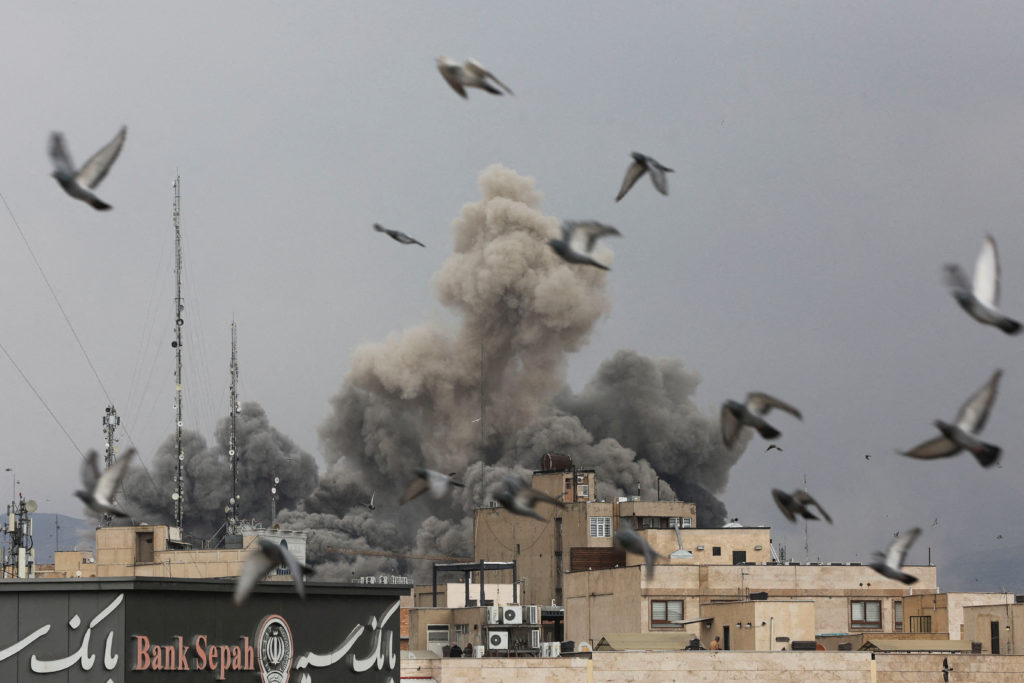
Dubai, Mar 6: Explosions and airstrikes across the Middle East stranded hundreds of thousands of travelers after a US and Israeli attack on Iran, followed by Iranian retaliation on Gulf states and Israel.
Widespread airspace closures forced many to seek alternate routes through Oman, Egypt, and Saudi Arabia, which remained operational for commercial and repatriation flights.
Some travellers, like Cory McKane, resorted to driving long distances to borders, paying steep fees, and enduring long journeys to catch flights home.
Governments worldwide mobilized to evacuate citizens. France organized military and charter flights, prioritizing vulnerable travellers, while United States has repatriated 18,000 citizens so far.
The United Kingdom, Ireland, Norway, Mexico, and South Africa also deployed flights or advised citizens to use available commercial options.
Airline operations were heavily disrupted, with over 23,000 of roughly 44,000 scheduled flights cancelled. Emirates and Etihad suspended most commercial flights, maintaining limited repatriation services.
Israel and Jordan partially reopened airspace, while Iran, Iraq, Qatar, Bahrain, Kuwait, and Syria imposed continued no-fly zones, sometimes changing restrictions on short notice.
Tourists and residents reported fear amid missile alerts and smoke from strikes, with some concerned about health and family needs.
Limited flight options and rapid cancellations forced travellers into a tense, multi-day scramble to evacuate the region safely as the conflict escalates.