


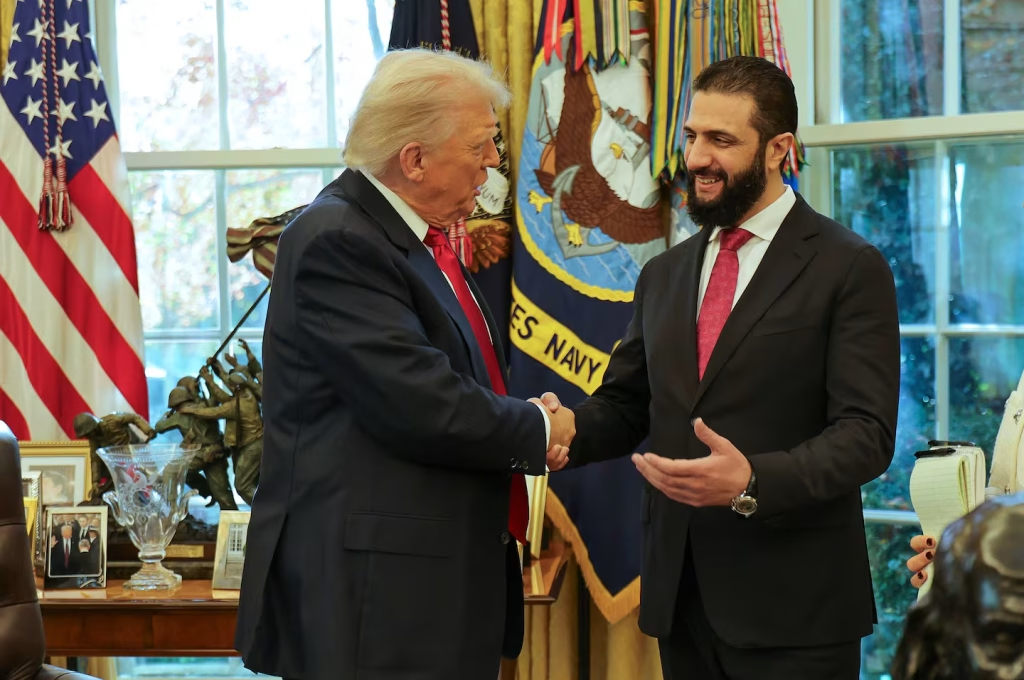
Washington, June 29:
US President Donald Trump’s suggestion that Syria should take over the fight against Hezbollah has sparked concern across the Middle East, particularly in Lebanon and Israel, despite Syria’s repeated insistence that it has no intention of intervening.
As the White House has grown increasingly critical of Israel’s prolonged military campaign against the Iran-backed Hezbollah group in Lebanon, Trump has proposed that Syria’s new Islamist-led government could more effectively confront the militant organisation.
He argued that Syria’s battle-hardened forces would be more precise than the Israeli military, which has faced criticism over civilian casualties. Speaking at the G7 summit, Trump said Israel’s offensive had gone on for too long and caused excessive civilian deaths, adding that Syria could “do a better job” against Hezbollah.
The proposal comes after Islamist-led insurgents overthrew former Syrian President Bashar Assad in late 2024 and formed a new government under President Ahmad al-Sharaa. However, Syrian officials have strongly rejected suggestions that Damascus plans to launch military operations in Lebanon.
Al-Sharaa said reports of a Syrian intervention were based on a misunderstanding of Trump’s remarks, stressing that Syria supports a peaceful resolution, stronger Lebanese institutions and closer economic ties rather than military action.
Although Syria’s new leadership had fought against Hezbollah during the country’s civil war, officials now say their priority is rebuilding a war-ravaged nation and avoiding involvement in wider regional conflicts.
Since taking power, Damascus has avoided direct confrontation with Hezbollah despite occasional border tensions and has instead focused on preventing weapons smuggling and maintaining stability.
Trump’s proposal has nevertheless revived fears in Lebanon, where memories of Syria’s decades-long military presence, which ended in 2005, remain deeply sensitive. Many Lebanese communities also worry that renewed Syrian involvement could inflame sectarian tensions, particularly after recent outbreaks of violence inside Syria involving Sunni Islamist factions and minority Alawite and Druze groups.
Israel is also watching developments with caution. While Israeli officials remain primarily focused on countering Hezbollah, they are wary of the new Islamist-led Syrian government and concerned that Damascus could regain political influence in Lebanon.