
Close Menu
  • HOME
  • TAMIL NADU
  • CHENNAI
  • NATION
  • WORLD
  • BUSINESS
  • SPORTS
  • ENTERTAINMENT
  • EDIT
  • COLUMNS
    • POINTBLANK
    • WHY TN IS FORBIDDEN LAND
  • MIXED BAG
    • CLIMATE & WEATHER
    • EDUCATION
    • HEALTH
    • JOBS
    • LEGAL
    • LIFESTYLE
    • SCIENCE
    • TECHNOLOGY
  • E-PAPER
Facebook X (Twitter) Instagram Threads YouTube
  • About us
  • Contact Us
  • Privacy Policy
  • Terms and Conditions
Friday, October 30, 2026
Facebook X (Twitter) Instagram
News Today | First with the newsNews Today | First with the news
Login / Register Subscribe
  • HOME
  • TAMIL NADU
  • CHENNAI
  • NATION
  • WORLD
  • BUSINESS
  • SPORTS
  • ENTERTAINMENT
  • EDIT
  • COLUMNS
    • POINTBLANK
    • WHY TN IS FORBIDDEN LAND
  • MIXED BAG
    • CLIMATE & WEATHER
    • EDUCATION
    • HEALTH
    • JOBS
    • LEGAL
    • LIFESTYLE
    • SCIENCE
    • TECHNOLOGY
News Today | First with the newsNews Today | First with the news
  • E-PAPER
  • POINTBLANK
  • PRIME PULSE
  • TN ECHOES
  • Asian Games 2026
  • DEEP DIVE
  • GLOCAL
  • COLD FACTS
  • LEADING LIGHTS
  • CRYSTAL GAZING
  • PATTERNS
Home Ā» Tougher norms for passenger vehicles, To come into effect from April 2027
BUSINESS

Tougher norms for passenger vehicles, To come into effect from April 2027

NandhiniBy NandhiniJuly 17, 2026No Comments
🌐 Translate ā–¾
  • Tamil
  • Hindi
  • Malayalam
  • Kannada
  • Telugu
Share WhatsApp Facebook Twitter LinkedIn Pinterest Telegram Copy Link Email

New Delhi, July 17:

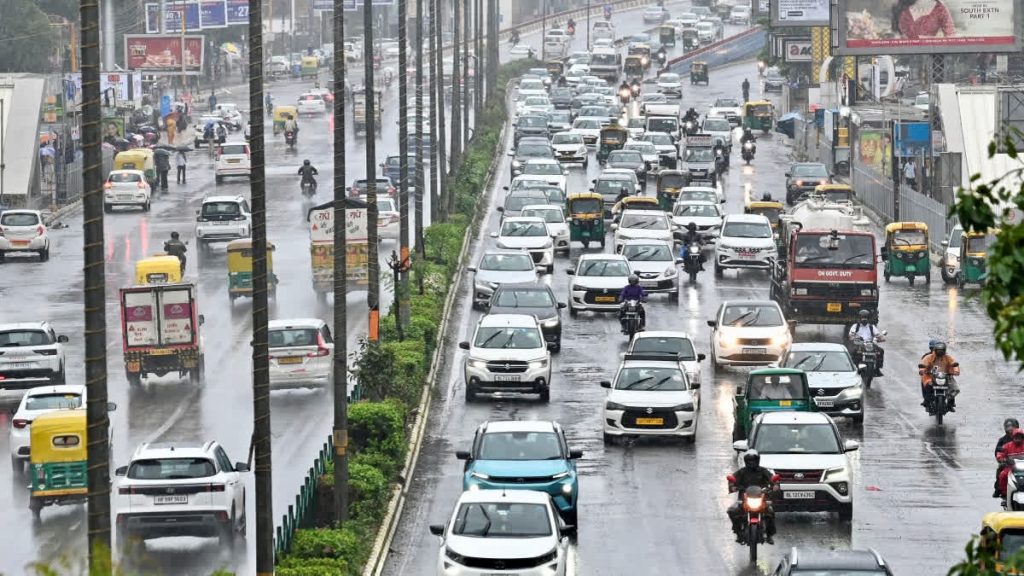
The government has proposed tighter fuel efficiency standards for passenger vehicles under the third phase of the Corporate Average Fuel Efficiency (CAFE) regulations, including stricter carbon dioxide emission targets, incentives for cleaner technologies, and a market-based compliance mechanism.

The Union Power Ministry on Thursday released draft CAFE-III norms for stakeholder consultation, proposing the new norms to take effect from April 1, 2027, after the current CAFE-II regime expires on March 31, 2027. These will remain in force for five years.

Compliance would be assessed over two blocks — an initial three-year period followed by a two-year period.

The proposed regulations would apply to M1 category passenger vehicles having not more than eight seats in addition to the driver’s seat, that are manufactured or imported for sale in India during the 2027-28 to 2031-32 period.

The draft proposes progressively tighter fleet-average fuel consumption targets, reducing the benchmark from 3.996 litres per 100 km (94.76 grams of carbon dioxide per km) in 2027-28 to 3.3273 litres per 100 km (78.90 grams of CO2 per km) by 2031-32.

The phased approach is intended to provide automakers with greater regulatory certainty while allowing time to develop and introduce more fuel-efficient models.

For the first time, the proposal introduces Carbon Neutrality Factors (CNFs), allowing specified reductions in declared tailpipe CO2 emissions for vehicles using ethanol, biofuels and Compressed Bio-Gas (CBG).

An 8 per cent CNF has been proposed for current ethanol blending levels, while reductions for CBG and other biofuels would be linked to prevailing blending levels.

The draft also proposes compliance incentives of up to 9 grams of CO2 per km for approved fuel-saving technologies, subject to a cap of 1 gram per technology, and retains volume-based “super credits” for battery electric vehicles, range-extended electric vehicles, plug-in hybrids, strong hybrids and flex-fuel vehicles while calculating fleet-average fuel consumption.

A credit-and-debit mechanism has also been proposed under which manufacturers exceeding their prescribed targets would earn compliance credits that can be carried forward within a compliance block.

Automakers falling short of their targets could meet their obligations through carry-forward provisions, voluntary pooling arrangements with other manufacturers or by purchasing compliance credits from the Bureau of Energy Efficiency (BEE).

The proposal sets an initial buyout price of Rs 2,500 for each compliance credit, with the price rising by Rs 500 annually. Credits would lapse if left unused at the end of a compliance block.

Manufacturers failing to comply with the norms would be liable for penalties under the Energy Conservation Act, while passenger vehicle makers with annual sales of fewer than 1,000 units would remain exempt.

The Ministry of Power has invited comments from stakeholders and the public on the draft norms until August 6.

“The norms are proposed to be applicable to M1 category passenger vehicles manufactured or imported for sale in India during 2027-28 to 2031-32,” it added.
 

To come into effect from April 2027 Tougher norms for passenger vehicles
Share. WhatsApp Facebook Twitter Telegram Copy Link Email
Previous ArticleCUTS report calls for unified bike taxi policy
Next Article Palani land scam: CB-CID grills registration dept staff

Related Posts

BUSINESS

PhonePe launches Tatkal NPSĀ 

October 30, 2026
BUSINESS

Amazon rolls out Diwali sale with up to 80% discounts

October 30, 2026
BUSINESS

Crompton launches 5.9-litre instant water heaters

October 30, 2026
BUSINESS

Volkswagen expands Chennai networkĀ 

October 30, 2026
BUSINESS

Benelli launches TRK 552 and TRK 552X adventure bikes

October 30, 2026
BUSINESS

Bandhan Bank’s total business crosses Rs 3.3 lakh cr

October 30, 2026
Add A Comment

Comments are closed.

Latest Posts

E-paper 30 October 2026

NT BureauOctober 30, 20260

Auto drivers thank govt for revising meter fares after 14 years

NT BureauOctober 30, 20260

Federation of Tamil Nadu Auto and Call Taxi Drivers’ Associations has thanked the State government for revising auto-rickshaw meter fares after a gap of 14 years.

HC dismisses voter’s plea challenging OPS’ victory

NT BureauOctober 30, 20260

The Madras High Court has dismissed an election petition filed by a voter challenging the victory of DMK MLA O. Panneerselvam from the Bodinayakanur Assembly constituency in the recently concluded Tamil Nadu Assembly elections.

TASMAC bar contracts extended by two months till Dec 31

NT BureauOctober 30, 20260

The Tamil Nadu State Marketing Corporation (TASMAC) has extended the validity of contracts for bars attached to its retail liquor outlets by another two months, till December 31, 2026.

Coonoor: Bus services resume after six-day halt due to landslides

NT BureauOctober 30, 20260

Bus services resumed in Coonoor on Friday after a six-day suspension caused by landslides and heavy rain in the Nilgiris, bringing relief to residents and commuters.

About
About
Facebook X (Twitter) Instagram RSS
Latest Posts
  • E-paper 30 October 2026
  • Auto drivers thank govt for revising meter fares after 14 years
  • HC dismisses voter’s plea challenging OPS’ victory
  • TASMAC bar contracts extended by two months till Dec 31
  • Coonoor: Bus services resume after six-day halt due to landslides
Ā© 2026 NewsTodayNet.com. All Rights Reserved. Designed & Maintained by Gifted Technologies.
  • About us
  • Contact Us
  • Privacy Policy
  • Terms and Conditions

Type above and press Enter to search. Press Esc to cancel.

Ad Blocker Enabled!
Ad Blocker Enabled!
Our website is made possible by displaying online advertisements to our visitors. Please support us by disabling your Ad Blocker.

Sign In or Register

Welcome Back!

Login to your account below.

Lost password?