


Chennai, Aug 17:
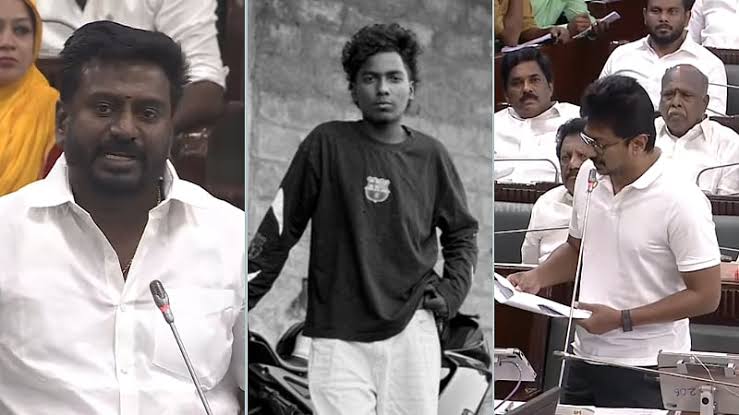
The murder of a Coimbatore student triggered a heated exchange between Tamil Nadu Public Works Minister Aadhav Arjuna and Leader of Opposition Udhayanidhi Stalin in the Assembly on Monday, with the ruling TVK and Opposition DMK trading charges over the rise in drug abuse and sexual crimes.
The issue came up during a discussion on an attention motion concerning the student’s murder. What began as a discussion on the government’s response soon turned into a political confrontation, with the two sides accusing each other of failing to adequately tackle drugs and crimes against children.
Participating in the debate, Minister Aadhav Arjuna alleged that the drug culture in Tamil Nadu had increased significantly after 2020 and claimed that the rise in drug abuse had contributed to an increase in sexual crimes against children.
He said cases registered under the Protection of Children from Sexual Offences (POCSO) Act had increased by 40 per cent during the previous DMK regime, citing a report from the police department.
Aadhav stressed that his remarks were based on official police data and not on figures prepared by the TVK government.
He also questioned the action taken by the previous DMK government in the case involving the sexual assault and death of a two-and-a-half-year-old girl allegedly involving a DMK member.
“Action will be taken against anyone who commits a mistake, irrespective of who they are,” Aadhav said, while defending the government’s position on crimes and drug abuse.
His allegation that the increase in drug abuse was one of the reasons for the DMK’s defeat in the Assembly election triggered uproar in the House.
The remarks led to protests from the Opposition benches.
DMK MLA Velu objected to the minister’s intervention, arguing that the discussion on an attention motion should focus on the government’s explanation rather than counter-allegations against the Opposition.
Speaker JCD Prabhakar subsequently said the remarks made by Aadhav Arjuna against the Opposition could not be accepted and directed that they be removed from the Assembly records.
Velu pointed out that allegations should not be levelled during Question Hour or while discussing attention and adjournment motions.
He said the convention of the House required the government to provide an explanation on the issue raised rather than respond with counter-allegations against the Opposition.
Leader of Opposition Udhayanidhi Stalin then strongly defended the previous DMK government’s record on combating drugs.
He said the Opposition had already raised concerns over several murders allegedly linked to drug abuse during the past week, but alleged that the government had failed to answer the specific questions raised by the Opposition.
“Instead of answering our questions, they say this happened during your regime and that happened during your regime,” Udhayanidhi said.
He maintained that cases involving crimes committed during the DMK regime had been investigated and action had been taken.
The Opposition leader then turned the government’s own appointments and awards into a counterargument.
Udhayanidhi said the DMK government had undertaken measures against drug abuse, conducted awareness programmes and maintained data on its initiatives.
He questioned why Amalaraj had been appointed as Commissioner if the DMK government had failed to act against drugs.
He also pointed out that police personnel who had performed well in combating drug trafficking had received awards from Chief Minister Vijay.
“If the DMK government had taken no action against drugs, why were these officers honoured?” Udhayanidhi asked.
He said 15 police personnel who had performed well over the past year had received the Chief Minister’s awards, questioning the government’s criticism of the previous administration’s record.
Responding to Udhayanidhi, Aadhav Arjuna sought to soften the tone of his earlier remarks.
He said the government’s intention was not to blame others but to respond to the concerns expressed by the public, particularly women, over the growing threat posed by drugs.
He maintained that people had demanded stronger action to control drug abuse and that the government was committed to addressing the issue.