


Kyiv, Oct 9:
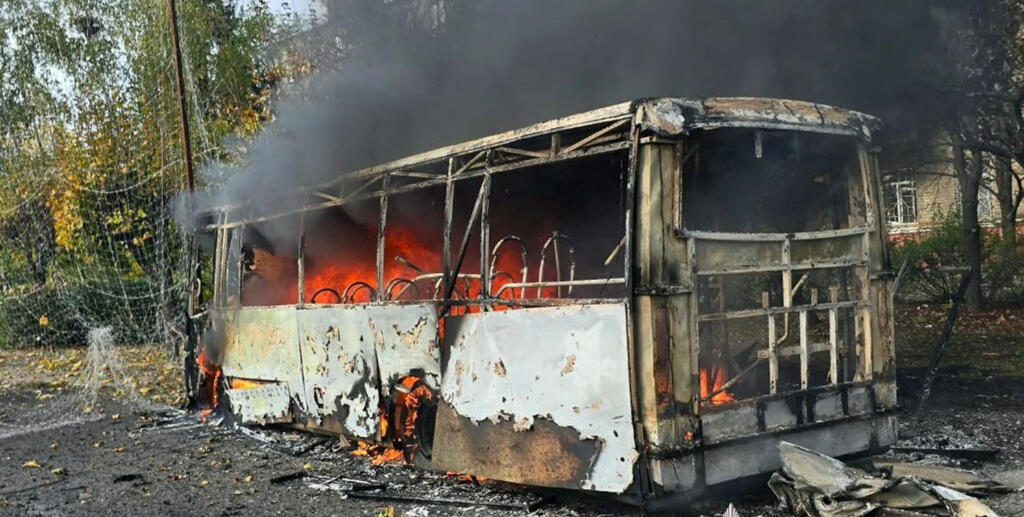
A Russian-guided bomb exploded near public buses carrying passengers in the eastern Ukrainian city of Kramatorsk, killing 30 people and injuring at least 18, as a fresh wave of Russian attacks intensified pressure on Ukraine’s civilian population and worsened power outages in the capital, Kyiv. The attack took place on Thursday in the Donetsk region, where the war has continued to disrupt daily life and essential public services.
The strike occurred near a bus stop in Kramatorsk, prompting authorities to suspend public transport in the city and neighbouring Sloviansk because of the deteriorating security situation. Oleksandr Honcharenko, head of Kramatorsk’s military administration, accused Russia of deliberately targeting civilians. He said rescue operations were complicated by subsequent attacks involving small drones, adding to the dangers faced by emergency responders.
Vadym Filashkin, head of the Donetsk regional military administration, said public transport could not continue operating safely in Kramatorsk and Sloviansk. He stressed that protecting passengers and drivers had become the priority amid the escalating threat. The attack has renewed concerns about the safety of civilians who depend on buses and other public transport to travel, access essential services and carry out their daily activities in frontline areas.
The latest attack came a day after a Russian missile strike on a residential building in Pryluky, a town in northern Ukraine, killed 22 people, including five children. At least 54 people were injured, while rescue workers continued searching the rubble for survivors. The consecutive attacks have heightened fears that Russia could intensify its aerial campaign as Ukraine prepares for winter.
Meanwhile, Kyiv faced worsening electricity shortages after the national grid operator ordered emergency power cuts. Ukraine’s energy company DTEK said the emergency outages would suspend the regular, scheduled power-cut system while the grid dealt with the immediate situation. Authorities urged households to prepare emergency kits, store drinking water and arrange backup power supplies as attacks continued to threaten energy infrastructure.
Kyiv police also reported that bomb-disposal teams had defused two unexploded ballistic missile warheads, each weighing about half a tonne, after they landed near residential buildings. Russian drone attacks on the capital late Wednesday killed four people and injured 12 others, including four children, according to police.
Ukrainian President Volodymyr Zelenskyy, who visited Pryluky with British Foreign Secretary Ed Miliband on Thursday, warned that missile and drone attacks could intensify as winter approaches. He appealed to NATO countries for additional air-defence capabilities, ammunition for combat aircraft and interceptor systems, arguing that concrete military assistance was essential to saving lives. Miliband announced additional sanctions against Russia during the visit.
The latest attacks underscore the growing humanitarian and infrastructure challenges facing Ukraine as the conflict continues with little progress along much of the frontline. With winter approaching, the threat to electricity supplies, transport networks and residential areas is adding to the strain on civilians already living under prolonged wartime conditions. The suspension of public transport in parts of the Donetsk region and emergency power cuts in Kyiv illustrate how the fighting continues to affect everyday life far beyond the battlefield.